
| Price Tier | Current | Budget 2024 Flat rate of 4% | Difference |
| First RM100,000 | 1% RM1,000 | 4% RM4,000 | RM3,000 |
| Next RM400,000 (RM101,000 – RM500,000) | 2% RM8,000 | 4% RM16,000 | RM8,000 |
| RM500,001 to RM1,000,000 | 3% RM15,000 | 4% RM20,000 | RM5,000 |
| Thereafter (>RM1 million) | 4% | 4% |
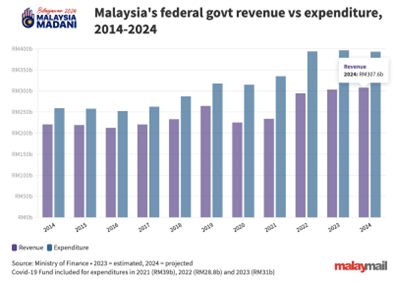
With an allocation of RM393.8 billion, Budget 2024 is Malaysia’s largest-ever budget. There’s a further shift from blanket subsidies to a more targeted approach to benefit the lower-income groups. On the property front, there’s a flat rate on stamp duty for MOT, increased allocation for the Housing Credit Guarantee Scheme (HCGS), and funding to revive sick and abandoned projects.
Let’s go over those, and other financial incentives that consumers and home buyers can look forward to.

Budget 2024 was tabled by Malaysian Prime Minister and Finance Minister, Datuk Seri Anwar Ibrahim on 13 October 2023. Themed Reformasi Ekonomi, Memperkasa Rakyat, or Economic Reform, Empowering the People, Budget 2024 is a reflection of the unity government’s determination to uplift the national economy and the people’s well-being.
With a total allocation of RM393.8 billion, Budget 2024 represents an RM5.8 billion increase compared to the RM388 billion that was allocated for 2023. There’s a reduction in development expenditure, dropping from RM97 billion in 2023 to RM90 billion in 2024, but there’s also more infrastructure spending, such as RM15 billion on expanding light rail transit projects.
Here are the main financial incentives announced under Budget 2024.
1. Assisting more borrowers with Housing Credit Guarantee Scheme (HCGS)
HCGS received RM5 billion in funding in 2023 to assist up to 20,000 borrowers. In Budget 2024, HCGS will be doubled to RM10 million, benefitting up to 40,000 borrowers. This is a welcome move, as it will allow individuals without a steady income, such as gig and freelance workers, independent business owners, small traders, and entrepreneurs, to achieve homeownership.
HCGS was established as a company wholly owned by the Minister of Finance in 2007. The scheme involves the purchase of low and medium-cost houses, whether under construction or completed, existing houses from sellers or auction houses. The maximum financing set at RM300,000.
To apply for this scheme, the applicant’s average monthly income must be at least RM1,000. For more details on HCGS and how to apply for it, click here.
2. Urban rejuvenation of projects in the city
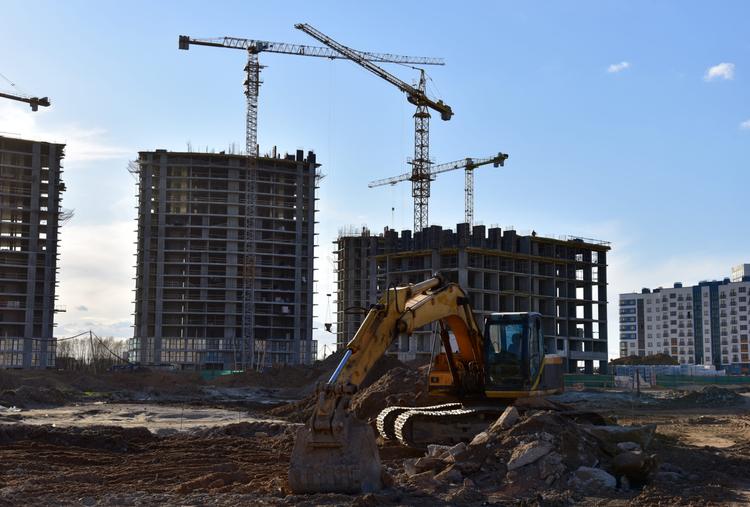
The government aims to resolve the problem of late, sick and abandoned private housing projects. RM23.37 billion was spent as of August 2024 to restore 256 sick projects, encompassing over 28,000 housing units.
A special guarantee fund amounting to RM1 billion is allocated to incentivise reputable developers to revive and revitalise identified abandoned projects. This will encourage urban renewal and the redevelopment of old buildings in the city.
Think City will receive an allocation of RM20 million to rejuvenate and revitalise downtown Kuala Lumpur into a creative capital, focusing on flagship projects around Masjid Jamek and its surrounding areas. Think City is a wholly-owned subsidiary of Khazanah Nasional and past projects realised by Think City include The Downtown Kuala Lumpur Grants Programme which funds seed projects to accelerate the recovery of downtown Kuala Lumpur.
3. Flat rate stamp duty on property transfers for non-citizens
A flat rate of 4% stamp duty on the Memorandum of Transfer (MOT) will be implemented for non-citizens and foreign-owned companies, with the exemption of permanent residents. This applies to instruments of transfer executed from 1 January 2024. This move will help control land or property prices for locals.
What is stamp duty? It is the tax placed on property documents during the sale or transfer of the property. The tax includes:
- Stamp duty on the Sale and Purchase Agreements (SPA) of the property – this costs RM10.
- Stamp duty on the instruments of transfer – Memorandum of Transfer (MOT) or Deed of Assignment (DOA). Previously, the stamp duty was calculated based on a tiered system as shown in the table below.
- Stamp duty on loan agreement – a flat rate of 0.5% of the total loan.
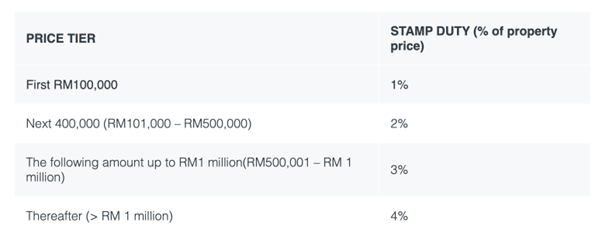
For example, if the property purchased is RM1 million, the difference is RM16,000. To some, this might only have a small impact. Foreigners usually purchase properties in the Klang Valley and Penang, where the threshold is RM1 million and above.
The government is also proposing a nominal stamp duty fee of RM10 to replace the previous variable rate for real estate transfer documents among family members.
Currently, the stamp duty for transfer of properties between parents and children, and grandparents and grandchildren, is fully exempted for the first RM1 million and given a 50% discount (subject to an valorem duty rate) for the balance above RM1 million.
This change will apply to cases where beneficiaries are relinquishing their rights to eligible beneficiaries in accordance with a will, Faraid, or the Distribution Act 1958.
Some opine that the flat rate of 4% stamp duty may discourage home ownership and Malaysia My Second Home (MM2H) to those who might be looking to migrate to Malaysia in the future. On MM2H, the government indicated an easing of the current conditions for MM2H applications to attract more tourists and foreign investors into Malaysia.
4. Affordable housing projects to bolster homeownership
RM2.47 billion will be allocated for public housing projects (PPRs) in 2024. Various allocations for the B40 will assist more Malaysians to own homes. These allocations include:
- RM546mil to continue development of 36 Program Perumahan Rakyat (PPR), including a new project in Kluang, Johor. 15 PPRs are anticipated to be completed in the coming year, benefiting 5,100 potential residents.
- RM358mil towards the development of 3,500 residential units under 14 Program Rumah Mesra Rakyat.
- RM460mil towards building new homes or housing repair works involving roughly 65,000 underprivileged individuals in rural areas.
Additionally, there will be RM100 million allocated for the maintenance of low and medium-cost strata housing, which will include repairs to water tanks, roofs, wiring, and the installation of closed-circuit cameras (CCTVs).
Other housing-related projects include:
- RM100mil allocation to Chinese villages to upgrade infrastructure and social facilities.
- RM2.4 billion to construct, improve and maintain the housing facilities for civil servants, teachers, hospitals, and the police, army and fire brigade forces under the Special Task Force on Agency Reform (STAR).
- RM2.8 billion allocations to repair roads and bridges, with RM300 million for G1 to G4 contractors.
- RM100 million to upgrade street lamps across the country.
- RM50 million to address accident-prone areas, including installing smart traffic lights on federal roads to reduce accidents.
5. Takeover of the Bandar Malaysia
The government will take over the development of the previously cancelled Bandar Malaysia. Some redevelopment plans include providing affordable housing projects for veterans, considerations for Bumiputera interests in the federal territories, and the provision of parks and green spaces that can be used by all residents in the Klang Valley.
6. Introduction of new taxes, with a revised service tax
New taxes include a 10 per cent capital gains tax on the disposal of unlisted shares by local companies will be enforced from 1 March 2024 onwards, and a luxury goods tax of 5 to 10 per cent on items such as jewellery and watches will also be introduced. However, the value of the goods subject to luxury tax has yet to be specified at the time of publication
The government is also considering the exemption of Capital Gains Tax on the disposal of shares related to certain activities such as approved Initial Public Offering (IPO), internal structuring and venture capital companies.
Services tax (SST) will be increased from 6 to 8 per cent and encompass a wider range of activities including brokerage, karaoke, underwriting and logistics. SST would not apply to some services such as food and beverage, and telecommunications.
An increase in SST could directly or indirectly impact the livelihood and income of stakeholders in many industries. For example, it could increase the cost of construction, which might then be passed on to purchasers.
7. Encouraging sustainable development and adoption of electric vehicle usage
Budget 2024 supports the ESG agenda, with a focus on renewable energy and promoting a low-carbon economy. The RM2 billion allocation for the National Energy Transition funds presents opportunities for investment in renewable energy sources.
- Solar panels will be added to government buildings in partnership with Tenaga Nasional Bhd (TNB) and Gentari.
- The government will use electric vehicles (EVs) for official purposes.
- TNB, Gentari, and Tesla are investing over RM170 million to create charging stations for EVs.
- The government is encouraging companies to offer a “Zero Capital Cost” subscription model, similar to what Gentari is offering for residential homes.
- RM200 billion fund to incentivise industries to transition to a low-carbon economy.
- The Net Energy Metering (NEM) programme will be extended until 31 Dec 2024 to promote solar panel adoption. The government is also working on a rooftop solar buyback programme with minimal cost implications.
- Encourage people with annual incomes of RM120,000 or lower to use electric motorcycles, with rebates of up to RM2,400 through the Electric Motorcycle Use Promotion Scheme.
- Individual income tax relief of up to RM2,500 on EV charging facility expenses for a period of four years.
- Tax deductions for EV rental costs for another two years.
- 150 electric buses will be rolled out by Prasarana Malaysia Bhd, which will also construct three new bus depots with a budget of RM600 million.
These green initiatives could see more sustainable living components being incorporated into property projects.
Check out properies for sale8. Empowering residents in strata-titled properties
Reduction of the majority consent for en-bloc sale from 100% to a level consistent with international practices, as seen in Singapore, which stands at 80% to 90%. This move aims to empower and reflect the equity of residents living in strata-titled properties.
9. Encouraging high-tech industrial development in the Northern region
The plans to establish a high-tech industrial hub in Kerian, north Perak, to expand the electronics and electrical (E&E) cluster eco-system could have a substantial impact on the market, and see spill-over effects from existing industrial areas in Bayan Lepas, Penang.
10. Resumption of construction for five LRT3 stations
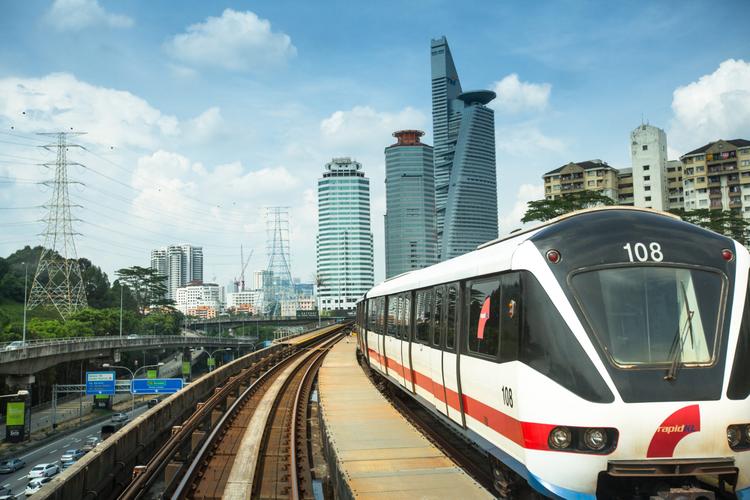
To improve public transportation services, RM4.7 billion is allocated to reinstate five previously shelved LRT3 stations (LRT Shah Alam Line) at Tropicana, Raja Muda, Temasya, Bukit Raja and Bandar Botanic.
This is good news for public transport users, especially those in the western corridor of the Klang Valley which covers areas from Johan Setia, and Klang to Bandar Utama, Petaling Jaya. It is expected to benefit two million users along the corridor.
To support the LRT3 project and provide the first and last mile facilities for the LRT3 project to support nett zero carbon emissions, Prasarana Malaysia Berhad will procure 150 electric buses, and construct 3 bus depots at a cost of RM600 million,
Other infrastructure projects highlighted in Budget 2024 include:
- The Seberang Perai LRT, as planned by the state government, will cost roughly RM10 billion, and will be developed via a public-private partnership (PPP).
- RM50 million to install smart traffic lights at congestion and accident-prone areas.
- RM47 million to improve passenger facilities and extend the runway at the Tioman airport.
- RM20 million in matching grants to upgrade the Malaysia Maritime Single Window (MMSW).
- RM100 million allocations for the maintenance of streetlights, including replacement with energy-efficient LED types that can save electricity.
- RM2.4 billion ringgit for the construction, maintenance and improvement of government employee quarters, teacher accommodations, hospitals, police, military and firefighter facilities.
11. PTPTN repayment discounts
To encourage the repayment of National Higher Education Fund (PTPTN) loans, the government is offering 10% to 15% discount for loan repayments from 14 Oct 2023 till 31 March 2024.
12. New Employee Provident Fund (EPF) account, and increased contributions for various schemes
The government will introduce a third EPF account. The flexible EPF account will allow contributors to access them at any time. Plans for an Account 3 go as far back as 2019, but it did not materialise.
Currently, EPF contributors have two EPF accounts. Mandatory contribution from employee and employer is split 70:30 between Accounts 1 and 2. Account 1 cannot be accessed until retirement, and Account 2, where funds can be withdrawn for certain purposes, such as purchasing a first or second home, settling monthly instalments for an existing home loan, or paying down an existing home loan to save on interest costs.
EPF, a retirement fund for private sector employees, offers decent dividends, with a payout of 5.35% (conventional) and 4.75% (shariah) for the year 2022.
- Under Budget 2024, EPF accounts of contributors will also be restructured to empower the savings of retirees.
- For the EPF i-Saraan scheme for self-employed workers, matching contributions from the government will be adjusted to RM500 annually and, with lifetime caps of RM5,000. Previous i-Saraan annual matching contribution was RM250 from 2018 to 2022, and RM300 in 2023.
- For the EPF’s Caruman Sukarela Insentif Suri (i-Suri) programme for housewives, matching contributions from the government will be raised to RM300 annually, with lifetime caps of RM3,000. Previous initial matching contribution was RM200 in 2018, and RM480 in the subsequent years.
- RM50 million was allocated for the Housewives Social Security Scheme. This will benefit 400,000 housewives registered under e-Kasih.
- Under the EPF i-Sayang initiative, wives will be able to transfer 2% of employees’ contributions to their husbands. EPF introduced i-Sayang in March 2023 to enable husbands to voluntarily transfer 2% of their EPF monthly contributions to their wives’ accounts.
- The monthly wage ceiling for the contribution of Socso will be raised to RM6,000 from RM5,000. This increase will result in cash benefits of 20.2% for the 1.45 million employees under coverage.
13. Automatic bankruptcy discharge
To further protect the people’s welfare, the unity government will expand the Second Chance Policy on bankruptcy to those aged 40 and below who have debts not exceeding RM200,000. As of July 2023, almost 14,000 cases with small debts of below RM50,000 had been discharged from bankruptcy.
15. Cash aids and subsidies
- Phased rationalisation for diesel, with subsidies still applicable for selected users such as good transport companies.
- Sumbangan Tunai Rahmah (STR) cash handouts will see an increase in cash handouts from RM8 billion to RM10 billion to nine million recipients (60 per cent of adults in Malaysia). The maximum cash aid will increase from RM3,100 to RM3,700, while the minimum cash aid for youths will be increased from RM350 to RM500 (channelled to recipients before Ramadan). Despite these cash aids, the plan to cut out subsidies such as diesel, chicken and eggs, is already causing anxiety.
- Under Sumbangan Asas Rahmah (SARA), the government will increase the number of recipients from 200,000 to 700,000. Each recipient will receive RM100 every month for a year in their MyKad to buy necessities.
- For electricity, there’s an allocation of RM55 million and the government will continue rebates of up to RM40 to poor households and exempt bill deposits in the owner’s name.
Click here for the full list of key highlights and allocations announced under Budget 2024.
Disclaimer: The information is provided for general information only. iProperty.com Malaysia Sdn Bhd makes no representations or warranties in relation to the information, including but not limited to any representation or warranty as to the fitness for any particular purpose of the information to the fullest extent permitted by law. While every effort has been made to ensure that the information provided in this article is accurate, reliable, and complete as of the time of writing, the information provided in this article should not be relied upon to make any financial, investment, real estate or legal decisions. Additionally, the information should not substitute advice from a trained professional who can take into account your personal facts and circumstances, and we accept no liability if you use the information to form decisions.