
Buying property as a foreigner in Malaysia in 2026 comes with stricter rules and higher costs. This article explains the latest state price thresholds, the eight per cent stamp duty, MM2H requirements, and what foreigners can legally buy under current regulations.

Buying a home feels tougher today than ever. Prices keep climbing, and many people are struggling to understand what is driving demand. One common concern is how a foreigner can buy property and whether this affects affordability for local buyers.
Budget 2026 introduced major changes that impact how a foreigner buys property in Malaysia. The most significant is the increase in stamp duty for foreign purchasers to eight percent from 1st January 2026. The Government says this is to safeguard local buyers and cool speculative interest.
This guide breaks down the latest rules, property types foreigners are allowed to purchase, state thresholds, and how MM2H affects buying activity. It explains what has changed and what Malaysians should know when discussing how a foreigner purchases property in Malaysia in 2026.
Can Foreigners Buy Property in Malaysia? Understanding the Rules in 2026
There is a lot of confusion about the actual rules. Many believe foreigners can freely buy any property they want. Others think they are taking over the market and making homes harder to afford. The truth is much more controlled.
Foreign buyers must follow strict regulations under the National Land Code 1965. They also need approval from the State Authority before any purchase is completed. The rules vary nationwide. Every state sets its own limits, price thresholds, and approval conditions.
A foreigner buy property in Malaysia only if the property type and price meet the state’s minimum requirements. They cannot buy low-cost or medium-cost housing. They also cannot buy units under the Bumiputera quota or the Malay Reserved Land. Landed properties are heavily restricted, except for selected strata landed homes in certain states.
These rules exist to protect Malaysian buyers and ensure local housing access is not compromised. Understanding them clearly helps separate fact from assumption and gives a clearer picture of how the system works.
Minimum Property Price Thresholds by State in 2026

Each state in Malaysia sets its own minimum price for foreign property purchases. These limits help protect local buyers and ensure affordable homes are not affected by external demand. The thresholds also guide where foreign interest is allowed and at what entry point.
For 2026, most states maintain a minimum price of RM1 million or more for residential properties. Some states follow higher limits for landed or premium locations. The table below provides an updated, easy-to-read overview.
State-by-State Minimum Purchase Price 2025
A quick look at the latest thresholds helps show how each state manages foreign demand and protects local housing access.
| State / Territory | Minimum Price for Foreign Buyers (2026) | Notes / Conditions |
| Kuala Lumpur | RM1,000,000 | Applies to most strata units. Landed homes still require approval. |
| Putrajaya | RM1,000,000 | Limited residential stock. Mostly strata-type. |
| Labuan | RM1,000,000 | Similar rules to FT regions. |
| Selangor (Zone 1) Petaling, Gombak, Hulu Langat, Sepang, Klang | RM2,000,000 | Strata landed allowed. Individual landings were not allowed. No auction or agricultural land. |
| Selangor (Zone 2) Kuala Selangor, Kuala Langat | RM2,000,000 | Same restrictions as Zone 1. |
| Selangor (Zone 3) Hulu Selangor, Sabak Bernam | RM2,000,000 | Limited high-rise supply. |
| Johor | RM1,000,000 (strata/high-rise) | RM2,000,000 for landed in designated international zones. |
| Melaka | RM1,000,000 (landed) | RM500,000 (high-rise/strata). |
| Negeri Sembilan | RM1,000,000 (landed/strata landed) | RM600,000 (high-rise/strata). |
| Penang Island | RM3,000,000 (landed) | RM1,000,000 (condominium). |
| Penang Mainland | RM1,000,000 (landed) | RM500,000 (strata). |
| Kedah | RM600,000 | RM1,000,000 in Langkawi only. |
| Perak | RM1,000,000 | Applies to landed and high-rise. |
| Perlis | RM500,000 | One of the lowest thresholds. |
| Kelantan | RM1,000,000 | Mostly landed restrictions. |
| Pahang | RM1,000,000 | Depending on the district and title. |
| Terengganu | RM1,000,000 | Subject to state approval. |
| Sabah | RM1,000,000 (landed) | RM600,000 (high-rise/strata). |
| Sarawak | RM500,000–RM600,000 (varies by division) | Subject to stricter local approval. |
Important Notes
- States may adjust thresholds based on market conditions, especially in areas with strong foreign demand.
- Meeting the price threshold does not guarantee approval. State Authority consent is still required.
- Landed homes remain tightly controlled, especially in Selangor and Johor.
- Properties under the Bumiputera quota, Malay Reserved Land, and affordable housing categories are not open to foreign buyers.
What These Thresholds Mean for Malaysians?
These price floors ensure that entry-level and mid-range homes remain accessible to locals. Foreign interest is directed toward higher-value segments, which protects lower and middle-income buyers from direct competition.
Understanding these limits also helps Malaysians see how the system controls foreign participation, and why certain areas feel more insulated from external demand.
Before Any Foreign Purchase Is Approved
Foreign buyers must:
- Meet the state’s minimum price
- Confirm property title type
- Ensure the property is not restricted
- Apply for State Authority consent
- Pay higher stamp duty (eight percent from 1st January 2026)
These steps keep the process regulated and transparent.
Key Budget 2026 Updates Affecting Foreign Property Purchasers
Budget 2026 introduced several changes that shape how foreigners buy property in Malaysia. These measures focus on protecting local affordability, reducing speculative demand, and guiding foreign interest toward higher-value property segments.
For Malaysians, the updates provide clearer boundaries on foreign participation in the market.
1. Stamp Duty for Foreign Buyers Increased to Eight Percent
From 1st January 2026, the stamp duty for foreign buyers on residential property transfers increased to eight percent. This applies to both new launches and sub-sale units. It replaces the earlier four percent rate used for many transactions.
This higher duty raises the overall cost of entry for foreign purchasers. It also signals the Government’s intention to prioritise local buyers and stabilise activity in higher-demand urban areas.
2. First-Home Buyer Relief Extended for Malaysians
While foreign buyers now face higher taxes, Malaysian first-time buyers continue to receive support.
The stamp duty exemption for homes priced up to RM500,000 has been extended until 31st December 2027. This ensures that local buyers remain protected even as foreign purchase costs rise.
3. Incentives for Commercial-to-Residential Conversions
Budget 2026 also introduced incentives to encourage developers to convert underused commercial buildings into residential units. Approved projects may qualify for a tax deduction on part of their renovation and conversion costs.
Although this incentive applies to developers, the resulting increase in housing supply may ease pressure in specific urban markets. More units in mature areas can help stabilise rental prices and improve options for Malaysian households.
4. More Digitalisation in Stamp Duty and Tax Processes
The Government is also moving toward a more digital tax environment. This includes enhancements to electronic stamping and assessment systems. These improvements will make property transactions more efficient and reduce manual processing time.
What These Changes Mean for the Market
Higher stamp duty for foreigners will likely reduce smaller or speculative purchases. The conversion incentives may add more supply in city centres. Together, these changes support a more balanced market and help protect Malaysian buyers from excess competition.
What Buyers Should Take Note Of?
- The eight percent stamp duty applies based on the date the transfer instrument is executed.
- Buyers should recalculate all acquisition costs to include the higher duty.
- Developers planning conversion projects must follow the qualifying rules for the tax deduction.
- Transaction timelines may shift slightly as digital stamping systems expand.
These updates make the rules clearer and show a stronger push to keep local housing access at the centre of policy decisions.
Understanding MM2H in 2026: Programme Structure and New Expectations
The Malaysia My Second Home (MM2H) programme remains one of the country’s main long-term residency options for foreigners. However, the structure has changed in recent years, with clearer tiers and stricter financial and property requirements. These updates shape how foreign applicants enter and participate in the housing market.
1. MM2H Tiers and Key Requirements
MM2H now operates under several tiers. Each tier carries its own fixed deposit amount, property purchase requirement, visa duration, and privileges. The higher the tier, the longer the visa validity and the broader the benefits.
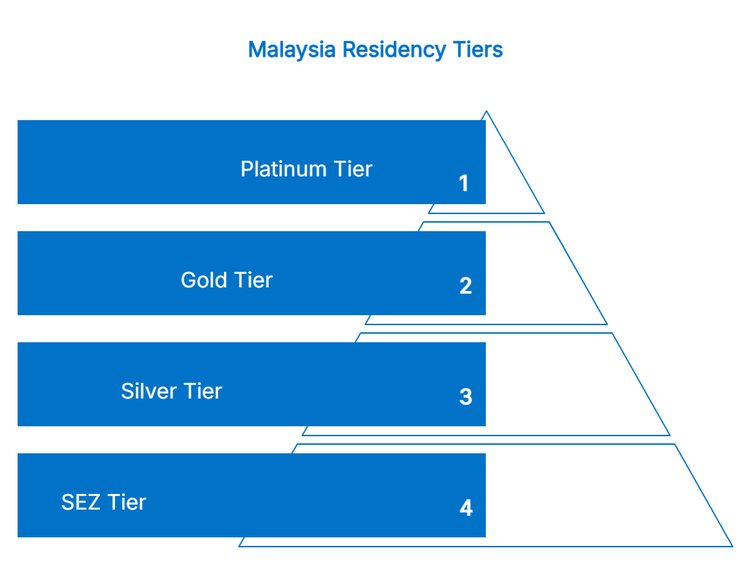
Silver Tier
- Fixed deposit of USD 150,000
- Minimum property purchase of RM600,000
- Visa duration of about ten years
- Limited privileges
Gold Tier
- Fixed deposit of USD 500,000
- Minimum property purchase of RM1,000,000
- Visa duration of about fifteen years
- Wider privileges, including business or work options, in some cases
Platinum Tier
- Fixed deposit of USD 1,000,000
- Minimum property purchase of RM2,000,000
- Visa duration of about twenty years
- Full range of privileges, including the ability to hire domestic help
Special Economic Zone (SEZ / SFZ Tier)
- Lower fixed deposit
- Property must be purchased within designated zones, such as Forest City
- Fewer privileges than the main tiers
These tiers reflect a move to attract long-term, higher-value participants who can commit financially and socially to Malaysia.
2. Property Purchase Is Now a Core Requirement
One of the biggest changes is the mandatory property purchase rule. Applicants in most tiers must buy a qualifying residential property within a set timeframe after their visa is approved.
The property must meet the minimum price required for its tier and the relevant state. Many applicants must also hold the property for at least ten years. Selling earlier usually requires upgrading to a higher-value home.
These rules ensure that participation in MM2H contributes to long-term residency rather than short-term investment.
3. Fixed Deposit Withdrawal and Ongoing Obligations
Participants can withdraw part of their fixed deposit after the first year for approved uses. These include property purchase, children’s education, and medical expenses. The remaining balance must stay in the account to maintain visa eligibility.
Applicants must also undergo medical checks and maintain medical insurance. These steps ensure participants can support themselves while living in Malaysia.
4. SEZ Pathway for Designated Zones
Some areas operate under a special MM2H structure. In these zones, applicants must purchase a property directly from a designated development. Requirements in these zones are less rigid than the main tiers, but privileges are narrower.
What Malaysians Should Know About MM2H in Today’s Market?
The updated programme directs foreign interest toward higher-value homes. It also reduces speculation, since applicants must commit to the country for many years through both residency and property ownership.
For Malaysian buyers, these safeguards mean foreign activity remains controlled and does not interfere with the lower or mid-market segments.
Projects Eligible for MM2H Applicants in 2026
These developments align with the typical price range, location preferences, and lifestyle expectations of MM2H participants. They offer strong long-term value, modern facilities, and better neighbourhood connectivity.
1. Papyrus North Kiara, Kuala Lumpur
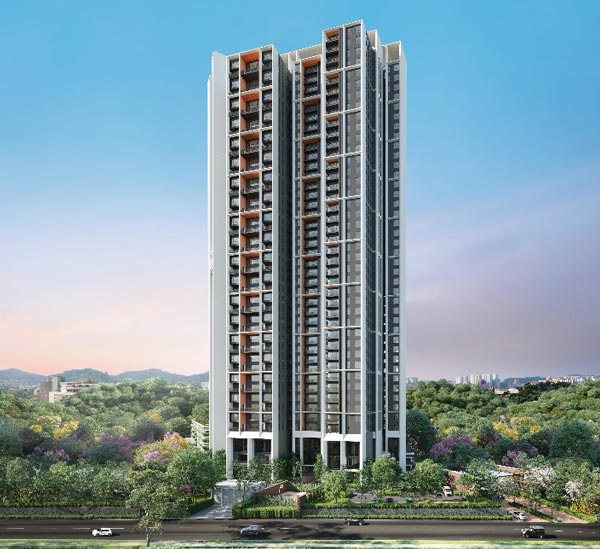
Scheduled for completion in 2028, Papyrus North Kiara is a freehold development surrounded by greenery and quiet residential pockets. It sits near Mont Kiara and Desa ParkCity, two of Kuala Lumpur’s most established townships for international communities.
Key Highlights:
- Project type: Condominium
- Completion year: 2028
- Developer: Yakin Land Sdn Bhd
- Unit layouts: 1,141 to 5,523 sq ft
- Price: Starting from RM868,000
- Unique selling points:
- Surrounded by landscaped areas and wellness-focused amenities
- Close to DUKE, Jalan Kuching, and Mont Kiara International School
- Designed for spacious living with larger-than-average unit layouts
Why It Works for MM2H:
A suitable choice for applicants who want privacy, space, and a nature-inspired environment close to KL.
2. Oxley Towers, KLCC

Oxley Towers is a mixed-use development in the KLCC Golden Triangle. It features residences, hotels, and retail components within a freehold address.
Key Highlights:
- Project type: Mixed-use development
- Completion year: 2025
- Developer: Oxley Holdings
- Unit layouts: 566 to 5,059 sq ft.
- Price range: RM 1,700,000 – RM 18,500,000
- Tenure: Freehold
- Unique selling points:
- A landmark tower in KL that reaches approximately 345 metres in height
- Positioned close to KLCC Park, Pavilion KL, and major city attractions
Why It Works for MM2H:
A strong match for high-tier applicants seeking a premium KLCC lifestyle and long-term capital appreciation.
3. Pavilion Square, Kuala Lumpur
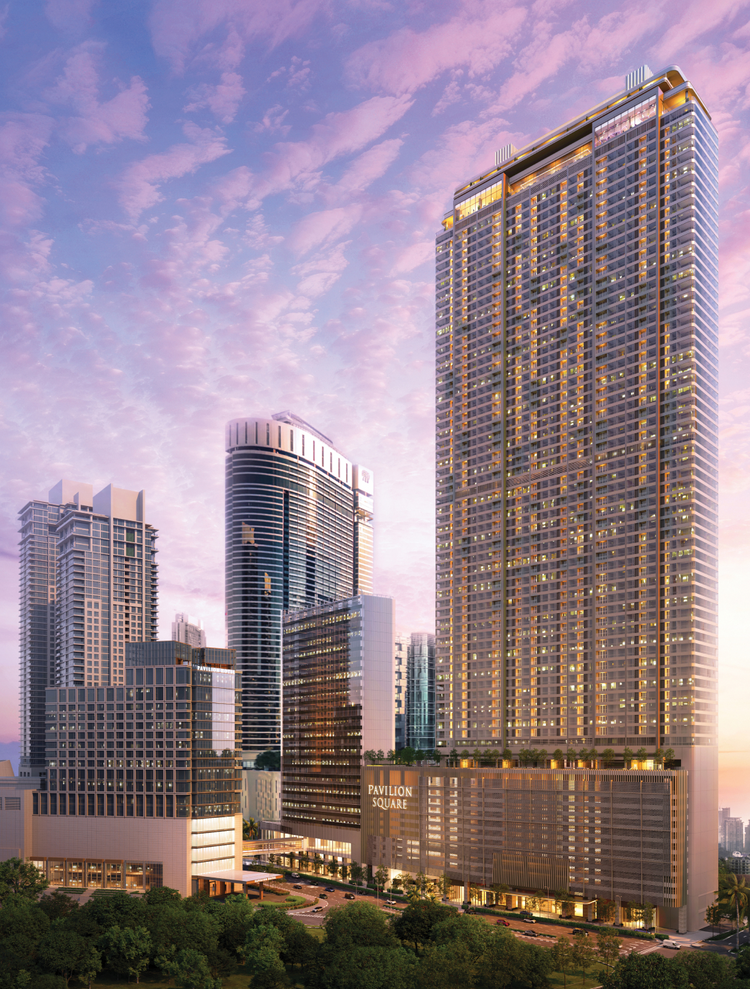
Pavilion Square is designed for modern urban living. Its location offers quick access to nearby malls, schools, business centres, and transport links.
Key Highlights:
- Project type: Service Residence
- Completion year: 2028-2029 (estimated)
- Developer: Pavilion Group
- Unit layouts: 504 sq ft – 1,255 sq ft
- Price range: RM 1,000,000 – RM 18,000,000
- Tenure: Leasehold
- Unique selling points:
- City-fringe location with strong connectivity
- Full suite of lifestyle amenities
- Attractive for long-stay residents who want convenience
Why It Works for MM2H:
A practical option that offers good accessibility without KLCC price premiums.
Check out the exclusive sales listing for Pavilion Square, Kuala Lumpur.
4. R&F Princess Cove, Johor Bahru

R&F Princess Cove is a large waterfront township located at the Johor–Singapore border. The development spans three phases, with completed units in Phases 1 and 2, and newly launched units in Phase 3. Its location near the CIQ and future RTS Link makes it highly strategic for long-stay foreign residents.
Key Highlights:
- Project type: Mixed-development
- Completion years:
- Phase 1: 2018
- Phase 2: 2023–2024
- Phase 3 (New Casa Suites): 2029 (expected)
- Developer: R&F Development
- Unit layouts: Studios to large family units across phases
- Tenure: Freehold
- Price range: RM 597,700 – RM 1.60 Million
- Unique selling points:
- 116-acre integrated waterfront township
- Includes R&F Mall, Marina Promenade, clubhouse facilities, and lifestyle areas
Why It Works for MM2H:
Its cross-border convenience and township scale make it suitable for long-stay residents seeking strong value and accessibility.
5. CloutHaus Residences, Kuala Lumpur

CloutHaus Residences offers modern city-centre living with easy access to retail, dining, and workplaces. It is suitable for those who prefer compact, efficient units in prime locations.
Key Highlights:
- Completion year: 2027 (expected)
- Developer: TA First Credit Sdn Bhd
- Unit layouts: 549 sq ft
- Tenure: Freehold
- Price: Starting from RM 1,500,000
- Unique selling points:
- Located within the KLCC vicinity
- Close to major shopping districts and business centres
Why It Works for MM2H:
A good choice for applicants who want a modern KL city home with strong rental demand.
Explore available units, pricing, and availability at CloutHaus Residences.Practical Tips for Buyers, Investors, and Joint Ownership Cases
Before taking the next step, keep these practical tips in mind:
1. Understand State Minimum Price Rules Clearly
Minimum purchase prices vary by state and apply even if only one owner is a foreigner. This can affect mixed-nationality couples or joint buyers.
What to check:
- Whether the selected unit meets the state’s minimum foreign purchase value
- Whether the property type is allowed for foreign ownership
- Whether the state has special restrictions, such as landed titles, in Selangor
This avoids approval delays and ensures the transaction qualifies at the state level.
2. Plan for Higher Transaction Costs in 2026
Foreign purchasers now pay an eight percent stamp duty on residential property transfers. This increases the upfront cost for both individual buyers and purchasers of mixed-ownership properties.
Important considerations:
- Budget for legal fees, valuation fees, and loan-related costs
- Understand that stamp duty applies regardless of whether the property is a subsale or a new launch
- Check for any upcoming policy changes affecting foreign buying segments
A complete cost overview helps avoid unexpected financial strain.
3. For Investors: Understand Rental Demand and Compliance Needs
Foreign investors often target high-demand rental areas in Kuala Lumpur, Johor, and Penang. Malaysians may worry about foreign competition, but most foreign activity is limited to higher-value segments.
Before investing, review:
- Local rental demand and tenant profiles
- Short-term rental policies (some buildings restrict Airbnb use)
- Management fees, sinking funds, and ongoing costs
- Prospects for capital appreciation in each neighbourhood
Proper due diligence ensures the investment remains sustainable.
4. Joint Ownership Between Malaysians and Foreigners
Joint ownership is common among married couples or business partners. However, the rules follow the status of the foreign owner, not the Malaysian owner.
What this means:
- The minimum purchase price must meet foreign buyer thresholds
- State approval is required even if one owner is Malaysian
- Stamp duty for the foreign buyer applies proportionately to their share
- Loan eligibility differs, depending on income source and bank requirements
Understanding these rules prevents unexpected complications during the purchase and approval process.
5. Verify Financing Options Early
Foreigners face tighter lending requirements. Banks may offer lower loan margins or require stronger income proof.
Simple steps:
- Check loan eligibility before signing any agreement
- Compare loan margins offered to non-citizens
- Prepare income documents early, especially if overseas-based
- Always maintain a buffer for currency fluctuations
Early planning keeps the process smooth and avoids last-minute issues.
6. For MM2H Applicants: Choose Long-Term Suitable Projects
MM2H now has clearer property thresholds tied to each tier. In most cases, buyers must hold the property for long periods.
Before selecting a development:
- Ensure the property price meets your MM2H tier requirement
- Check whether the unit must be held for ten years
- Review the developer’s reputation and the project timeline
- Choose locations with strong daily convenience and lifestyle appeal
This makes long-term living more comfortable and predictable.
7. Avoid Relying Solely on Asking Prices
Listings often show asking prices that may not reflect final closing prices.
Always check:
- Recent transacted values
- Subsale trends in the neighbourhood
- Market reports from reliable platforms
- Valuation advice from qualified professionals
This helps buyers and investors make realistic decisions.
These simple checks help buyers and investors make more confident property decisions in today’s market.
Check verified transacted prices to understand the actual market value.Wondering What Your Next Step Should Be as a Foreign Property Buyer in Malaysia?
Buying property in Malaysia in 2026 comes with clearer rules and more defined processes. The updated MM2H tiers, higher stamp duty, and state-level minimum price requirements are designed to guide foreign participation in a more structured way. These changes help you understand what you can buy, what it will cost, and how to plan your long-term stay with more confidence.
Want clearer updates on Malaysia’s property market? Visit iProperty’s guides section.
Discover new launches and top projects near you.