
Learn what rental yield is, how to calculate gross and net yield, and what counts as a good return in Malaysia (5.19% average in Q3 2025). Compare locations, understand key risk factors, and discover practical ways to maximise rental income and long-term investment performance.

Are you looking to boost your rental income in Malaysia? Understanding rental yield is key to making informed property investment decisions.
In 2026, the rental market is evolving, with factors like location, property type, and market demand playing a huge role in determining returns. Whether you’re a first-time investor or a seasoned landlord, knowing how to calculate rental yield accurately can help you maximise profits.
In this guide, we’ll walk you through the basics of rental yield, what makes a good yield, and how you can use it to assess investment opportunities. You’ll also get updated insights into Malaysia’s rental trends so that you can make the right moves in a changing market.
What is Rental Yield?
Rental yield is a key metric for property investors. It shows how much income a property generates in relation to its value. Simply put, it’s a way to measure your return on investment (ROI) from rental income. For those looking to make smart decisions, understanding rental yield is crucial.
There are two types of rental yield you should know about: gross rental yield and net rental yield. Both offer different insights into a property’s performance.
Gross Rental Yield
Gross rental yield is the simplest way to calculate rental yield. It measures the annual rental income as a percentage of the property’s value or purchase price. Here’s the formula:
Gross Rental Yield = (Annual Rent ÷ Property Value) × 100
For example, if you buy a property for RM 500,000 and rent it out for RM 3,000 a month, your annual rent would be RM 36,000. The gross rental yield would be:
(36,000 ÷ 500,000) × 100 = 7.2%
This gives you a quick estimate of your rental return, but it doesn’t account for expenses such as maintenance or property management fees.
Net Rental Yield
Net rental yield is a more accurate reflection of the property’s profitability. It takes into account the costs associated with owning the property, such as:
- Maintenance and repairs
- Property management fees
- Insurance
- Taxes
- Vacancy periods
The formula for net rental yield is:
Net Rental Yield = ((Annual Rent – Annual Expenses) ÷ Property Value) × 100
This gives a clearer picture of the actual income you’ll earn after expenses. For example, if your annual expenses are RM 5,000, your net rental yield would be:
(36,000 – 5,000) ÷ 500,000 × 100 = 6.2%
Understanding both gross and net rental yields helps you better grasp how well a property is performing financially.
How Rental Yield Helps You Compare Properties?
One of the main benefits of calculating rental yield is that it allows you to easily compare different properties.
For instance, if you’re choosing between two apartments, one in a central area and another in a suburban location, comparing their rental yields can help you understand which one offers better return potential.
This comparison goes beyond the property price alone and gives you a clearer picture of how the property will perform financially.
1. Rental Yield as a Risk Indicator
While high rental yields can seem attractive, they can also be a red flag if they seem too good to be true. In some cases, higher yields may come with risks like higher vacancies, tenant turnover, or higher maintenance costs.
By calculating rental yield, investors can assess whether the income being generated is realistic for the area and property type. A balanced, sustainable rental yield typically indicates a lower-risk investment.
2. Monitoring Rental Yield Over Time
Rental yield is not static; it can change due to market shifts, rent increases, or changes in property values. Regularly monitoring rental yield can help you stay on top of your investment’s performance.
For example, if rental yields drop, it may indicate a need for improvements, such as property upgrades or better marketing to attract tenants. By tracking yield, you can make informed decisions on whether to hold, sell, or reinvest in the property.
3. Maximising Rental Yield with Strategic Property Management
Effective property management plays a significant role in boosting rental yield. Good management ensures that vacancies are minimised, tenants are reliable, and maintenance costs are controlled.
By investing in professional property management or implementing a clear maintenance schedule, you can maximise your rental income while reducing costly downtime between tenancies.
What’s a Good Rental Yield in Malaysia?
Knowing what constitutes a good rental yield in Malaysia can be tricky, as it depends on several factors such as property type, location, and market conditions. However, having a benchmark can help you assess whether an investment property is likely to be profitable.
Typical Rental Yields in Malaysia
In general, a rental yield of around 4% to 5% is considered decent for properties in prime areas like Kuala Lumpur, where property prices are higher, but so is demand. These yields are often seen in established neighbourhoods close to business districts, transport hubs, and amenities.
The average gross rental yield in Malaysia currently stands at 5.19% (Q3, 2025). This is a slight increase from 5.10% in Q1, 2025, showing a gradual improvement in rental returns despite fluctuating market conditions.
However, higher yields, sometimes reaching 6% to 8%, can be found in less central areas, smaller units, or emerging neighborhoods where property prices are lower, but rental demand remains strong.
Areas such as Penang, Johor Bahru, and Melaka may offer higher yields as the cost of property is lower, while the demand for rental properties remains stable.
Rental Yields by Property Type and Location
To give you a clearer picture, here’s a breakdown of typical rental yields in Malaysia by property type and location:
| Location | Typical Yield | Property Type | Remarks |
| Kuala Lumpur | 4% to 5% | High-rise Condos, Apartments | Higher property prices with strong rental demand in business areas. |
| Petaling Jaya | 4% to 5% | Apartments, High-rise Condos | Established area with a mix of commercial and residential demand. |
| Bangsar | 4% to 5% | Condominiums, Apartments | Central area, strong demand, but higher property prices. |
| Johor Bahru | 5% to 6.5% | Apartments, Condos | Lower property prices with stable rental demand, especially near Singapore. |
| Penang | 4.5% to 6% | Apartments, Studios | Tourist and business-driven demand with more affordable prices. |
| Melaka | 5% to 6% | Apartments, Landed Homes | Strong demand from students, tourists, and businesses. |
| Kajang, Setapak, Rawang | 6% to 8% | Smaller Units, Apartments, Landed Homes | Higher yields in suburban or emerging locations due to affordability. |
How Property Type Affects Rental Yield
Different types of properties can provide varying rental yields. For example:
- High-rise condominiums in central business districts (CBDs) may provide lower rental yields due to their higher purchase prices but benefit from higher demand.
- Landed homes or properties in suburban areas might offer higher yields since they are generally more affordable but can attract long-term tenants who appreciate more space.
What to Look for When Assessing Rental Yield?
When looking to calculate rental yield, always consider the following:
- Property price: Higher property prices may lower your yield unless rents can keep up with the cost.
- Market conditions: Economic trends and demand fluctuations can significantly affect the yield.
- Tenant demand: Properties in high-demand areas, like near universities, MRT stations, or shopping malls, can yield more consistent returns.
The key to making an informed decision is to calculate rental yield accurately and evaluate the potential for both short-term returns and long-term capital growth.
View real-time property transaction prices across Malaysia.Key Factors That Affect Rental Yield
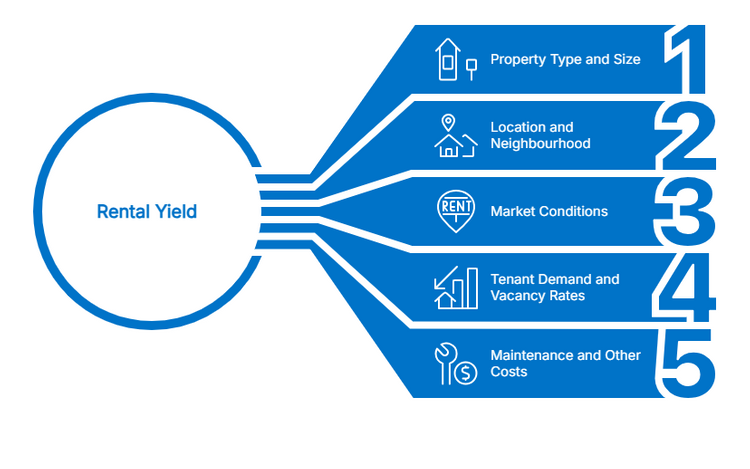
When it comes to rental yield, several factors influence the final numbers you see. It’s not just about how much rent you can charge versus the purchase price; the property’s condition, its location, and the broader economic environment all play a role. Let’s break down the key factors that can impact your rental yield.
1. Property Type and Size
- Smaller properties such as studio apartments or one-bedroom flats tend to yield higher returns, especially in high-demand rental markets. Their lower purchase prices relative to rent make them more attractive for investors seeking better returns.
- Larger properties, like luxury homes or landed properties, generally offer lower yields. Although they tend to generate higher rental income, their purchase prices are much higher, resulting in a lower rent-to-price ratio.
- For example, a luxury home in Kuala Lumpur might generate significant rental income, but it will require a larger investment to buy, which ultimately lowers the rental yield.
2. Location and Neighbourhood
- Location is crucial when evaluating rental yield. Areas with high tenant demand typically yield better returns. Properties near MRT stations, shopping malls, or business districts tend to attract professionals who are willing to pay a premium for convenience.
- In contrast, suburban areas or emerging neighbourhoods may offer higher rental yields because property prices are lower, but they may experience lower demand and higher vacancy rates.
- For instance, while Kuala Lumpur city centre might have lower yields due to high property prices, areas further out, like Kajang or Setapak, could offer better yields because prices are more affordable.
Market Conditions
- The broader property market plays a significant role in determining rental yield. During times of economic uncertainty or downturns, rents may not increase as expected, and property values may stagnate or even decline.
- On the other hand, during periods of economic growth, rental demand could rise, driving up both rents and property values. Being aware of current and forecasted market conditions can help you better predict rental yield trends.
Tenant Demand and Vacancy Rates
- Tenant demand is a critical factor affecting your rental yield. Properties located near key amenities, such as schools, offices, or public transport, are likely to experience higher occupancy rates, leading to more consistent rental income.
- Vacancy rates, on the other hand, can drastically reduce your rental yield. Even if a property has a high rental rate, if it’s left vacant for extended periods, the overall yield will drop.
- By ensuring your properties are well-maintained and offering amenities that attract long-term tenants, you can reduce vacancy risks and protect your rental yield.
Maintenance and Other Costs
- While gross rental yield gives a quick estimate, net rental yield tells the real story. Costs such as maintenance, property taxes, management fees, and other recurring expenses can significantly erode your rental income.
- For example, if you have to spend RM 5,000 annually on repairs and maintenance, your net rental yield will be lower than the gross yield. Proper property management is essential to ensure your property remains in good condition and your yield isn’t affected by avoidable costs.
- Having a clear maintenance plan and budgeting for unexpected repairs can help you protect your rental yield.
By carefully evaluating these elements, you can make better investment decisions and ensure a profitable return. Always assess both gross and net yield for accurate insights.
How to Maximise Your Rental Yield in Malaysia?
Maximising rental yield is essential for property investors who want to increase returns. Here are some practical ways to optimise your rental yield.
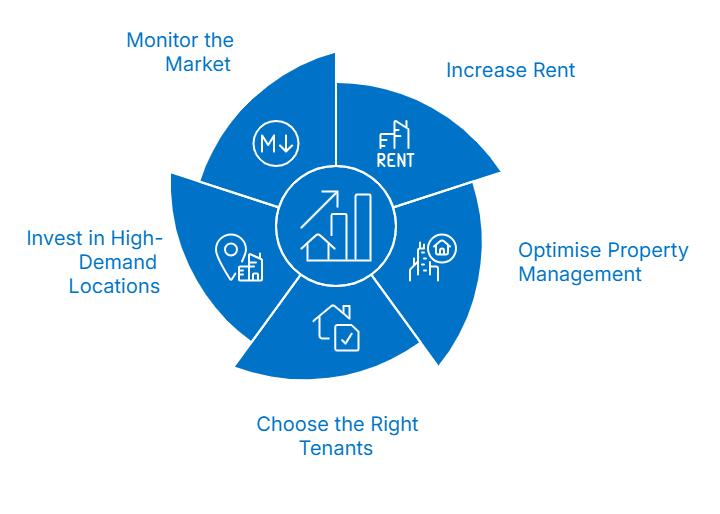
1. Increase Rent Without Losing Tenants
Minor upgrades, such as fresh paint, new fixtures, or furnishing your property, can justify a higher rent. Regularly review market rates and make small rent increases as needed, while keeping your tenants satisfied.
2. Optimise Property Management
Hire a property management company to ensure the property is well-maintained and tenants are reliable. Regular maintenance can also prevent expensive repairs and reduce vacancy periods, thus protecting your net rental yield.
3. Choosing the Right Tenants
Screen tenants carefully to find reliable individuals who will pay rent on time and care for your property. Long-term tenants reduce turnover costs and maintain consistent rental income.
4. Invest in High-Demand Locations
Properties near key amenities, such as MRT stations or business hubs, tend to have higher demand. Emerging areas may offer higher yields due to lower initial property costs, but rents are likely to rise as they develop.
5. Keep an Eye on the Market
Monitor market conditions, interest rates, and supply/demand trends. These factors can affect your rental yield, so staying informed helps you adjust your strategy accordingly.
By carefully considering these factors and making strategic decisions, you can effectively maximise your rental yield and enhance the profitability of your property investment in Malaysia.
Ready to Maximise Your Rental Yield?
If you’re looking to optimise your rental yield in Malaysia, now is the perfect time to put these insights into action. By understanding the factors that affect rental yield and following the strategies to maximise it, you can make smarter property investment decisions that lead to better returns.
Still on the lookout for high-yield properties? Check out the latest rental listings in Malaysia.
For more property tips, guides, and the latest market trends, explore our Property Guides section.
Disclaimer: The information is provided for general information only. iProperty.com Malaysia Sdn Bhd makes no representations or warranties in relation to the information, including but not limited to any representation or warranty as to the fitness for any particular purpose of the information to the fullest extent permitted by law. While every effort has been made to ensure that the information provided in this article is accurate, reliable, and complete as of the time of writing, the information provided in this article should not be relied upon to make any financial, investment, real estate or legal decisions. Additionally, the information should not substitute advice from a trained professional who can take into account your personal facts and circumstances, and we accept no liability if you use the information to form decisions.