
Water leak in condo in Malaysia is one of the fastest ways a neighbour issue turns into a legal and repair headache. This 2026 guide explains inter floor leakage, how the Form 28 Strata Management Act process works, who pays based on where the leak starts, and what owners, tenants, and management should do to fix it quickly and prevent repeat damage.
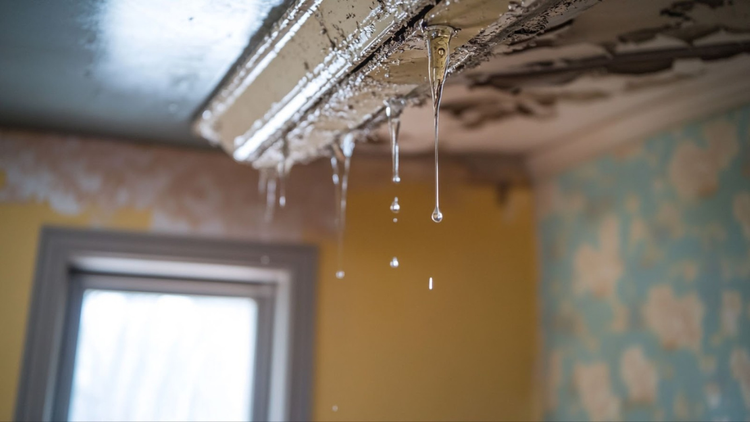
Water leakage between units is one of the most common disputes in high-rise living, and thousands of Malaysian property owners report the issue every year. Whether you are a tenant, owner, Joint Management Body, Management Corporation or developer, knowing how the Form 28 Strata Management Act works can save time, disputes and costly repair bills.
With inter floor leakage cases continuing to rise in Malaysian stratified buildings, proper legal understanding and good maintenance strategies are now more important than ever.
This guide explains exactly what you need to do and who is responsible when a water leak occurs in a strata unit.
What is Inter Floor Leakage in a Strata Building?
In Malaysian strata regulation, inter floor leakage is defined as water penetration, dampness or moisture appearing on the ceiling or interior surfaces of a parcel or common property caused by leaking pipes, fittings, waterproofing failure or structural defects.
Typical signs include:
- Dripping from the ceiling
- Yellow or brown stains
- Damp walls or peeling paint
- Swollen timber flooring
- Musty smell or mould growth
Under the Strata Management Regulations 2015, building management or the affected owner is required to take action once these signs appear, especially if the problem affects another parcel below.
Legal Framework: How the Form 28 Strata Management Act Works
Malaysia provides a clear legal structure for resolving leaking issues in multi-storey buildings. The procedures are governed by:
- Strata Management Act 2013 (SMA)
- Strata Management (Maintenance & Management) Regulations 2015 (form 28 strata management act procedures)
Under this legal framework:
- Affected parties can file a formal report.
- The building manager must investigate.
- A Form 28 Certificate of Inspection must be issued.
- Repairs must be carried out by the responsible party.
The Form 28 Strata Management Act process ensures fairness by requiring professional assessment and time-bound corrective action.
Who Is Responsible for Inter-Floor Leakage?
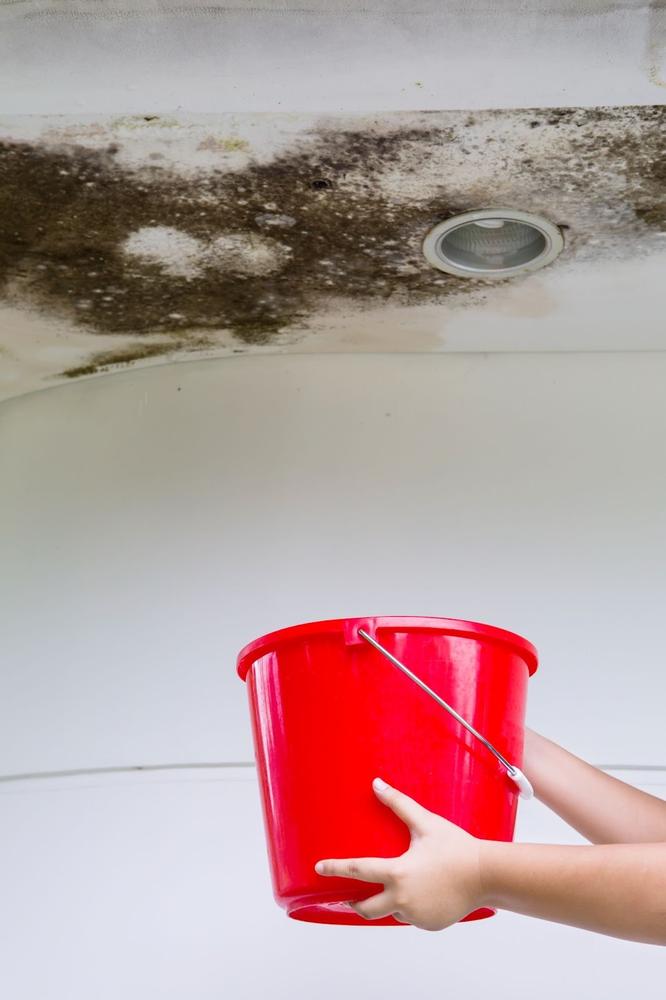
When a water leak occurs in a strata unit, determining who is liable can be complex. Responsibility depends on three factors:
1. Within the Defect Liability Period (DLP)
If the building is still under the DLP (typically 24 months from vacant possession), the developer must fix inter floor leakage, including consequential damage.
2. After DLP: Fault From Upper Unit
If the leak originates from the unit above, the upstairs owner is presumed responsible unless evidence shows otherwise. This may include:
- Burst pipes
- Faulty fittings
- Renovation damage
- Failed waterproofing in bathrooms
3. Defects From Common Property
If the leak originates from utilities used by more than one unit (e.g. riser pipes, fire suppression pipes, roof slabs), the Joint Management Body (JMB) or Management Corporation (MC) must handle repairs.
The burden of proof and decision will ultimately be outlined in Form 28 of the Strata Management Act Certificate of Inspection.
What To Do When You Notice Water Leakage?
If water leakage appears:
- Take clear photos or videos.
- Notify building management immediately.
- Submit a written complaint if possible.
- Keep records of all communication.
Once notified, the management must initiate the investigation process with urgency, especially since mould and structural damage worsen quickly.
SOP for Building Management under the Form 28 Strata Management Act
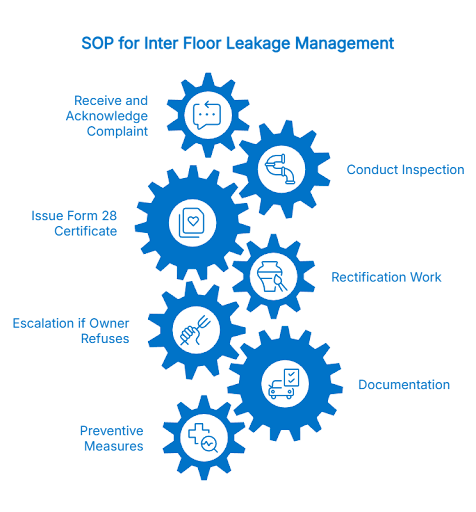
Under the Form 28 rules of the Strata Management Act 2013 and related regulations, building managers, Joint Management Bodies (JMBs), Management Corporations (MCs), or developers must follow a clear and timely process when handling inter-floor leakage complaints. The SOP ensures fairness, legal compliance, and timely rectification.
Step 1: Receive and Acknowledge Complaint
- The complaint must be in writing (email, letter, or form).
- Acknowledge within 24–48 hours.
- Record details: unit, description, photos/videos.
Step 2: Conduct Inspection Within 7 Days
- Inspect the complainant unit, the suspected upstairs unit, and the relevant utilities.
- Identify cause, source parcel, responsible party, and urgency.
- Emergency access allowed if there is a risk of flooding or ceiling collapse (with witnesses).
Step 3: Issue Form 28 Certificate
- Send the certificate to the complainant and the responsible owner within 7 days.
- Include source, responsible party, rectification steps, and timeline.
- Send a duplicate to the Commissioner of Buildings (COB).
Step 4: Rectification Work
- The responsible party must repair within 7 days.
- Management may step in if the owner delays and charge the cost.
Step 5: Escalation if Owner Refuses
- Refer the dispute to COB for professional assessment.
- Appoint an architect, engineer, or surveyor if needed.
- Escalate the matter to the Strata Management Tribunal (SMT) in case of non-compliance.
Step 6: Documentation
- Keep records of inspections, notices, and repairs.
- Maintain the Form 28 complaint register for transparency.
Step 7: Preventive Measures
- Root cause analysis after rectification.
- Inspect adjacent units and plumbing regularly.
- Educate residents on early leak detection.
Effective management of inter floor leakage under the Form 28 Strata Management Act safeguards both property and residents. Prompt action, clear documentation, and cooperation between owners and management are key to preventing costly damage and disputes.
Find homes for sale in MalaysiaIssuing the Certificate of Inspection: Form 28 Strata Management Act
After the inspection is carried out, the next step is to record the cause of the leak officially. This is where Form 28 comes in, the certificate used to confirm the findings.
Step 1: Issue Form 28
Within 7 days, management must issue the Form 28 Strata Management Act Certificate of Inspection, detailing:
- Cause of leakage
- Responsible party
- Required rectification steps
- Timeline for repairs
Step 2: Send Duplicate to COB
A copy must also be submitted to the Commissioner of Buildings (COB) for the record.
Step 3: Owner Must Take Action
The responsible owner must begin repair work within 7 days. Failure to do so allows the management to:
- Carry out repairs directly
- Invoice the responsible owner
- Take action for the unpaid costs
This ensures that delays do not lead to worsening structural or health damage.
If The At-Fault Owner Refuses To Rectify the Problem
If the owner disagrees with the findings of Form 28 Strata Management Act, or refuses to pay for repairs:
- The matter can be escalated to the COB.
- COB may appoint a professional assessor, such as:
- Architect
- Professional engineer
- Building surveyor
- Quantity surveyor
Costs of this independent assessment will be charged to the responsible owner once confirmed.
If the owner still refuses to comply, the case may be escalated to the Strata Management Tribunal (SMT), which can issue legally binding orders.
Can the Management Cut Off the Water Supply?

Alt text: Service maintenance worker repairing
No. Under the Act, management cannot terminate the water supply as punishment. However, if a temporary shut-off is required for leak control:
- Limited supply must still be provided.
- The shut-off must be strictly temporary.
- Restoration must follow immediately after repairs.
This prevents water disruption from being used as a means of force or retaliation.
View property guides for smarter investments.Common Causes of Inter Floor Leakage in Malaysian Buildings
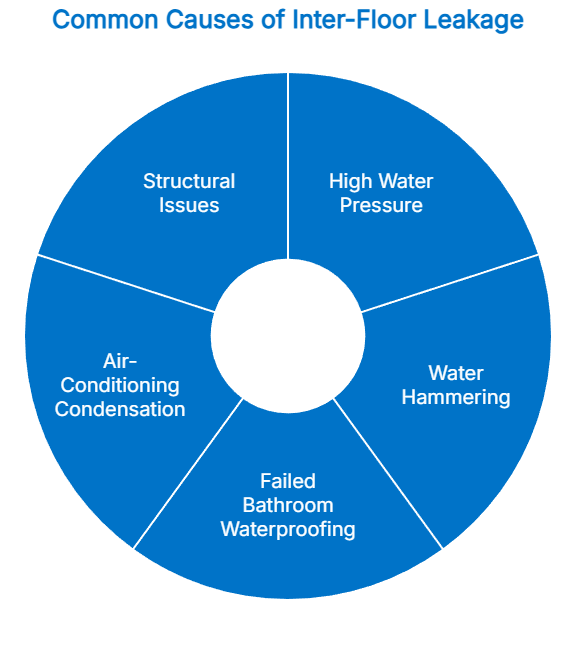
Inter floor leakage is a common issue in Malaysian strata buildings, often causing property damage and disputes between neighbours. Understanding the typical causes helps owners and management take preventive action and protect their units.
1. High Water Pressure and Pipe Bursts
Ageing infrastructure, poor maintenance, and inadequate pressure regulation are among the main causes of inter floor leakage. High water pressure can lead to:
- Plastic pipes splitting
- Metal pipes corroding
- Poorly installed fittings failing
According to Suruhanjaya Perkhidmatan Air Negara (SPAN) standards, safe water pressure for residential units is a minimum of 10 metres head (0.98 bar) at the parcel meter, and 10.5 metres head (1.03 bar) for flush valves.
Any pipeline with a pressure exceeding 30 metres head should be equipped with a pressure-reducing valve (PRV) to prevent pipe bursts and leaks.
2. Water Hammering
Sudden changes in water flow can cause pressure spikes that damage the internal walls of pipes. Installing water hammer arrestors can significantly reduce this risk. Regular monitoring of water pressure and timely maintenance of valves further helps prevent pipe bursts and leaks.
3. Failed Bathroom Waterproofing
This is one of the leading causes of inter-floor leakage and usually occurs:
- Three to eight years after construction
- When grout, tiles or membranes fail
- After low-quality renovation work
4. Air-Conditioning Condensation
Poorly insulated AC pipes or thermal bridges can create:
- Constant drips
- Wet ceilings
- Mould formation
5. Structural Issues
Structural issues are another common cause of inter-floor leakage, including:
- Roof slab leakage
- Cracked external walls
- Failed window sealant
Left untreated, these can progress into major structural risks.
Understanding the common causes of inter floor leakage helps owners and management take timely preventive measures. Regular maintenance, proper installation, and prompt repairs are key to minimising damage and ensuring building safety.
How to Prevent Water Leaks in Strata Properties
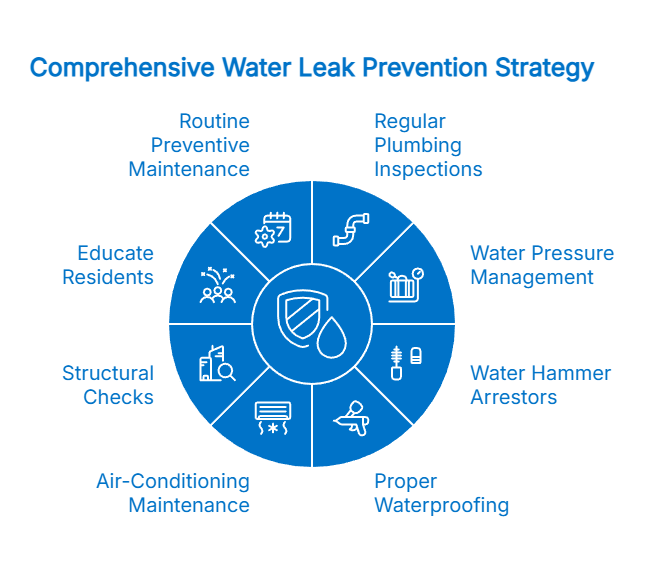
While prevention ideally begins during the construction stage, effective maintenance and proactive management can significantly reduce the risk of inter floor leakage. Key measures include:
- Regular Plumbing Inspections: Check water pipes, risers, and valves periodically for signs of wear, corrosion, or leaks.
- Water Pressure Management: Maintain safe water pressure levels and install pressure-reducing valves (PRVs) wherever necessary.
- Install Water Hammer Arrestors: Reduce sudden pressure spikes that can damage pipes.
- Proper Waterproofing: Ensure bathrooms, kitchens, and wet areas have intact membranes, grout, and sealant.
- Air-Conditioning Maintenance: Insulate AC pipes properly to prevent condensation and damp ceilings.
- Structural Checks: Inspect roofs, external walls, and window sealants to prevent water ingress.
- Educate Residents: Encourage prompt reporting of leaks or damp spots to management.
- Routine Preventive Maintenance: Schedule regular maintenance checks for both common property and individual units.
Proactive maintenance and early detection are key to preventing inter floor leakage. A well-managed inspection and repair routine helps protect both the property and the residents’ well-being.
Recommended 2026 Maintenance Practices
Implementing regular maintenance practices is essential for preventing inter floor leakage and ensuring the longevity of plumbing and building systems. These measures help identify potential issues before they escalate into costly repairs.
1. Annual Water Pressure Assessment
Joint Management Bodies (JMBs) should:
- Test pressure at key points
- Monitor irregular spikes
- Replace worn valves
2. Scheduled Pipe Lifespan Planning
All plumbing materials have service life limitations. Regular upgrading avoids sudden system-wide failures.
3. Improve Pipe Joint Quality
Use corrosion-resistant materials with strong joining methods, such as:
- Threaded steel
- Hot air fusion plastic piping
4. Ventilation in Pump and Water Tank Rooms
Poor airflow accelerates corrosion from chlorine or moisture gases, weakening fittings prematurely. Ensuring proper ventilation helps prolong the lifespan of pipes and prevents costly inter-floor leakage repairs.
5. Waterproofing Audits Every 2–3 Years
Routine inspections can detect early warning signs, such as:
- Hollow tiles
- Loose grout
- Damp patches
Catch failure early, and rectification becomes inexpensive.
Adopting consistent maintenance practices helps building management prevent inter-floor leaks, reduce long-term repair costs, and extend the lifespan of critical plumbing systems. With proactive monitoring, strata properties can maintain safety, comfort, and asset value for all residents.
View the latest property launches in Malaysia.Why You Must Take Inter-Floor Leakage Seriously
1. Health Hazards: Mould & Air Quality
Dampness promotes mould growth, and mould releases:
- Mycotoxins
- Spores
- Volatile organic compounds (VOCs)
These can cause:
- Respiratory issues
- Frequent flu-like symptoms
- Allergies
- Poor indoor air quality
In multi-unit buildings, mould contamination often spreads quickly through ceilings, walls, and HVAC (Heating, Ventilation, and Air Conditioning) systems.
2. Structural Consequences
Water accelerates oxidation of metals, corrosion of reinforcement bars and degradation of concrete. If ignored long enough, inter floor leakage may lead to:
- Ceiling collapse
- Concrete spalling
- Structural weakening
- Damage to finishes, cabinets and flooring
This is why the Form 28 Strata Management Act procedure is designed to enforce timely repairs and minimise long-term deterioration.
iProperty Tips for Property Owners
Clear roles and responsibilities help prevent disputes and ensure the timely resolution of inter floor leakage issues. Understanding what to do as a resident or as part of management is crucial to achieving effective outcomes.
1. If You are in the Affected Unit
- Document everything
- File immediately through management
- Do not attempt repairs before inspection
- Follow up on Form 28 Strata Management Act deadlines
2. If You are in the Upper Unit
- Cooperate with inspectors
- Provide access promptly
- Fix identified issues within 7 days
- Keep receipts and completion reports
3. If You are Part of Management
- Follow statutory timelines
- Provide transparent communication
- Enforce the SOP consistently
- Escalate non-cooperation to COB and SMT
By documenting, cooperating, and adhering to the Form 28 Strata Management Act procedures, all parties can minimise damage, maintain harmony, and ensure the building remains safe and well-maintained.
What You Should Do Moving Forward
Living in a strata property offers convenience, security and shared amenities, but the shared nature of building systems means disputes are inevitable, especially involving inter floor leakage.
With the proper understanding of the Form 28 Strata Management Act, owners and managers can:
- Resolve issues fairly
- Reduce conflict
- Prevent escalating repair costs
- Maintain building value and safety
If caught early, water leakage is manageable. Left untreated, it can become expensive, health-damaging and structurally serious.
Learn your borrowing capacity and get prepared for a smooth mortgage application. Use the Home Loan Eligibility Calculator on iProperty.