
Rental SST Malaysia became a major cost and compliance consideration after the Malaysian Government expanded the Service Tax to cover commercial leasing from 1st July 2025. If you rent out office, retail, or industrial space, you may now need to charge 8% SST, depending on your registration status and annual rental revenue. This guide explains what is taxable, what stays exempt, key thresholds, transitional relief for older contracts, and what landlords and tenants should do now to avoid disputes and penalties.

Rental SST Malaysia has become a crucial topic for landlords, tenants, and property investors following the Malaysian Government’s expansion of the Service Tax (SST) to cover commercial leasing from 1 July 2025. Previously, most rental and leasing services were exempt from SST, but the revised regulations now require certain commercial landlords and lessors to charge 8% SST on applicable leases.
This article aims to provide a detailed, up-to-date guide on rental SST Malaysia, including what services are taxable, exemptions, registration thresholds, transitional rules, compliance obligations, and practical implications for both landlords and tenants.
By understanding these rules, property stakeholders can make informed leasing decisions, manage costs effectively, and ensure full compliance with Malaysia’s SST framework.
Overview: Rental SST Malaysia
Before diving into the specifics of rental SST Malaysia, it is important to understand the broader context of the Service Tax expansion. The Malaysian Government has historically imposed SST on certain goods and services, but many commercial leasing arrangements were previously exempt. With the July 2025 expansion, landlords and tenants are now required to account for 8% SST on a wide range of commercial leases.
This update affects various stakeholders, including:
- Landlords: Must reassess lease agreements, pricing strategies, and SST registration requirements.
- Tenants: Need to understand additional costs, negotiate payment responsibilities, and determine eligibility for exemptions.
- Investors: Should factor SST into yield and return calculations for commercial properties.
- Property Managers & Agents: Required to update invoicing systems, ensure compliance, and advise clients accurately.
Understanding the scope, exemptions, and practical implications of rental SST in Malaysia is essential for making informed decisions in Malaysia’s commercial real estate market.
Why SST Expansion Matters?
The expansion of SST to include commercial leasing is part of the Malaysian Government’s broader fiscal strategy. By extending the 8% service tax to previously exempt services, the Government aims to:
- Broaden the tax base and enhance revenue collection for infrastructure and public services.
- Encourage transparency in commercial leasing agreements.
- Ensure businesses contribute fairly to the taxation system while maintaining economic sustainability.
Before 1 July 2025, commercial leases were largely exempt from SST, which often led to inconsistencies in how businesses accounted for tax. The updated regulations under the Service Tax Regulations 2018 (Group K: Rental & Leasing) now standardised the treatment of rental services, providing clarity for landlords, tenants, and property managers.
What Rental SST Malaysia Covers

Understanding what constitutes rental SST Malaysia is essential for compliance. The expanded SST applies to a variety of commercial leasing services.
1. Taxable Rental & Leasing Services
The following services are generally subject to 8% SST:
- Commercial property rentals, including offices, retail outlets, industrial spaces, and warehouses.
- Equipment and machinery leases used in commercial operations.
- Vehicles for business use, such as hire cars, vans, and buses.
- Bundled services, including property maintenance included in the rental package.
2. Examples Relevant to Property Readers
To make the implications of rental SST Malaysia more concrete, consider these examples:
- An office space leased by a multinational company in Kuala Lumpur is subject to 8% SST if the landlord’s annual revenue exceeds RM1 million.
- Retail shops within shopping malls must incorporate SST into the rent charged to tenants.
- Industrial warehouses rented by logistics firms or manufacturers are taxed under the same SST framework.
- Short-term commercial spaces such as co-working offices or pop-up retail units are also liable for SST.
These examples illustrate that landlords and tenants across Malaysia’s commercial real estate sector must carefully assess their SST obligations.
What Is Not Taxable: Rental SST Malaysia
While rental SST Malaysia applies to most commercial leasing services, certain leases remain exempt. Knowing these exemptions is crucial to avoiding overcharging tenants or miscalculating obligations. Key exemptions include:
- Residential Property Rentals: Condominiums, serviced apartments, and landed houses remain exempt.
- Assets Outside Malaysia: Rentals of properties or equipment located overseas are not taxed.
- Financial Leases: Leases where ownership transfers to the lessee at the end of the contract.
- Special Exemptions: Certain aircraft, ships, and government or local authority leases under RMCD guidelines.
Understanding these exclusions allows landlords, tenants, and property investors to accurately calculate costs and avoid unnecessary SST charges. Additionally, being aware of exemptions helps in negotiating leases, particularly when tenants may qualify for SME exemptions or transitional relief under the Government’s updated regulations.
Find your dream home from new launchesSST Registration & Thresholds
Businesses providing rental or leasing services are required to register for SST if their annual revenue from such services exceeds RM1 million. Proper registration ensures compliance with the Malaysian Government’s updated tax framework and avoids unexpected liabilities.
Key points include:
- Rate: 8% applied to all taxable commercial leases.
- Threshold: RM1 million annual rental revenue triggers mandatory registration.
- Responsibility: Registered landlords must collect SST from tenants and remit it to the Royal Malaysian Customs Department (RMCD).
- Revenue Tracking: Landlords should maintain separate accounts for rental income to ensure accurate SST reporting.
Adhering to these rules helps landlords manage tax obligations effectively and maintain transparent leasing operations while avoiding penalties or interest charges. It also ensures that both landlords and tenants have clarity on their financial commitments under the SST framework.
Transitional Rules & Exemptions: Rental SST Malaysia
To support the smooth adoption of rental SST Malaysia, the Malaysian Government introduced transitional rules and exemptions. These measures provide clarity and relief for certain leases and tenants during the initial implementation period.
1. Transitional Exemption for Contracts
Leases signed before 1 July 2025 may be temporarily exempt from rental SST Malaysia if they have fixed rental values, include no price revision clauses, and do not extend beyond the transitional exemption period, typically until mid‑2026.
2. SME Tenant Exemption
Small and medium-sized enterprises (SMEs) with annual sales under RM1 million can apply for SST exemptions. This reduces the tax burden on smaller businesses and encourages continued commercial activity without sudden cost increases.
3. B2B Transitional Exemptions
Short-term business-to-business exemptions were available for early registrants in July–August 2025. Compliant parties could claim refunds for SST paid on qualifying leases, providing temporary financial relief during the transition.
4. Government & Local Authority Exemptions
Leases involving federal or state government entities and certain local authorities may be exempt from SST either temporarily or permanently. RMCD guidelines define eligibility, ensuring government-related commercial activities are not overtaxed.
These transitional rules and exemptions help reduce the initial impact of SST, allowing landlords, tenants, and property managers to adjust gradually. Awareness and proper application of these rules are key to optimising cost and compliance.
Practical Implications on the Property Market

The expansion of rental SST Malaysia impacts all stakeholders, influencing costs, lease agreements, and market behaviour.
1. Landlords
Landlords may face higher operating costs if SST cannot be fully passed to tenants. Lease agreements need updating to include SST charges, and rental yields should be re-evaluated.
2. Tenants
Tenants’ rental expenses could rise unless exemptions apply. Negotiating who bears SST in the lease is essential.
3. Property Managers & Agents
Accounting systems must be updated for SST-compliant invoicing, and agents should guide clients on exemptions and transitional relief to avoid disputes.
4. Market Reactions & Stakeholder Views
Retail and mall operators have requested concessions to offset costs, while analysts expect moderate rental adjustments and cautious leasing activity.
Understanding these implications helps all parties make informed decisions and maintain smooth leasing operations. Clear communication is key to compliance and financial clarity.
What to Prepare as a Landlord or Tenant
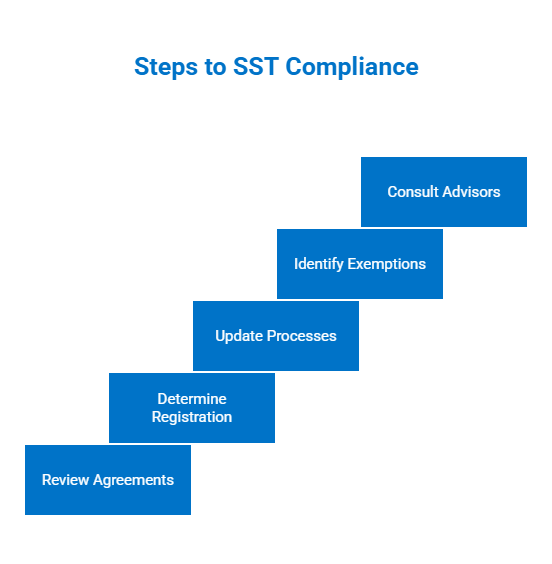
Preparation is essential for smooth compliance with rental SST Malaysia. Being organised helps prevent oversights, financial miscalculations, and conflicts, while ensuring all lease arrangements remain fully compliant.
- Review all rental and lease agreements to identify which contracts are subject to SST
- Determine whether SST registration is necessary based on annual rental revenue and business type
- Update billing and accounting processes to accurately reflect SST charges and exemptions
- Identify any eligible exemptions or transitional relief to reduce tax liability
- Consult with tax advisors or professional consultants to confirm compliance and ensure proper documentation
Proper preparation allows landlords and tenants to navigate SST obligations confidently, avoiding financial surprises. Planning ahead ensures smooth lease management, compliance with RMCD requirements, and clear communication between all parties.
Learn to buy, sell, and invest wisely with property guidesImpact on Lease Pricing & Investment Decisions: Rental SST Malaysia
The introduction of rental SST Malaysia directly affects commercial lease pricing, investment strategies, and market competitiveness. Landlords, tenants, and investors must understand the financial implications to make informed decisions.
- Lease Pricing Adjustments: Landlords may increase rental rates to cover SST costs, but careful assessment is needed to avoid deterring tenants.
- Rental Yield & ROI: Net rental income is affected by SST, influencing investment calculations and overall returns for landlords and investors.
- Market Competitiveness: Higher SST-inclusive rents may encourage tenants to negotiate or explore alternative properties, impacting demand in certain locations.
- Investment Viability: Developers and investors must factor SST into their projected returns, ensuring that commercial projects remain profitable despite the additional tax.
Understanding the impact of SST on lease pricing and investments allows stakeholders to make strategic decisions and maintain market competitiveness. Proper financial planning ensures profitability and avoids unexpected reductions in returns.
What are the Compliance & Penalties Related to Rental SST Malaysia?

Compliance with rental SST Malaysia is mandatory for all landlords, tenants, and property managers. Awareness of filing requirements, record-keeping obligations, and penalties is essential to prevent legal and financial complications.
- SST Filing Obligations: Registered landlords must submit SST returns to RMCD on time, following the prescribed schedule.
- Record-Keeping: Maintain detailed invoices, payment records, and supporting documents to ensure transparency and audit readiness.
- Penalties for Non-Compliance: Late registration, undercharging, or failure to remit SST can result in fines, interest charges, or legal action.
- Best Practices for Compliance: Implement accounting software for accurate tracking, stay updated on RMCD guidelines, and seek professional advice when needed.
Strict adherence to SST compliance protects landlords and tenants from fines, penalties, and legal issues. Timely filing, proper documentation, and clear processes are crucial for smooth operations and financial security in Malaysia’s commercial property market.
iProperty Tips & Best Practices: Rental SST Malaysia
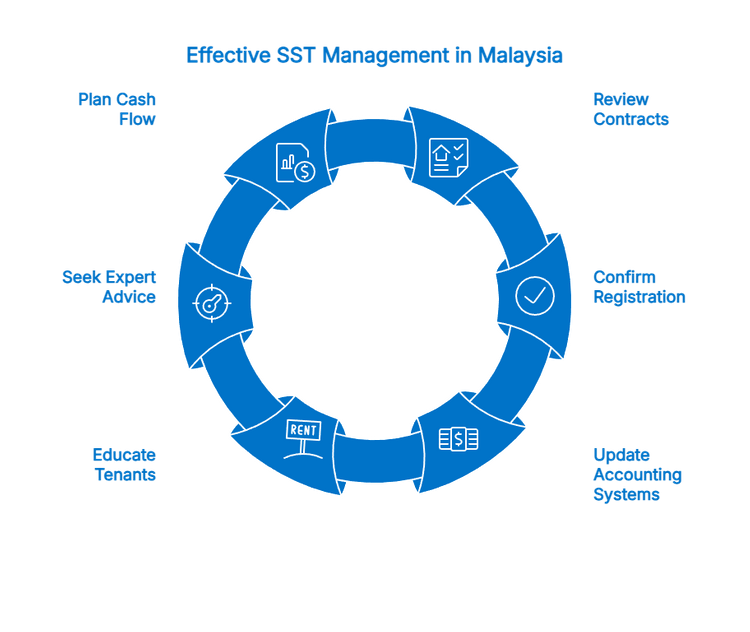
Implementing rental SST Malaysia efficiently requires proactive planning, clear communication, and organised processes. By following established best practices, landlords, tenants, and property managers can minimise errors, ensure compliance, and maintain smooth financial operations.
- Review Contracts: Ensure all leases explicitly include SST clauses and clearly outline which party is responsible for the tax. Regularly reviewing contracts helps prevent misunderstandings and potential disputes.
- Confirm Registration: Determine whether the landlord or tenant is required to register with RMCD for SST. Proper registration ensures legal compliance and avoids penalties.
- Update Accounting Systems: Incorporate SST line items in invoicing and accounting software for accurate reporting and easier audit tracking.
- Educate Tenants: Clearly communicate exemptions and transitional rules, so tenants understand their responsibilities and the financial impact.
- Seek Expert Advice: Consult tax professionals for complex lease structures or when navigating exemptions, SME relief, or transitional rules.
- Plan Cash Flow: Ensure funds are available for timely SST remittance to avoid penalties, interest, or compliance issues.
Following these best practices ensures landlords, tenants, and agents can manage SST effectively, reduce disputes, and maintain financial clarity. Proactive planning safeguards operational efficiency and protects all parties from unexpected costs.
Final Thoughts on Rental SST Malaysia
Rental SST Malaysia represents a major change in Malaysia’s commercial leasing landscape. The 8% SST, effective from 1 July 2025, requires careful planning and understanding by landlords, tenants, and property managers.
Being aware of exemptions, transitional rules, and compliance requirements helps stakeholders avoid unnecessary costs. Proper planning ensures that contracts are SST-compliant and that rental pricing and investment decisions remain informed and strategic.
Browse a wide range of homes to match your budget and lifestyle needs. View Properties for Sale in Malaysia on iProperty Malaysia.
Check how much you may be able to borrow before starting your property search. Calculate Your Home Loan Eligibility on iProperty Malaysia.