
| No. | Types | Description | Components |
| 1 | Precast Concrete Framing and Box System | The precast concrete component is cast in a reusable mould, cured under a controlled environment, transported to the site and placed at the required position. This system involves the production of building components, as well as the erection and assembly of these components, into the desired building structure by mechanical means, using as little in-situ construction as possible. | 1. Beam 2. Column 3. Half Slab 4. Hollow Core Slab 5. Prestressed Planks 6. Staircase 7. Wall (load-bearing and no-load bearing) 8. 3D Component (balconies, staircases, toilet pod, lift, chambers, refuse chambers, prefabricated bathroom unit) |
| 2 | Formwork System | Formwork refers to the material required for shaping or moulding concrete structures before they undergo the curing process. A formwork system comprises moulds that store and hold wet concrete until it achieves the desired level of curing. The term “system formwork” distinguishes it from conventional formwork, typically the timber one. System formwork has good casting quality, speedier assembly and greater reusability compared to conventional formwork. | 1. Tunnel Forms 2. Beams and Columns Moulding Forms 3. Permanent Steel Formworks (metal decks) |
| 3 | Steel Framing System | The steel framing system consists of a “skeleton frame” comprising steel columns and beams constructed in a rectangular grid to support the floors, roof, and walls of a building, all of which are connected to the frame. Steel framing systems are commonly used in medium and high-rise structures, as well as industrial, warehouse, and residential buildings. | 1. Steel Beams and Column 2. Portal Frames 3. Roof Trusses |
| 4 | Prefabricated Timber Framing System | The Prefabricated Timber Framing System is a structural system that utilises heavy timber, creating structures using squared-off timbers that are carefully fitted and joined, with large wooden pegs securing the joints. When the load-bearing timber frame is left exposed on the building’s exterior, it is often referred to as half-timbered. In many instances, the infill between the timbers is used for decorative purposes. | 1. Timber Frames 2. Prefabricated Timber Roof 3. Trusses |
| 5 | Blockwork System | The Blockwork System is an evolution from conventional brick usage. It involves the construction of concrete or concrete blocks larger than standard clay or concrete bricks. These blocks are designed to be lighter and easier to work with, featuring hollow cores that enhance insulation capabilities. Notably, the blockwork system differs from conventional bricks as it does not rely on mortar during the process of binding bricks. | 1. Interlocking Concrete Masonry Unit (CMU) 2. Lightweight Concrete Blocks |
| 6 | Hybrid / Innovative System | An innovative system involves the integration of different materials or multiple categories/types of IBS, including precast concrete, formwork system, and blockwork system. This combination allows architects and specifiers to leverage the distinct strengths and properties of different materials, enabling the construction of taller and larger buildings. Typically, a hybrid system requires prefabricated elements to be manufactured off-site. Prefabrication expedites the construction process and facilitates convenient on-site installation, as the system arrives on-site when needed during the construction phase. | 1. Sandwich Panel 2. Cemboard 3. Drywall 4. Modular System |
Understanding these key cost components of housing development is crucial for developers, investors, and homebuyers alike, as it provides valuable insights into the financial aspects of property development. From land acquisition and construction materials to labour and regulatory expenses, Dr Foo explores the intricate web of costs involved in bringing housing projects to life, particularly in relation to the industrialised building system (IBS).
Digitisation, automation, and the increased use of information and communications technology (ICT) are the fundamental principles underpinning the 4th Industrial Revolution (IR 4.0). Since its inception, IR 4.0 has become a widely used buzzword across various sectors, mainly because approximately 50% of jobs are considered susceptible to automation (Figure 1).
The construction industry, in particular, faces a high vulnerability in light of this transformative shift, owing to its relatively lower productivity and heavy reliance on manual labour. Consequently, leaders in the construction industry have shown a growing interest in the concept of IR 4.0, which emphasises the need for a shift towards digital transformation.
The integration of IR 4.0 into the construction industry, commonly called Construction 4.0, will witness the incorporation of interdisciplinary technologies that streamline the construction process across all stages of the value chain.
The future of construction industry development revolves around adopting component industrialisation, construction breakdown, design-identical, construction-assembly, and operation-data techniques to maximise the life cycle value.
To align the domestic construction industry with this transformation, the Construction Industry Development Board Malaysia (CIDB) has devised the Construction 4.0 Strategic Plan (2021 – 2025).
This strategic plan outlines a roadmap for the digital revolution, introducing advanced technologies such as Building Information Modelling (BIM), cloud collaboration, artificial intelligence (AI), Internet of Things (IoT), augmented reality (AR), blockchain, simulation, autonomous systems, robotics, big data, 3D printing, and additive manufacturing. These technologies are expected to enhance construction competitiveness and productivity.
Prefabricated construction: How does Malaysia stack up against the global trend?
As part of the industrialisation process, prefabricated construction is considered to enhance current construction performance and reputation. Prefabricated construction involves the standardisation of structural components, which are manufactured in off-site plants and then transported to the project site for assembly.
Prefabricated housing is the most commonly explored type of prefabrication, encompassing manufactured housing, modular housing, and production housing, as categorised by authorities in different countries.
According to a global market study, the valuation of the prefabricated homes market reached USD 149.52 billion in 2022. It is projected to achieve a compound annual growth rate (CAGR) of 6.8%, surpassing USD288.68 billion by 2032.
The growth of this market is driven by increasing awareness of eco-friendly, time-saving, and cost-effective construction practices in property development. Additionally, continuous technological advancements, favourable government regulations, and promotional efforts by manufacturers contribute to this positive trend.
Traditionally, the United States and Europe have been the leading regional markets, occupying the majority share of the global prefabricated housing market. In the Asian region, Australia and New Zealand are considered pioneers in the concept of factory-built housing.
However, rapid development in emerging markets such as China, India, Taiwan, and Korea, is expected to propel the Asia Pacific region forward. Furthermore, other developing countries with large populations, unmet needs, and rising disposable incomes present untapped opportunities for the global prefabricated housing industry. In Malaysia, the term industrialised building system (IBS) is used to describe the concept of prefabricated construction. IBS can be further categorised and has evolved in response to technological advancements (Table 1).
The adoption of IBS is primarily driven by the desire for improved product quality and reduced reliance on manpower, particularly unskilled foreign labour. This aligns with the paradigm shift from conventional methods to a more modern, systematic, and mechanised approach.
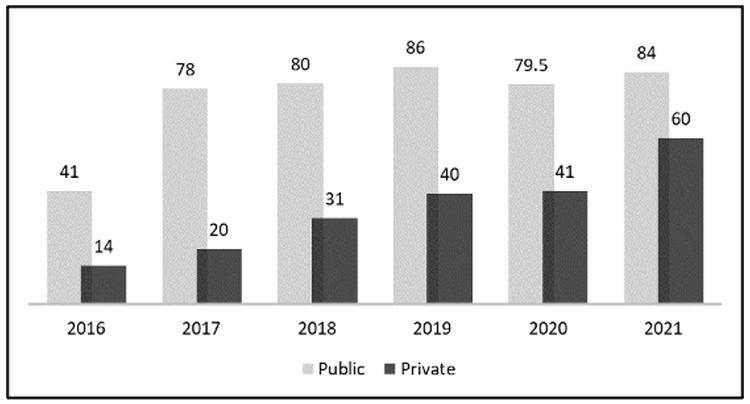
According to the Construction Industry Development Board Malaysia (CIDB), the adoption rate of IBS in government projects increased to 84% in 2021 from 79.5% in 2020. Remarkably, in private projects, the adoption rate surged to 60% in 2021 compared to 41% in 2020 (Figure 2).
Why didn’t IBS gain traction in the construction industry previously?
While the higher adoption rate in government projects is understandable, as a minimum IBS score of 70 is mandatory, the significant uptake in the private sector is somewhat surprising. IBS has historically struggled to gain traction in the industry, despite being introduced long ago.
IBS is often associated with higher construction costs compared to the widely used “cast-in-situ” method due to the involvement of skilled labour, additional lifting equipment/machinery, and transportation of manufactured components to the construction site.
While IBS components can be produced on-site, leading to cost savings, there is a risk of damage if the components are not properly stored. On-site damage to IBS components can have significant cost and time implications.
A higher adoption of IBS in the private sector may be attributed to factors such as a shortage of foreign labour during and after the pandemic, increased costs in conventional construction making it comparable to IBS, and a shift towards high-rise development in Malaysia’s property landscape. The widespread use of monolithic reinforced concrete structures in high-rise buildings also contributes to this trend.
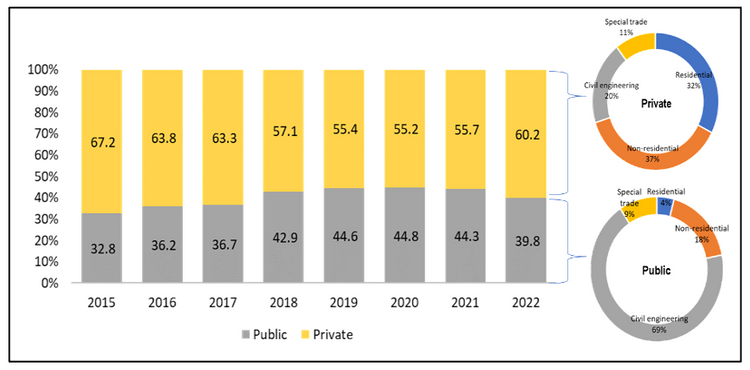
Rapid urbanisation and high population density, particularly in prime real estate markets, have led to an increasing number of high-rise constructions (Figure 3). While conventional construction methods involving “bricks and mortar” and “timber formwork” could still be applicable for landed houses, they are impractical for high-rise buildings.
Nowadays, high-rise developments often employ a hybrid construction method that combines reusable formwork systems (such as steel or aluminium) with a percentage of prefabricated components. This approach leverages the advantages of system formwork, including lower construction costs, improved casting quality, faster erection, and greater reusability.
Since 10th January 2018, private projects worth RM50 million and above are required to achieve a minimum IBS score of 50. System formwork, considered a type of IBS system, is commonly used in combination with cast-in-situ reinforced concrete frame structures and prefabricated internal walls (e.g. interlocking blocks, lightweight blocks, precast wall panels, drywall, cement board, etc.). This combination easily meets the IBS score requirement of 50 to 60, qualifying the project as an IBS project and contributing to a higher adoption rate of IBS in the private sector.

With the private sector being a major growth force in the construction industry, particularly in residential and non-residential building construction (Figure 4), it is important to note that the majority of “IBS projects” in the private sector still predominantly rely on the “cast-in-situ” construction method using system formwork. Therefore, a 60-percent adoption rate of IBS in the private sector should not be regarded as a substantial penetration of prefabricated construction in the industry. This is more significant considering the government’s aspirations of digitising, modernising, and industrialising the construction industry through Construction 4.0.
How does IBS construction affect costs in the building industry?
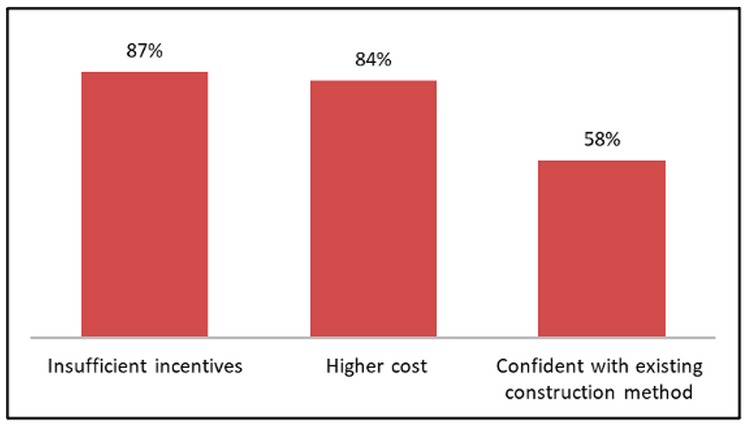
According to a 2021 survey conducted by REHDA Institute, industry players (including developers, contractors, and consultants) have reported the top three reasons the private sector is not keen to adopt IBS (particularly precast) construction are insufficient incentives, higher costs, and confidence in existing construction methods (Figure 5).
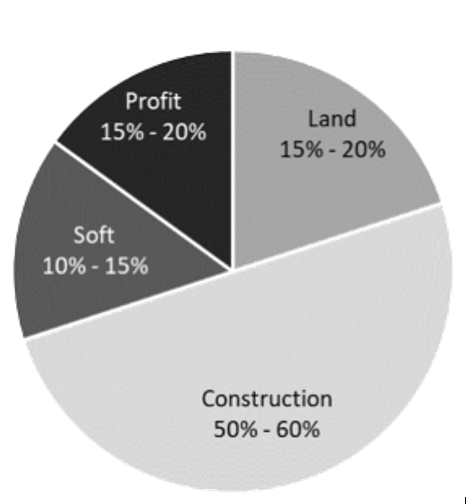
It is important to note that construction costs account for the largest portion of a project’s gross development value (GDV) in Malaysia, which can easily reach from 50% to 60% (Figure 6).
This reality has compelled builders to continue operating their projects using conventional methods, also known as the hybrid construction approach, as even small changes in construction costs can impact a project’s financial viability.
The cost differences between precast and system formwork can be observed by comparing the build-up rate of a 1m2 precast concrete slab to that of a 1m2 reinforced in-situ grade 35 slab (Table 2).
While IBS construction can reduce labour costs, the overall cost of constructing a 1m2 precast concrete slab remains higher than that of a 1m2 reinforced in-situ grade 35 slab due to the relatively higher material costs.
| Item | Precast Slab (1m2) | Cast in-situ Slab (1m2) |
| Material Cost | ||
| Concrete | – | RM62.93 |
| Reinforcement | – | RM24.15 |
| Formwork | – | RM47.00 |
| Precast | RM155.00 | – |
| Sub-total | RM155.00 | RM134.08 |
| Labour Cost | ||
| Laying concrete | – | RM7.10 |
| Bending/laying reinforcement | – | RM2.00 |
| Installation of formwork | – | RM17.34 |
| To install the precast | RM14.00 | – |
| Sub-total | RM14.00 | RM26.44 |
| 15% overhead and profit | RM25.35 | RM24.08 |
| Total cost per m2 | RM194.35 | RM184.61 |
Table 2: Cost summary of precast and cast in-situ slab
Considering that labour costs constitute only 14% of the total cost of a 1m2 cast in-situ slab, there is little motivation for builders to shift towards the precast system. In countries like Malaysia and other developing nations, where labour costs are lower, builders tend to adopt more labour-intensive construction processes. In contrast, higher labour wages in developed countries will encourage builders to reduce their reliance on labour by using standard concrete element sizes (prefabricated components).
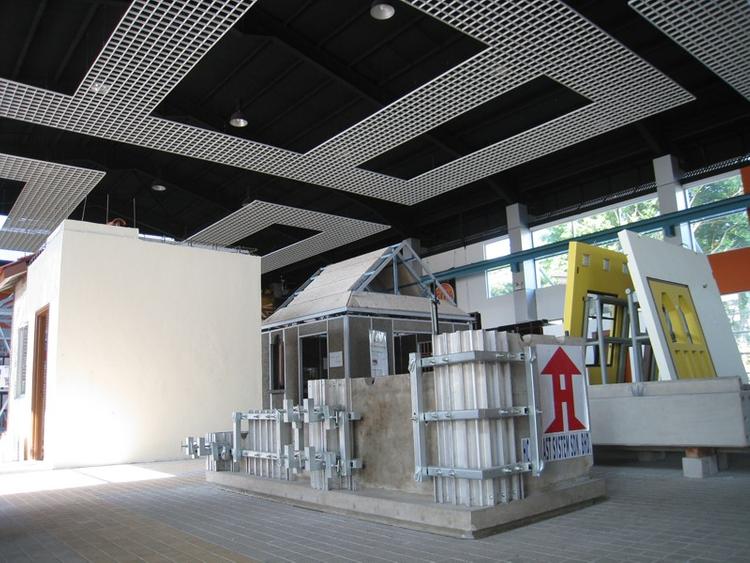
There are indications that using IBS can shorten the construction period, resulting in overall cost reduction. In theory, this could be true, given that IBS construction involves off-site manufacturing of structural components, leading to a greater reduction in on-site wet works during the superstructure construction stage, which is typically time-consuming.
Additionally, since electrical and piping works are already incorporated into precast elements, and plastering works are no longer required, less time is needed during the finishing stage.
What are the challenges in adopting a new construction system?
The key to time savings lies in meticulous initial planning and subsequent rescheduling. Typically, the project owner, usually the developer, sets the timeline for the construction project.
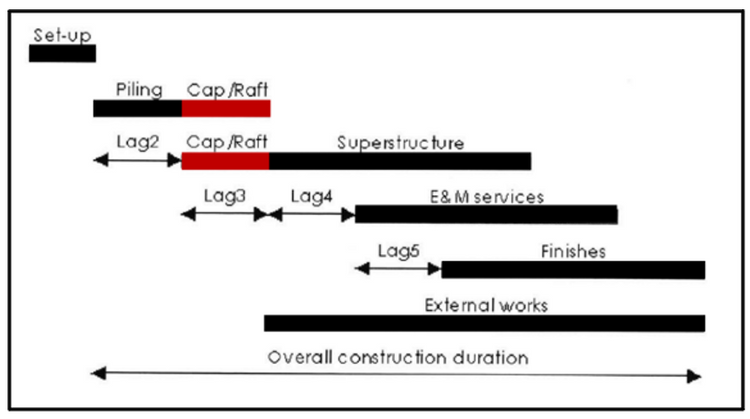
The construction duration encompasses the period from the commencement of foundation work to the completion and handover of the building. Due to the interconnected nature of construction activities, any delay in one stage or trade can have a cascading effect on subsequent activities.
For instance, Figure 7 illustrates how lag times are influenced by factors such as piling duration, type of foundations, cap/raft and superstructure durations, as well as the durations of M&E services and finishes.
All of these lag times are ultimately tied to project characteristics such as soil conditions, design complexity, construction requirements, client demands, project milestones, and location.
Contractors rarely propose shorter construction periods than those specified in the contract. This is primarily due to the unpredictable and uncertain nature of the construction environment, coupled with unforeseen incidents arising from human error and management. Factors like working hour limitations imposed by local authorities, concerns about noise levels from local residents, and construction-related traffic congestion further contribute to this.
Some argue that construction delays are mainly due to inefficiencies associated with the cast-in-situ construction system for erecting the superstructure. They believe that using prefabricated structural components can expedite construction.
However, it is essential to recognise that material hoisting plays a critical role in high-rise development. As the building grows taller, transportation time increases due to the weight of the precast elements, thereby extending the duration of crane-related activities. Construction efficiency is subject to factors such as hoisting machinery capacity, selection of special lifting transport and auxiliary equipment, and strategic logistic planning and scheduling.
Similarly, when using cast-in-situ reinforced concrete frames, decision-making regarding construction workflow is based on optimising formwork usage. The floor area is typically divided into zones, enabling resources to rotate horizontally between zones at the same floor level or move upward to the next floor in the subsequent cycle to maximise reuse.
Addressing the role of formwork systems in guiding construction workflows not only connects the choice of formwork system with logistics planning, inventory management, crane schedules, labour and material delivery, and safety procedures but also contributes to on-site construction efficiency.
Therefore, construction efficiency relies not solely on the construction method, but heavily on the quality of workflow arrangement and strict schedule control. These factors are significantly influenced by various managerial and organisational aspects, as well as the capacity and foresight of planning professionals to anticipate site dynamics and proactively shape progress.
How can the Malaysian IBS ecosystem be enhanced?
The fragmented IBS ecosystem in the construction industry is the main obstacle to widespread IBS adoption in the private sector. This is due to a mismatch between the incentives offered by the government and the expectations of developers. The incentives given mainly focus on the supply side, to enhance the supply capacity of the IBS ecosystem.
Incentives such as levy exemptions and incentive tax allowances by MIDA for manufacturers downstream in the supply chain don’t effectively address the major concern faced by developers – higher construction costs associated with adopting IBS. The government needs to recognise the crucial role of developers, as they hold the key to the success of IBS adoption. By incentivising developers in the upstream of the supply chain to use IBS, it can generate higher demand and contribute to a more vibrant IBS ecosystem in the country. Therefore, a shift in approach is necessary, with a focus on increasing demand for IBS among developers.
Having said that, it’s important to note that developers are diverse in nature. There are varying types, scales, business models, and operational strategies. The government should be aware of this diversity and incentivise them accordingly.
Not all developers have the same capabilities as large companies like SP Setia, Gamuda, IJM, Sunway, or MRCB, which have in-house IBS manufacturing capacity and are able to provide full-fledged IBS engineering services. These larger companies can partake in the entire IBS supply chain, from being a planner, designers, contractors, and manufacturers, as well as other trades along the IBS supply chain.
There are also various forward-integrated product manufacturers such as Kimlun, or contractors such as LBS and Seri Pajam, who become developers capable of providing IBS construction services. They can benefit from direct incentives that help sustain mass volume production or upgrade their IBS manufacturing facilities, such as tax holidays or import duty exemptions for machinery, equipment, and technology to lower their production cost.
In Malaysia, many developers are only involved in property development and investment, as they outsource their building and construction work to third parties. These developers, known as “pure developers”, follow a development process that involves land acquisition, marketing, engaging consultants for building design, obtaining necessary approvals and financing, hiring contractors for construction, and ultimately renting or selling the property.
Financial viability is crucial for these developers to kickstart projects, and they will always strive to keep construction costs low to offset rising business expenses posed by artificial regulatory barriers. Any government measures that can help mitigate the additional costs of using IBS would be highly beneficial for them.
For instance, measures aimed at improving the project development process, such as fast-track approvals for IBS projects or eliminating onerous building requirements, would go a long way in reducing costs and enabling timely responses to existing housing demands.
“Non-cash incentives” such as higher plot ratios for affordable housing projects adopting IBS or reductions in compliance costs, are definitely viewed as more attractive to developers as they directly benefit them.
Considering the importance of “demand-side” incentives in generating higher IBS demand among private developers, it is essential to involve entities beyond CIDB or MIDA, such as KPKT (Ministry of Housing and Local Government), state governments, and local authorities. Establishing a functional IBS ecosystem is no longer an issue within the construction industry alone, but part of a bigger ecosystem – the property industry ecosystem.
Disclaimer: The information is provided for general information only. iProperty.com Malaysia Sdn Bhd makes no representations or warranties in relation to the information, including but not limited to any representation or warranty as to the fitness for any particular purpose of the information to the fullest extent permitted by law. While every effort has been made to ensure that the information provided in this article is accurate, reliable, and complete as of the time of writing, the information provided in this article should not be relied upon to make any financial, investment, real estate or legal decisions. Additionally, the information should not substitute advice from a trained professional who can take into account your personal facts and circumstances, and we accept no liability if you use the information to form decisions.