
Not sure whether fully furnished or semi furnished suits you? This 2026 guide explains the fully furnished meaning, what is typically included, and how it compares with semi furnished and unfurnished homes in Malaysia. Learn the pros, costs, rental trends, and which option fits you best as a renter, buyer, or investor.
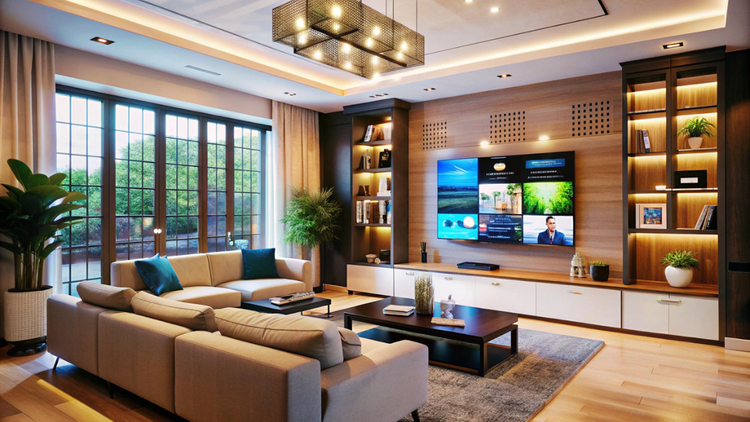
When searching for a home in Malaysia, whether to buy or rent, one of the earliest choices you will face is how furnished you want your new space to be.
Do you want the ease of walking in with a suitcase and settling in immediately? Or do you prefer a blank canvas you can shape entirely to your taste?
The three common categories, fully furnished, semi-furnished, and unfurnished, each offer distinct conveniences, compromises, and cost implications.
In this guide, we break down what fully furnished means, compare them side by side, and highlight the latest trends shaping the market as of 2025-2026, so you can choose with clarity and confidence.
Whether you are a first-time buyer, a long-term renter, or an investor weighing your options, a firm grasp of these differences will help you make decisions that genuinely suit your needs and lifestyle.
What Does Fully Furnished Mean?
A fully furnished property is essentially a walk-in, live-in home. It is designed to allow you to move in with little more than your suitcase, personal essentials, and perhaps a few decorative touches.
Everything else, from furniture to core appliances, is already in place, making it one of the most convenient options for renters and buyers who prioritise speed, comfort, and minimal set-up.
In practical terms, a fully furnished unit typically includes:
- Wardrobes and Storage: Built-in or free-standing wardrobes, cabinets, and shelving.
- Lighting and Cooling: Ceiling lights, lamps, fans, and usually air-conditioning units.
- Living Area Essentials: Sofa sets, coffee tables, side tables, and occasionally accent chairs.
- Dining Area Furniture: A dining table with chairs, ready for immediate use.
- Bedroom Basics: Bed frames, sometimes complete with mattresses or mattress protectors.
- Window Treatments: Curtains or blinds that offer basic privacy and light control.
- Kitchen Appliances: A refrigerator, a microwave, and, often, a hob or stove.
- Laundry Appliances: At a minimum, a washing machine; some landlords include a dryer as well.
Because the home’s foundation is already in place, the move-in process is exceptionally smooth. There is no need for large furniture purchases, complex deliveries, or coordinating installers, a significant advantage for expatriates, short-term renters, busy professionals, or anyone who simply values convenience over personalisation.
In essence, a fully furnished unit takes the stress out of moving and lets you settle in almost immediately, making it a convenient choice for those who want comfort without the hassle.
What Is Semi-Furnished (Partially Furnished)?
A semi-furnished, or partially furnished, property sits comfortably between an empty unit and a fully furnished one. It typically includes a selection of essential fixtures and appliances, but stops short of providing the full suite of furniture you would expect in a move-in-ready home.
In most cases, you will still need to bring (or buy) your own loose furniture, such as beds, sofas, or a dining set, but you benefit from core necessities already being installed.
To give you a clearer picture, here is what semi-furnished units usually include:
- Basic lighting fixtures
- Built-in or free-standing wardrobes or cabinets
- Air-conditioning units or ceiling fans
- A refrigerator
- Curtains or simple window treatments
However, they tend to exclude:
- Loose furniture such as sofas, armchairs, or beds
- Complete dining sets
- Kitchenware and smaller household items
- Certain appliances, which may vary depending on the landlord or seller
This level of furnishing strikes a practical balance for many tenants and buyers. You get a functional starting point, key fixtures, climate control, and basic appliances, while retaining the freedom to design the space to your taste.
It is a flexible middle ground, ideal if you want both convenience and room for personalisation.
What Is an Unfurnished (Bare) Unit?
An unfurnished, or “bare”, unit offers the cleanest slate of all furnishing types. In Malaysia, “bare” does not mean an incomplete or construction-stage property; instead, it refers to a home delivered with only its essential structural components.
Almost everything else, from lighting to appliances to loose furniture, will need to be added by the occupant.
In practical terms, unfurnished units usually come with:
- No wardrobes, or only very minimal built-in storage
- No light fittings beyond basic wiring
- No curtains or window treatments
- No major appliances such as a refrigerator, washing machine, or air-conditioner
- No loose furniture of any kind
Because so little is provided, you will be responsible for bringing in or purchasing all the key elements that make the home functional and comfortable.
While this may require more upfront planning, time, and investment, an unfurnished unit offers the most incredible freedom for customisation. You can choose every detail, from your preferred lighting style to your kitchen appliances, ensuring the entire space reflects your personal taste and long-term needs.
Semi-Furnished vs Fully Furnished Homes: Pros and Cons
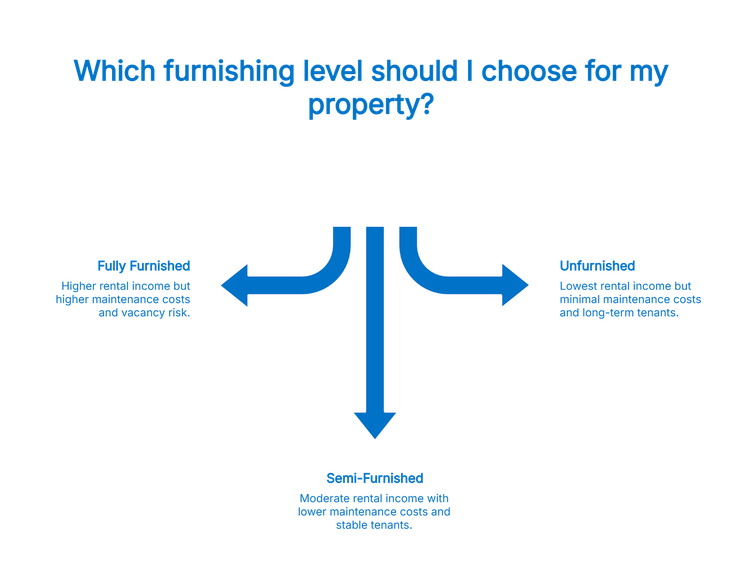
Here is a comparison table summarising the advantages and disadvantages of fully furnished, semi-furnished, and unfurnished units:
| Type | Pros | Cons |
| Fully Furnished | • Move-in ready; no need to buy large furniture or appliances.• Saves time and effort, ideal for short-term renters and expatriates.• Higher rental yield potential, appealing to investors.• Easier relocation with minimal bulky items. | • Limited personalisation; décor may not suit your taste.• Furniture quality may vary or show wear and tear.• Potential liability for damage when renting.• Less long-term flexibility. |
| Semi-Furnished (Partially Furnished) | • Includes essential built-ins (cabinets, lighting), reducing initial renovation costs.• Allows you to bring your own loose furniture for personalisation.• Balanced option for those who want convenience without sacrificing style. | • Still requires purchasing additional furniture.• More furnishing effort compared to fully furnished units.• The move-in process can be more logistically involved. |
| Unfurnished (Bare) | • Complete creative control over design and furnishings.• Ideal for long-term residents wanting custom furniture or specific layouts.• Usually available at a lower rental or purchase price. | • High upfront cost for furniture and appliances.• Longer time and effort needed before the space is liveable.• Risk of buying mismatched or low-quality items.• Moving in/out involves significant furniture logistics. |
Ultimately, the right choice of furnishings comes down to how you live, how much you want to spend up front, and the level of flexibility you want in shaping your home.
Market Insights: Malaysia Trends (2025-2026)

Understanding how the Malaysian property market is evolving for furnished, semi-furnished, and bare units will help you make an informed decision.
1. Demand Patterns
- Fully furnished units remain highly popular among expatriates and young professionals, especially in Greater Kuala Lumpur, Penang, and Johor. This group values convenience and mobility, favouring homes that require minimal setup.
- Semi-furnished units are favoured by long-term residents and families who want some conveniences but prefer to choose their own furniture.
- Bare/unfurnished units attract owner-occupiers who already own furniture, as well as savvy buyers and tenants planning to stay for a longer time.
2. Rental Premiums
- Fully furnished units command a rental premium of 10-20% over bare units in prime urban centres like KL and Petaling Jaya.
- In secondary markets, such as suburban townships or outer Penang, the premium may be more modest (around 5-10%) depending on building age and amenities.
3. Investor Behaviour
- Many investors prefer to lease their seats as fully furnished because they can justify the higher rental rate and reduce vacancy risk.
- However, in landed or larger strata homes, some investors opt for semi-furnished units: it lowers furnishing costs, and tenants often bring their own furniture, reducing wear-and-tear risk.
- There is increasing interest in short-term rentals (Airbnb, serviced apartments), where fully furnished units are more attractive.
4. Supply Trends
- Developers launching new projects increasingly offer fully furnished demonstration units, as buyers (especially expatriates) value ready-to-move-in homes.
- In the resale market, semi-furnished homes dominate because homeowners frequently upgrade their own furniture, leaving only built-ins.
- There is a growing trend toward minimalist Scandinavian-style, fully furnished homes that appeal to international tenants.
5. Future Outlook
- As remote work remains strong, demand for fully furnished units is likely to continue, especially among digital nomads and mobile professionals.
- Rising construction and labour costs may encourage more semi-furnished launches, with built-ins to reduce finish costs while still giving homeowners flexibility.
- Green furnishing (eco-friendly furniture, second-hand modular systems) may gain traction, particularly among investors and long-stay renters.
Overall, the trends point to a maturing market where the furnishing level you choose can meaningfully influence value, demand, and long-term liveability.
Which Option Is Right for You (As Buyer/Renter/Investor)
Choosing between fully furnished, semi-furnished, and bare units depends on how you plan to use the property.
If You’re a Renter
- Short-term or expatriate: Fully furnished is likely your best bet. You avoid major purchases, and you can move out with ease.
- Long-term local: Semi-furnished gives you the flexibility to bring or buy your own furniture while still using the built-in essentials.
- Permanent resident or settled: Unfurnished might be more economical; you can invest in quality furniture that will last, and you control the style.
If You’re a Buyer (Owner-Occupier)
- New launch property: Fully furnished could be attractive if the developer offers a furnishing package. But make sure to negotiate quality, because not all furniture is equal.
- Subsale property: Semi-furnished often provides the best value, built-ins are already done, while you choose your loose furniture.
- Long-term investment: If you intend to hold for many years, furnishing it yourself (semi or bare) gives more control over quality and depreciation.
If You’re an Investor
- Rental yield focus: Fully furnished units may let you charge a premium, but they also come with higher furnishing costs and replacement risks.
- Short-term rental (e.g. serviced apartments): Fully furnished is almost always preferable.
- Long-term lease: Semi-furnished often strikes a balance between lower furnishing costs and reduced risk of tenant damage to built-ins.
In the end, the best choice is the one that aligns with how you intend to live, invest, or grow your property ambitions in the years ahead.
Calculate your instalments before shortlisting properties.Cost Implications: Rent, Purchase & Yield
To see the real impact of your furnishing choice, let’s break it down through the key financial factors that shape both affordability and long-term value:
- Purchase Price: Fully furnished units sold by developers often include furnishings in the sale price; however, buyers should verify the furnishings’ value and quality.
- Rental Income: Fully furnished units can demand 10-20% more rent (in city-centre areas), while semi-furnished units may get a 5-10% uplift, depending on location and tenant segment.
- Depreciation & Maintenance: Furniture and appliances wear out. Fully furnished properties require periodic replacements; investors need to account for this in their profitability model.
- Vacancy Risk: Fully furnished units can have lower vacancy for short-term tenants, but the risk of damage is higher. Semi-furnished homes may appeal to more stable, long-term tenants.
Understanding these cost implications gives you a clearer sense of how each furnishing level aligns with your budget, your goals, and the returns you hope to achieve.
Tips for Negotiating Furnished Units
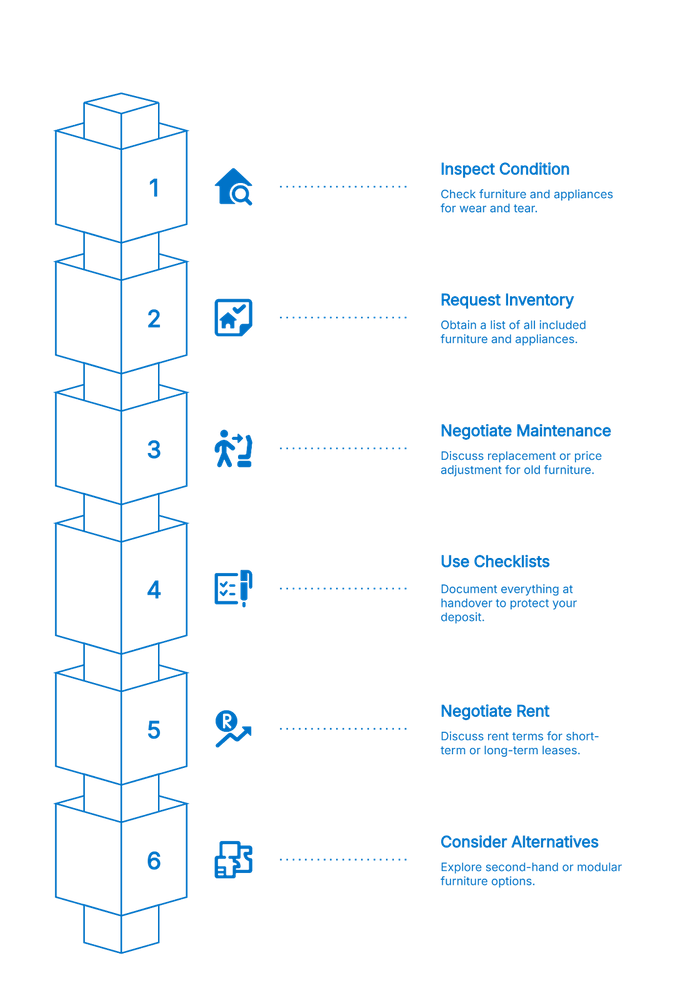
Here are practical tips to help you negotiate when dealing with furnished or semi-furnished properties:
- Inspect the condition
Check every piece of furniture and appliance. Take photos. Note wear and tear, especially in resale homes. - Ask for a furniture inventory list.
Request a detailed inventory (wardrobes, sofas, appliances). This helps you value what you’re paying for in rent or purchase. - Negotiate a maintenance or replacement clause.
If the furniture is old, ask the landlord or seller to replace it or adjust the price. - Use move-in/move-out checklists.
Document everything at handover to protect your security deposit. For buyers, this helps if you’re selling later. - Negotiate rent for short-term or long-term.
Fully furnished units command more in short-term leases. For longer leases, try to negotiate a lower rate or a rent portion tied to furnishings. - Consider second-hand or modular furnishings.
If semi-furnished, buy modular furniture or second-hand high-quality pieces to personalise without overspending.
With the proper preparation, you not only protect your budget but also secure a home setup that genuinely suits your lifestyle.
Choose the Home That Truly Fits Your Life
Understanding the fully furnished meaning, especially when comparing it with semi-furnished and unfurnished options, is more than just semantics. It has very real implications for your lifestyle, budget, and potential returns.
Whether you are renting or buying, making the right choice can save you money, reduce stress, and even boost your investment potential.
If you’re seriously evaluating your next home, visit iProperty Malaysia’s sales listings, where you can filter by fully furnished, partially furnished, or bare units.