
Foreigners can buy property in Malaysia, but only within a clear legal framework shaped by federal law and state-specific rules. This guide explains who qualifies as a foreign buyer, which property types are allowed or restricted, minimum price thresholds, approval processes, and key tax considerations to know in 2026.

Malaysia has long attracted interest from foreign property buyers, drawn by its relative affordability, modern infrastructure, and liveable urban centres. Yet while the country remains open to foreign ownership, buying property as a non-citizen is not unrestricted.
Instead, it is governed by a layered legal framework that combines federal law, state authority, and administrative approval processes.
For anyone researching how a foreigner buys property in Malaysia, understanding this framework is essential. Misconceptions are common, particularly around minimum price thresholds, restricted property types, and approval requirements.
These misunderstandings can lead to wasted time, aborted transactions, or non-compliant purchases.
This guide will provide you with a clear, legally grounded guide to foreign property ownership in Malaysia.
The Legal Basis for Foreign Property Ownership in Malaysia

Before examining eligibility criteria and price thresholds, it is essential to understand the legal framework governing the structure of foreign property ownership in Malaysia.
Federal Law and State Control
At the highest level, foreign ownership of property in Malaysia is permitted under federal law. However, land matters fall under state jurisdiction, as provided by the Federal Constitution.
This means that while foreigners can legally own property, each state sets its own conditions and thresholds for doing so.
As a result:
- Rules are broadly similar across Malaysia
- Minimum prices differ by state
- Certain property types are universally restricted
Any foreign buyer must therefore comply with both national principles and state-specific rules.
Approval Is Not Automatic
Unlike Malaysian citizens, foreigners do not have the automatic right to purchase property. Most transactions involving foreign buyers require state authority consent, which is typically granted through a formal application process after a sale-and-purchase agreement is signed.
Approval is procedural rather than discretionary in most compliant cases, but it remains a legal requirement, not a formality to be ignored.
Taken together, this dual-layer legal structure means that foreign buyers must approach Malaysian property purchases with careful attention to both federal principles and state-level requirements.
Who Is Considered a “Foreigner” Under Malaysian Law?

In the context of Malaysian property transactions, the term “foreigner” is defined by legal status rather than place of residence or length of stay.
This distinction is critical, as ownership rules, approval requirements, and minimum price thresholds are applied strictly based on classification under the law.
Under current property regulations, a foreigner generally includes:
- Individuals who are not Malaysian citizens, regardless of whether they live, work, or hold long-term visas in Malaysia.
- Foreign companies and foreign-controlled entities, including locally incorporated companies where foreign shareholding meets the statutory threshold for foreign control.
- Permanent Residents (PRs) are technically classified as foreigners under Section 433B of the National Land Code (NLC).
That said, there is an essential practical nuance for PRs. Since the issuance of EPU guidelines in 2020, many state authorities, most notably Selangor and Johor, have exempted permanent residents from minimum property price thresholds, even though they remain legally classified as foreigners.
This distinction matters because ownership restrictions apply based on legal classification, not on comfort with residency. Even long-term residents and PRs may still be subject to approval processes or state-level conditions unless explicitly exempted.
Understanding this classification is therefore essential before assessing eligibility, pricing thresholds, or approval requirements in any Malaysian property purchase.
Property Types Foreigners Can Buy in Malaysia
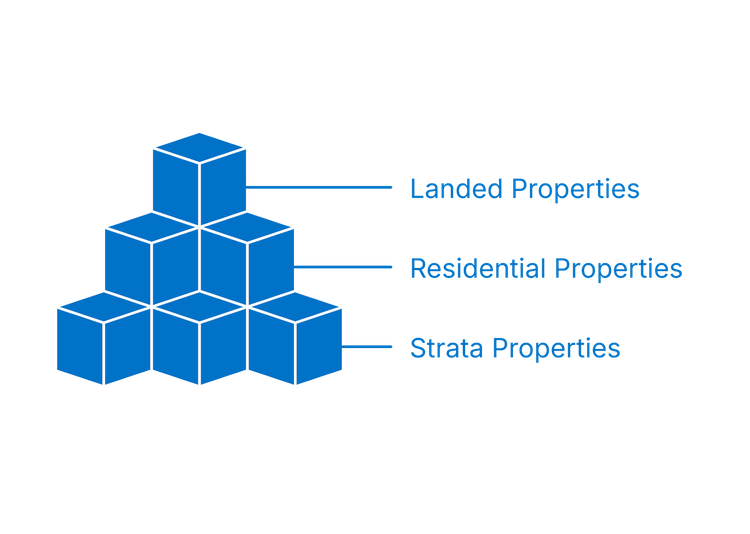
To understand how these legal principles translate into real-world buying options, it is essential to examine the specific property types generally open to foreign ownership in Malaysia, along with the practical limitations associated with each.
Residential Properties: The Primary Category
Foreign buyers are generally allowed to purchase residential properties, subject to minimum price thresholds. These include:
- High-rise residential units (condominiums and apartments)
- Landed residential properties, subject to stricter conditions
- Serviced residences classified for residential use
However, not all residential titles are treated equally.
Strata Properties Are the Most Common Choice
Strata-titled properties, such as condominiums, are the most accessible option for foreign buyers.
They are widely permitted across states and typically face fewer restrictions than landed homes.
This is why most foreigners looking to buy property in Malaysia focus on:
- Condominiums in urban centres
- Serviced apartments with residential titles
- Purpose-built strata developments
Overall, these strata options provide the most straightforward and most practical entry point for foreign buyers seeking legal certainty and wider availability in Malaysia’s property market.
Landed Properties: More Restrictions Apply
Foreign ownership of landed residential properties is more tightly regulated. While not prohibited outright, landed homes often require:
- Higher minimum purchase prices
- Additional state approvals
- Compliance with zoning and land-use conditions
In some states, landed properties may be restricted entirely to citizens, except in specific developments approved for foreign ownership.
Taken together, these distinctions highlight why foreign buyers tend to gravitate towards strata developments, while approaching landed properties more selectively and with careful attention to state-level regulations.
Property Types Foreigners Cannot Buy
Regardless of budget, there are property categories that foreigners are explicitly prohibited from purchasing under Malaysian law.
These include:
- Malay Reserved Land
- Low-cost and affordable housing units designated by the state
- Properties allocated under Bumiputera quotas
These restrictions are absolute and cannot be bypassed through nominee arrangements or private agreements.
Why These Restrictions Exist?
These limitations are designed to:
- Protect access to housing for Malaysian citizens
- Preserve constitutionally protected land categories
- Prevent displacement in the affordable housing segment
Foreign buyers should treat these restrictions as non-negotiable.
Overall, these prohibitions set clear, non-negotiable boundaries in Malaysia’s property market, reinforcing the need for foreign buyers to focus solely on legally permissible segments.
Minimum Purchase Price Thresholds: A State-by-State Reality
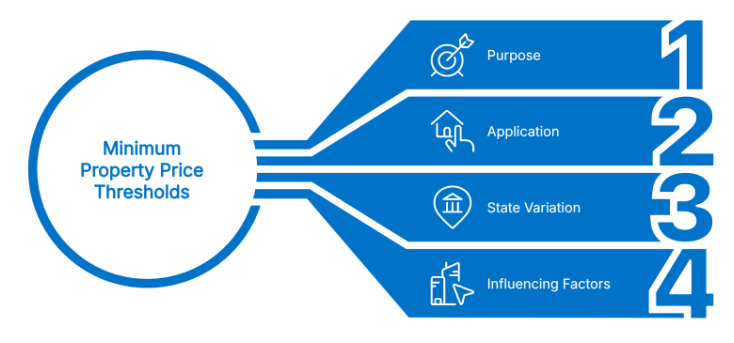
Before considering specific property types, foreign buyers must first understand the pricing thresholds that determine whether a purchase is legally permissible in each state.
Why Do Minimum Prices Exist?
Minimum price thresholds serve as a gatekeeping mechanism. They ensure that foreign participation is concentrated in the mid- to upper segments of the property market, reducing competition with local buyers in entry-level housing.
These thresholds apply per property, not per buyer.
Variation Across States
There is no single nationwide minimum price for foreign buyers. Instead, each state sets its own threshold, which may vary depending on:
- Property type (high-rise vs landed)
- Location within the state
- Policy adjustments over time
As a result, a property that qualifies for foreign purchase in one state may not be eligible in another.
Urban Centres Versus Peripheral Areas
Generally, states with major urban centres tend to impose higher minimum prices, reflecting stronger demand and affordability pressures. Less urbanised states may set lower thresholds, though these are subject to change.
Foreign buyers must always confirm the current state policy at the time of purchase.
Taken together, these state-by-state minimum price rules highlight the importance of policy verification, as eligibility for foreign ownership in Malaysia is shaped as much by location as by budget.
See what’s available for rent, browse listings today.Johor, Selangor, and Kuala Lumpur: High-Interest Markets
Among the various state-level frameworks, Johor, Selangor, and Kuala Lumpur consistently stand out as the most closely watched markets for foreign buyers, thanks to their economic importance and sustained demand.
Johor
Johor is a popular destination for foreign buyers due to its proximity to Singapore. However, it also enforces clear minimum purchase prices, particularly in urban and high-demand districts.
Selangor
Selangor’s rules tend to reflect its role as Malaysia’s most populous state. Foreign buyers are typically restricted to properties above a defined minimum value, with stricter scrutiny on landed homes.
Kuala Lumpur
As a federal territory, Kuala Lumpur operates under its own framework. Foreign ownership is permitted, but minimum prices remain among the highest nationally, especially in prime areas.
Together, these three markets illustrate how strong foreign interest is balanced by firm pricing thresholds, underscoring the importance of careful market selection and policy awareness for any overseas buyer entering the Malaysian market.
State Authority Consent: How the Approval Process Works
Beyond meeting price thresholds and property eligibility rules, foreign buyers must also navigate a formal approval process governing the legal transfer of ownership.
When Approval Is Required
In most cases, foreign buyers must obtain state authority consent after signing the sale and purchase agreement. This process is handled by the buyer’s solicitor and submitted to the relevant land office.
Approval timelines vary but typically take several months.
What Authorities Review
The state authority generally reviews:
- Buyer’s nationality and identity
- Property type and title
- Purchase price compliance with minimum thresholds
- Compliance with zoning and planning rules
As long as the transaction meets policy requirements, approval is commonly granted.
Consequences of Non-Compliance
Purchasing a property without the required approval can result in:
- Transaction invalidation
- Fines or penalties
- Forced disposal of the property
This makes legal compliance critical for foreign buyers.
Ultimately, state authority consent is not a mere administrative step but a core legal safeguard, making proper professional handling essential to ensure a secure and enforceable property purchase.
Financing Considerations for Foreign Buyers
After confirming legal eligibility and securing state consent, the next practical consideration for foreign buyers is how to finance the purchase.
Mortgages Are Possible, but Not Guaranteed
Foreigners can apply for housing loans in Malaysia, but lending terms differ from those offered to citizens. Banks may impose:
- Higher down payment requirements
- Stricter income documentation standards
- Shorter loan tenures
Approval depends on the buyer’s financial profile and the bank’s internal policies.
Financing Does Not Override Legal Rules
Even if a bank approves funding, the purchase must still comply with:
- State minimum price thresholds
- Property type restrictions
- Approval requirements
Financing approval does not legalise a non-compliant purchase.
In practice, successful financing for foreign buyers depends on aligning bank lending criteria with Malaysia’s legal framework, as loan approval alone cannot compensate for regulatory non-compliance.
Use the calculator to preview monthly loan commitments.Taxes and Ongoing Obligations for Foreign Owners

Beyond purchase eligibility and financing, foreign buyers must also understand the ongoing tax and ownership obligations that come with holding property in Malaysia.
Stamp Duty and RPGT
Foreign buyers in Malaysia are subject to a different stamp duty structure than citizens, paying a flat rate of 4% on property transfers (as of 2025). However, Real Property Gains Tax (RPGT) rates differ for foreigners, particularly on disposals within shorter holding periods.
This affects exit planning and long-term investment strategies. Always verify the latest via LHDN, as Budget 2026 raises foreign stamp duty to 8% from YA2026.
Assessment Rates and Maintenance Costs
Once ownership is established, foreigners are responsible for:
- Quit rent and assessment rates
- Maintenance charges and sinking funds (for strata properties)
- Compliance with management rules
There are no exemptions based on nationality.
Taken together, these recurring taxes and statutory costs reinforce the importance of factoring long-term holding expenses into any foreign ownership decision, not just the initial purchase price.
Common Misconceptions About Foreign Ownership
Several persistent myths surround the idea of foreigners buying property in Malaysia:
- “Foreigners can buy any property if they pay cash” = Incorrect
- “Using a local nominee avoids restrictions” = Illegal
- “Permanent residents are treated as citizens” = Not generally true
- “MM2H visa automatically waives all rules” = False
Relying on such assumptions exposes buyers to severe legal risk.
Long-Term Outlook for Foreign Buyers in Malaysia
Malaysia’s approach to foreign property ownership has historically been measured rather than prohibitive. The country allows foreign participation, but within boundaries designed to protect domestic housing access.
Future policy changes tend to involve:
- Adjustments to minimum prices
- Refinements to approval procedures
- Targeted controls rather than outright bans
- Visa-linked incentives (e.g., PVIP/MM2H threshold reductions in SEZs)
Foreign buyers should therefore expect evolution, not deregulation.
Foreigner Buy Property in Malaysia: A Rules-Based Opportunity
For those looking to understand how a foreigner buy property in Malaysia, the key takeaway is clarity rather than complexity.
The rules are well-defined, consistently enforced, and navigable with proper legal guidance.
Malaysia remains open to foreign property ownership, but only for buyers who respect:
- State-specific minimum thresholds
- Restricted property categories
- Mandatory approval processes
When approached correctly, foreign ownership in Malaysia is not only possible but structurally stable, offering certainty in a region where regulatory clarity is often lacking.
For buyers seeking clarity beyond asking prices, reviewing recent transacted prices offers a more grounded view of Eco Spring’s real market value and demand trends.
Disclaimer: The information is provided for general information only. iProperty.com Malaysia Sdn Bhd makes no representations or warranties in relation to the information, including but not limited to any representation or warranty as to the fitness for any particular purpose of the information to the fullest extent permitted by law. While every effort has been made to ensure that the information provided in this article is accurate, reliable, and complete as of the time of writing, the information provided in this article should not be relied upon to make any financial, investment, real estate, or legal decisions. Additionally, the information should not substitute advice from a trained professional who can take into account your personal facts and circumstances, and we accept no liability if you use the information to form decisions.