
Discover why Kuala Lumpur remains a top expat destination in 2026, offering competitive rents from RM1,800, strong English proficiency, modern healthcare, and seamless regional connectivity.

Why Kuala Lumpur Remains a Leading Expat Destination in 2026?
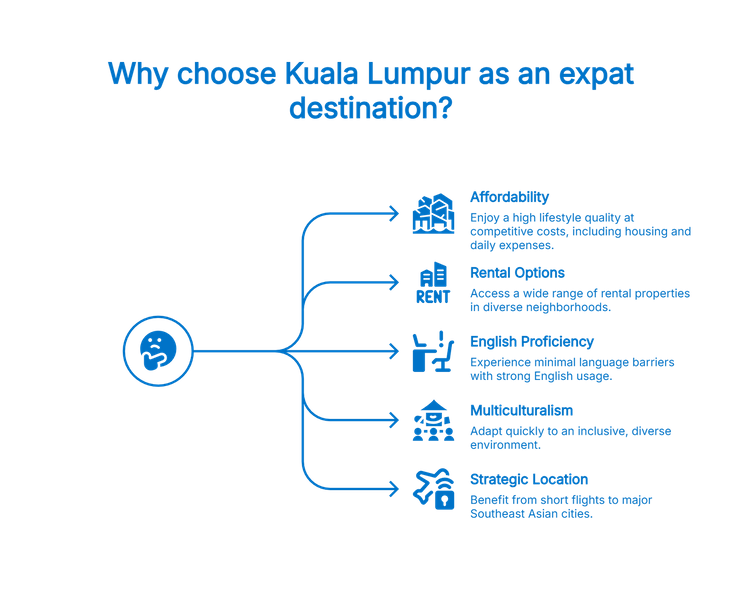
Kuala Lumpur continues to earn its place on global expat rankings, thanks to its unique balance of affordability, cultural depth, and international connectivity.
Here’s a more precise breakdown of why the city stands out:
1. High Lifestyle Quality at Competitive Costs
- Modern high-rise apartments with facilities (pools, gyms, security) cost significantly less than in Singapore or Hong Kong.
- Daily expenses, food, transport, domestic help, and entertainment, remain reasonably priced.
- Expats can enjoy a comfortable, urban lifestyle without compromising on quality or overspending.
2. Wide Range of Rental Options for Expats
- Strong supply of rental properties in both central areas (like KLCC, Bangsar, Mont Kiara) and suburban neighbourhoods.
- Options range from serviced apartments and luxury condos to larger landed homes.
- Continuous development across Klang Valley keeps rental prices competitive and choices plentiful.
3. Strong English Proficiency
- Malaysia ranks among Asia’s highest English-proficient countries.
- Workplaces, international schools, hospitals, and government counters commonly operate in English.
- Expats experience minimal language barriers, making relocation and daily life much smoother.
4. Multicultural, Globally Connected City
- KL’s population includes Malay, Chinese, Indian, and international communities, creating a truly diverse environment.
- Expatriates adapt quickly due to the city’s inclusive, multicultural atmosphere.
- A wide range of food, festivals, and cultural experiences enrich daily living.
5. Strategic Location for Regional Mobility
- Short flight distances to major Southeast Asian cities like Singapore, Jakarta, Bangkok, Hanoi, and Ho Chi Minh City.
- Ideal for professionals handling regional roles or frequent business travel.
- Well-connected airports and frequent flights make KL a practical base for mobility.
Overall, Kuala Lumpur offers expats a rare combination of affordability, comfort, cultural richness, and seamless connectivity, making it one of Southeast Asia’s most liveable and appealing cities in 2026.
Understanding Rental for Expats in Kuala Lumpur

The majority of expatriates in KL choose to rent rather than buy, especially in the early stages of relocation. The rental market is extensive and caters to a wide range of budgets and lifestyles.
Average Rental Rates in 2026 (KL City & Greater Klang Valley)
These ranges will vary depending on building age, furnishings, and accessibility.
| Property Type | Typical Rent (Per Month) | Notes |
| Studio/one-bedroom condo | RM1,800 – RM3,500 | Popular with single expats and digital nomads |
| Two-bedroom condo | RM2,200 – RM4,500 | Common choice for professionals and couples |
| Three-bedroom condo | RM3,500 – RM7,500 | Prime KLCC units may exceed RM8,000 |
| Serviced residences | RM4,000 – RM10,000 | Concierge, housekeeping, hotel-style amenities |
| Landed houses (TTDI, Bangsar, Desa ParkCity) | RM5,000 – RM15,000 | Preferred by families |
| Luxury bungalows/expat estates | RM15,000 – RM35,000 | Mont Kiara, Ampang Hilir, Kenny Hills |
What Affects Rental Prices?
The key factors are:
- Public transport access (MRT/LRT)
- Building age and facilities
- Furnishing level
- Proximity to international schools
- Security and neighbourhood profile
- Unit orientation and view (KLCC views command premiums)
Tenancy Duration
Most expat rental contracts fall under:
- 12-month tenancy (most common)
- 24-month tenancy (preferred by families)
- Short-term serviced apartment leases for corporate travellers
Together, these elements shape a rental landscape that gives expatriates in Kuala Lumpur both flexibility and clarity when choosing a home that matches their needs.
Best Neighbourhoods in KL for Expats
Before choosing where to live, it helps to understand how each neighbourhood in Kuala Lumpur offers a different lifestyle, community vibe, and rental range.
Here’s a clear breakdown of the city’s most popular expat-friendly areas:
1. Mont Kiara
Best for: Families, corporate professionals, long-term expatriates
Mont Kiara remains the most recognisable expat enclave in Malaysia. It offers proximity to international schools, supermarkets with imported goods, and condominium developments explicitly built for international residents.
Why do expats choose Mont Kiara?
- Short distance to Garden International School and Mont’Kiara International School
- Walkable neighbourhood pockets with cafés, grocers, and fitness studios
- High concentration of expat-friendly condominiums
- Stable rental market with modern facilities
Typical rents:
RM3,200-RM8,000 for most condominiums; higher for newer integrated developments.
2. Desa ParkCity
Best for: Families, pet owners, long-term relocations
This award-winning masterplanned township consistently ranks among Malaysia’s best places for families.
Pros:
- Gated parks and a walkable environment
- Private medical centre
- Village-style retail, cafés, and grocers
- Strong community networks
- Waterfront
Typical rents:
Condominiums: RM3,800 – RM7,500
Landed: RM7,000 – RM20,000+
3. Ampang Hilir
Best for: Diplomats, embassy staff, long-term expatriates
Ampang Hilir is well-known for large villas, private compounds, and proximity to several embassies.
Advantages:
- Spacious layouts
- Quiet, exclusive residential ambience
- Proximity to international schools
- Consistent appeal among Western expats
Typical rents:
RM10,000 – RM30,000+ for bungalows
RM3,500 – RM8,000 for condominiums
4. TTDI (Taman Tun Dr Ismail)
Best for: Expats who prefer suburban calm
A mature neighbourhood with cafés, markets, and a laid-back lifestyle.
Why TTDI appeals:
- Direct access to MRT
- Adjacent to the 85-hectare Bukit Kiara park
- Attractive mix of landed and condo options
Typical rents:
Condominiums: RM2,500 – RM6,000
Landed: RM6,000 – RM15,000
5. Damansara Heights (Bukit Damansara)
Best for: Senior executives, diplomats, high-income expats
One of Kuala Lumpur’s most affluent residential districts, Damansara Heights blends leafy suburban streets with premium dining, boutique fitness studios, and proximity to Bangsar and KL Sentral. Many foreign embassies and regional HQs are nearby, making it a preferred address for high-level expatriates.
Why expats choose Damansara Heights?
- Quiet, established neighbourhood with upscale living
- Close to international schools in Bangsar and Mont Kiara
- Luxury condos and renovated bungalows
- Quick access to the SPRINT and Jalan Bangsar
- Condominiums: RM4,500 – RM10,000
- Landed homes: RM10,000 – RM25,000+
6. Cheras (Taman Connaught/Sunway Velocity Area)
Best for: Budget-conscious expats, students, and medical workers
Cheras has quickly evolved, especially around Sunway Velocity and MyTown–Cochrane, offering modern, walkable enclaves with MRT connectivity. While not traditionally an expat hotspot, it has gained traction due to affordable high-rise living close to central KL.
Why Cheras works for expats?
- An ample supply of new condos with modern facilities
- MRT Cochrane/Maluri links directly to KLCC
- Close to Sunway Velocity Medical Centre
- Lower rental prices than in central districts
- Condominiums: RM1,800 – RM3,500
7. Kenny Hills (Bukit Tunku)
Best for: Ambassadors, ultra-high-net-worth expats, privacy-focused tenants
Often referred to as Kuala Lumpur’s “Beverly Hills,” Kenny Hills offers exclusive villas, dense greenery, and a highly private residential environment. It attracts embassies, top-level expats, and long-term diplomatic families.
Why Kenny Hills appeals:
- Extremely low-density, quiet, exclusive
- Minutes to KL city, yet entirely secluded
- Large villas with private gardens
- Preferred enclave for diplomatic residences
- Bungalows and villas: RM15,000 – RM45,000+
- Luxury low-rise condominiums: RM6,000 – RM15,000
8. Wangsa Maju
Best for: Outdoor-loving expats, active professionals, families seeking value
These neighbourhoods sit just a short drive from KLCC yet offer more pocket-friendly homes. With easy access to trails, parks, AEON malls, and the LRT Kelana Jaya line, the area appeals to expats who prioritise value and convenience.
Why Setiawangsa/Wangsa Maju attract expats:
- Affordable high-rise options with good facilities
- Closer to KLCC than many expect (10-15 minutes)
- Excellent access to Bukit Dinding hiking routes
- Substantial rental value for long-term stays
- Condominiums: RM1,800 – RM3,800
- Larger units: RM3,500 – RM6,000
Bonus Areas: Budget-Friendly Locations with Growing Expat Appeal
1. Bangsar
Best for: Young professionals, long-term expats, lifestyle-focused tenants
Bangsar blends established residential streets with trend-setting retail spaces. It’s known for its dining, nightlife, and proximity to the city centre.
Why expats love Bangsar?
- Mature neighbourhood with greenery
- Popular F&B scene (Telawi Streets)
- Easy link to KL Sentral and MRT stations
- Strong community feel
Typical rents:
Condominiums: RM2,800 – RM7,000
Landed homes: RM6,000 – RM15,000+
2. KLCC
Best for: Executives, corporate transferees, short-term assignees
KLCC offers a premium city-living experience with iconic views, high-end serviced residences, and direct access to offices.
Why KLCC works for expats:
- Walkable to business hubs
- World-class condos and serviced apartments
- Direct connection to malls, parks, and LRT
Typical rents:
Serviced residences: RM4,000 – RM10,000
Premium three to four bed units: RM8,000 – RM15,000+
Overall, each of these neighbourhoods offers its own strengths, from vibrant urban convenience to quiet, family-friendly living, allowing every expat to find a home that fits both lifestyle and budget.
Know your instalments before deciding, use the loan calculator.Cost of Living for Expats in Kuala Lumpur
While personal habits vary, the following breakdown is accurate and practical, based on 2025-2026 expenditure trends (excluding international school fees).
Monthly Estimate for a Single Expat
- Rent: RM2,500 – RM5,500
- Groceries: RM600 – RM1,200
- Dining out: RM700 – RM1,500
- Utilities + Internet: RM250 – RM450
- Transport (e-hailing/MRT): RM200 – RM500
- Gym/Wellness: RM150 – RM350
Average monthly: RM4,500 – RM9,000
Monthly Estimate for an Expat Family
- Rent: RM5,000 – RM12,000+
- Groceries: RM1,500 – RM2,500
- School fees: RM2,500 – RM8,000 per child
- Utilities: RM400 – RM700
- Transport: RM500 – RM1,200
Average monthly: RM10,000 – RM25,000+
Overall, Kuala Lumpur continues to offer expats a strong value-for-money lifestyle, where quality living, modern comforts, and urban convenience remain attainable across a wide range of budgets.
Visas and Work Permits for Expats
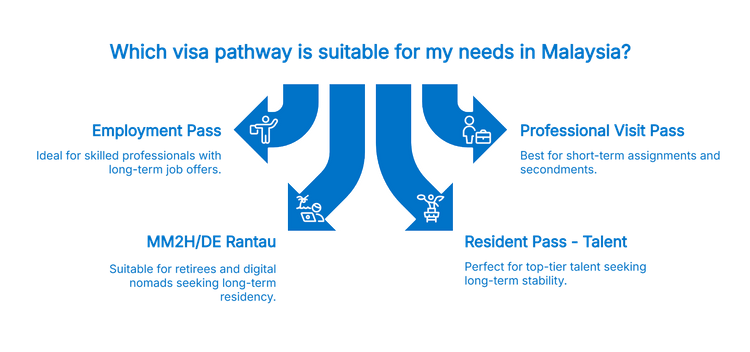
Malaysia offers several visa pathways for expatriates, each tailored to different professional, lifestyle, and relocation needs.
Below is a simplified breakdown of the main options relevant in 2026:
1. Employment Pass (EP)
The Employment Pass remains the most common route for skilled professionals relocating to Malaysia.
Key points:
- Issued to foreign talent hired directly by Malaysian employers.
- Typically granted to roles requiring specialised skills, managerial responsibilities, or niche expertise.
- Validity ranges from 1 to 5 years, depending on the EP category and the employer’s eligibility status.
- Allows dependants (spouse/children) to join under Dependant or Long-Term Social Visit Passes.
2. Professional Visit Pass (PVP)
Designed for short-term or project-based assignments.
Suitable for:
- Foreign specialists are invited to Malaysia temporarily (e.g., trainers, consultants, technical experts).
- Employees of overseas companies performing work in Malaysia on secondment.
Characteristics:
- Usually valid for up to 12 months.
- Holder remains employed by the overseas company, not a Malaysian entity.
3. Malaysia My Second Home (MM2H)/DE Rantau
A lifestyle-oriented visa category for long-stay foreigners, retirees, and digital professionals.
MM2H:
- A long-term residency scheme with financial requirements and minimum stay conditions (subject to ongoing 2026 revisions).
- Popular among retirees and those seeking semi-permanent residence with flexibility.
DE Rantau Nomad Pass:
- A digital-nomad visa tailored for remote workers and global freelancers.
- Allows extended stays in Malaysia while working for overseas employers or clients.
4. Resident Pass – Talent (RP-T)
A premium long-term residency option for top-tier talent.
Ideal for:
- Highly skilled professionals who meet stringent TalentCorp eligibility criteria.
- Individuals seeking stability, long-term career prospects, and enhanced flexibility.
Benefits include:
- Up to 10 years’ residency validity.
- Freedom to change employers without reapplying for a new pass.
- Ability to bring family dependants under the same long-term arrangement.
Together, these visa pathways give expatriates a clear, structured foundation for planning long-term moves, short-term assignments, or flexible remote lifestyles in Malaysia’s evolving 2026 landscape.
Daily Living Essentials for Expats in Kuala Lumpur
Relocating to Kuala Lumpur becomes far smoother when you understand the pillars of daily life, schooling, healthcare, and transport.
1. International Schools Popular with Expat Families
Klang Valley offers one of Southeast Asia’s most substantial concentrations of international schools, with curricula ranging from British and American to IB.
Well-established choices include:
- Garden International School (GIS)
- Mont’Kiara International School (M’KIS)
- The International School of Kuala Lumpur (ISKL)
- Alice Smith School
- Sayfol International School
- The British International School of Kuala Lumpur (BSKL)
What to expect:
- Annual fees typically range from RM25,000 to RM100,000, depending on the level and institution.
- Demand is strong, so early registration is often necessary.
- Many schools provide dedicated bus routes covering major expat neighbourhoods.
2. Healthcare and Insurance for Expats
Malaysia’s private healthcare system is one of its most significant advantages for expatriates, modern, accessible, and English-friendly.
Trusted private hospitals:
- Gleneagles Kuala Lumpur
- Prince Court Medical Centre
- Sunway Medical Centre
- KPJ Damansara
Key considerations:
- Consultation and treatment costs are relatively affordable by regional standards.
- Most expatriates secure international health insurance for specialist care and high-value treatments.
- Appointment availability is generally fast, especially in private facilities.
3. Transport and Mobility in Kuala Lumpur
KL is increasingly connected, making it easier for newcomers to get around without owning a car.
Main mobility options include:
- MRT Kajang Line and Putrajaya Line
- LRT Kelana Jaya & Ampang Lines
- KL Monorail
- KTM Komuter
- RapidKL bus network
- E-hailing services (Grab, AirAsia Ride)
How expats typically move around:
- Many choose transit-linked neighbourhoods to avoid traffic and parking concerns.
- E-hailing remains the preferred option for daily errands due to low cost and convenience.
- Car ownership is common mainly among families living in suburban, landed-home areas.
Together, these essentials, schooling, healthcare, and reliable transport, form the foundation of a smooth, comfortable expatriate lifestyle in Kuala Lumpur.
Essential Tips for New Expats Moving to Kuala Lumpur
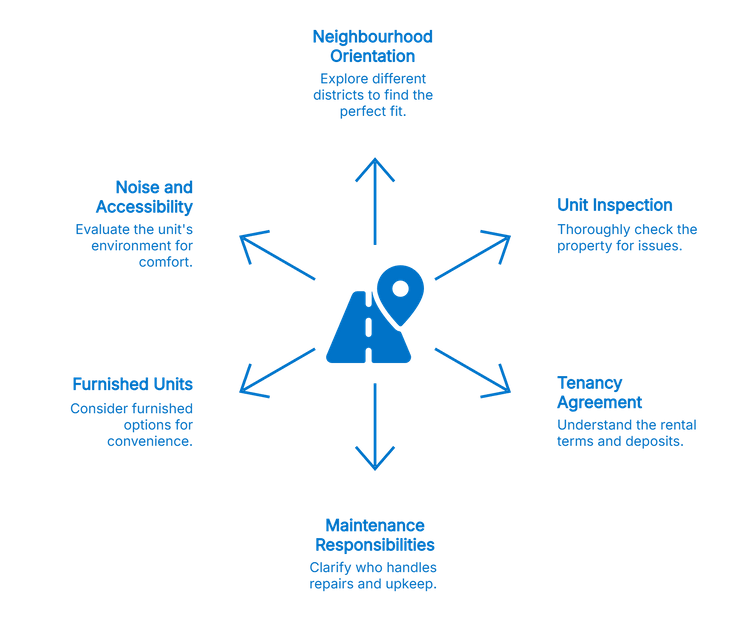
Here are the key things every newcomer should keep in mind:
1. Prioritise neighbourhood orientation
Before committing to a long-term lease, spend time exploring different districts. Each area offers a distinct lifestyle, from the calm, family-friendly feel of Desa ParkCity to the urban energy of KLCC or the café-driven charm of Bangsar.
Visiting during the day and at night helps you understand noise levels, traffic flow, and overall ambience.
2. Inspect units carefully
Physical inspections are essential in KL’s high-rise market. Check:
- Air-conditioning units for cooling strength and age
- Water pressure (varies widely between buildings)
- Condition of fittings like wardrobes, built-ins, and kitchen appliances
- Any signs of leaks or mould
This helps avoid surprises after moving in.
3. Understand tenancy agreements
Malaysia follows a fairly standard rental structure. Expect to pay:
- 1 month advance rental
- 2 months security deposit
- 0.5-month utilities deposit
Ensure all terms, renewal rights, notice periods, and inventory lists are clearly documented before signing.
4. Clarify maintenance responsibilities
In most condo tenancies:
- Landlords handle major repairs (e.g., air conditioning, plumbing, appliances).
- Tenants are responsible for minor wear and tear or basic upkeep.
Setting expectations early helps prevent disputes later.
5. Consider furnished units
Many expat-friendly properties are furnished, either fully or partially, often including essentials such as beds, sofas, kitchen appliances, and wardrobes.
This can significantly reduce your initial setup cost and speed up your move.
6. Check noise, traffic, and accessibility
KL is a vibrant city, but that also means certain areas face higher noise levels. When viewing a unit, pay attention to:
- Traffic noise near highways
- Train vibrations near MRT/LRT lines
- Construction activity in developing areas
A quick visit during peak hours can give you a more accurate picture of daily living conditions.
Overall, taking time to understand KL’s neighbourhoods, rental norms, and everyday practicalities will help you settle in smoothly and enjoy the city from day one.
Starting Your Expat Journey in Kuala Lumpur with Confidence
Living in Kuala Lumpur as an expat in 2026 offers the rare blend of comfort, culture, convenience, and affordability that few global cities can match.
With diverse neighbourhoods, transparent rental options, strong English proficiency, and a lifestyle that balances modernity with warmth, KL continues to stand out as one of Southeast Asia’s most welcoming long-term bases.
Whether you’re moving for work, lifestyle upgrades, or new regional opportunities, understanding where to live, how rentals work, and what daily life looks like will help you settle in quickly and confidently.
By taking time to explore neighbourhoods, familiarising yourself with tenancy norms, and understanding local systems, your relocation becomes not just smoother but genuinely enjoyable.
Ready to begin your KL chapter? Browse the latest sales listings on iProperty Malaysia and find a home that perfectly matches your expat lifestyle.