
MRT3 is more than a new rail line, it is a strategic planning instrument reshaping Kuala Lumpur’s urban structure. This guide explains how the Circle Line, alignment refinements, and transit oriented development will influence connectivity, land use, property values, and long-term city growth.
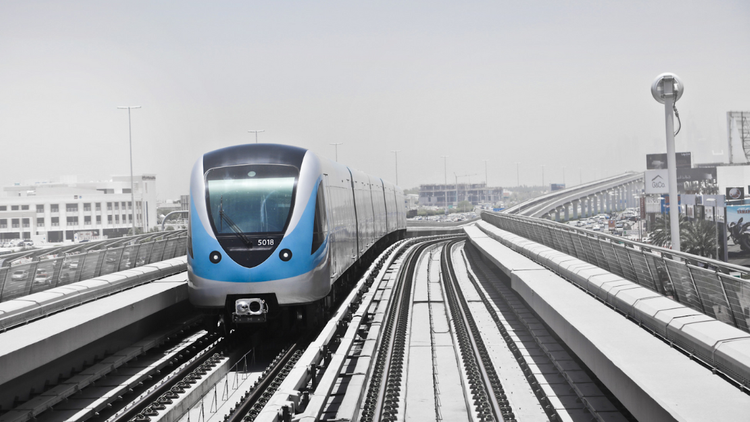
Major urban rail projects rarely exist in isolation. Beyond moving people, they redefine land use, density patterns, and long-term development priorities. In Greater Kuala Lumpur, the proposed MRT3 Circle Line represents not merely another addition to the rail network, but a structural intervention with the potential to reshape how the city grows outward and inward, over the coming decades.
As planning discussions around MRT3 continue, attention has increasingly shifted from headline announcements to alignment refinements and their implications for transit oriented development (TOD).
These two elements are closely intertwined. Where stations are placed, how alignments are adjusted, and how surrounding land is zoned will collectively determine whether MRT3 functions purely as a transport solution or as a catalyst for comprehensive urban transformation.
Understanding MRT3 Within Kuala Lumpur’s Rail Network
To appreciate the significance of MRT3, it is first necessary to know how a circle line functions within a mature urban rail system and how it reshapes movement patterns across the city.
The Role of a Circle Line
A circle line serves a fundamentally different function from radial rail lines. While radial lines connect suburbs to a central core, a circle line:
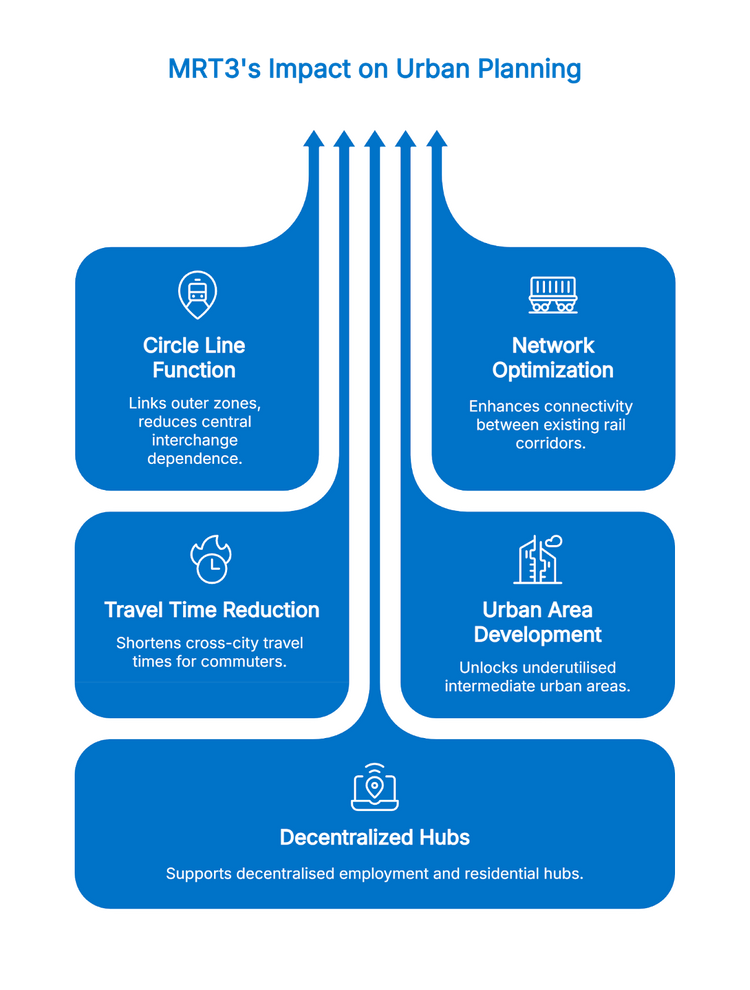
- Links outer urban zones directly to one another
- Reduces dependence on city-centre interchanges
- Redistributes passenger flows across the network
- Spanning 51.6 km with 31 stations (10 interchanges)
MRT3 is conceived as a network optimiser, improving connectivity between existing rail corridors rather than duplicating them.
Why MRT3 Matters at a Structural Level
From an urban planning perspective, MRT3’s significance lies in its ability to:
- Shorten cross-city travel times
- Unlock underutilised intermediate urban areas
- Support decentralised employment and residential hubs
These outcomes align closely with long-term metropolitan planning objectives, particularly those aimed at reducing congestion and promoting sustainable growth.
Alignment Refinements: Why They Matter More Than Headlines?
Before assessing station locations or market impact, it is essential to understand why alignment adjustments are a normal and necessary part of significant rail infrastructure planning.
What Alignment Refinement Actually Means
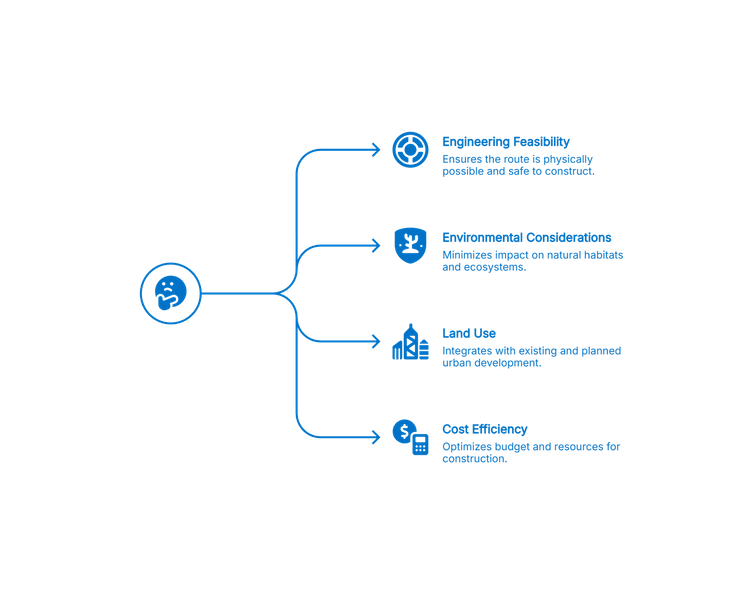
Alignment refinement refers to the iterative process of adjusting a rail line’s route based on:
- Engineering feasibility
- Environmental considerations
- Existing and planned land use
- Cost efficiency and constructability
This process is standard for large-scale rail projects and does not imply uncertainty or instability. Instead, it reflects the need to optimise outcomes across multiple constraints.
Balancing Engineering and Urban Outcomes
Rail alignments are not drawn solely to serve existing demand. They must balance:
- Geological conditions
- Land acquisition complexity
- Integration with the current infrastructure
- Long-term urban growth potential
In the case of MRT3, refinements are particularly significant because of its role as a connector between established and emerging urban zones.
Alignment as a Signal to Planners and Developers
Even before construction begins, alignment decisions act as signals to:
- Local authorities reviewing zoning plans
- Developers assessing long-term land value
- Infrastructure planners coordinating utilities and roads
As a result, alignment refinement has implications well beyond transport engineering.
MRT3’s alignment refinements are less about uncertainty and more about deliberate planning, shaping not only how the line is built, but how surrounding urban areas will evolve over the long term.
Transit Oriented Development (TOD): The Core Planning Philosophy
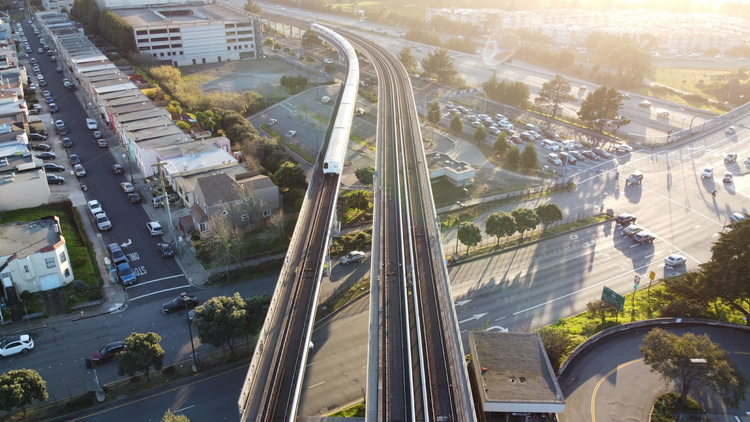
It is necessary to examine the planning philosophy that underpins how rail infrastructure and land use are intended to work together.
Defining Transit Oriented Development (TOD)
Transit oriented development (TOD) refers to a planning approach that concentrates high-density, mixed-use development within walking distance of public transport nodes. Its defining characteristics typically include:
- Compact, walkable neighbourhoods
- Integration of residential, commercial, and civic uses
- Reduced reliance on private vehicles
In Kuala Lumpur, TOD has become a central pillar of urban policy, particularly around rail infrastructure investments.
Why TOD Is Critical to MRT3’s Success?
Given MRT3’s circumferential nature, its success depends less on peak-hour commuter volumes and more on consistent, all-day ridership. TOD supports this by:
- Creating residential populations near stations
- Encouraging employment clusters along the line
- Supporting retail and service activity throughout the day
Without TOD, a circle line risks underutilisation. With it, MRT3 becomes a backbone for sustained urban activity.
Ultimately, the effectiveness of MRT3 will be shaped not just by its tracks and stations, but by how successfully transit oriented development translates rail access into active, lived-in urban environments along the circle line.
From Car-Centric Planning to Transit-Led Cities
With the principles of TOD established, the next step is to consider how this approach translates within Kuala Lumpur’s existing urban structure and planning history.
Moving Beyond Car-Centric Development
Historically, many areas in Greater Kuala Lumpur developed around road access rather than public transport. TOD represents a deliberate shift away from this model, aiming to:
- Reduce car dependency
- Improve land-use efficiency
- Enhance liveability in high-density areas
MRT3 provides a rare opportunity to apply TOD principles at scale, across multiple urban zones simultaneously.
Policy Alignment and Planning Integration
Transit oriented development around MRT lines typically requires coordination between:
- Federal transport authorities
- State and local planning departments
- Municipal councils
This coordination ensures that zoning, plot ratios, and land-use permissions align with rail investment objectives.
If policy coordination and execution remain consistent, TOD around MRT3 has the potential to gradually reshape Kuala Lumpur into a more transit-led, liveable city rather than one defined primarily by road access.
Compare units, pricing, and layouts across Kuala Lumpur sale listings.Residential TOD Opportunities Along MRT3
Building on MRT3’s TOD framework, residential development opportunities are among the most immediate and visible outcomes of improved orbital connectivity.
Higher-Density Living With Better Connectivity
Residential TOD around MRT3 is likely to emphasise:
- Medium- to high-density housing
- Smaller unit sizes are aligned with urban living
- Proximity-driven lifestyle appeal
Such developments cater to households that prioritise connectivity over land size, including young professionals and downsizers.
Shifting Buyer Preferences
As rail connectivity improves, buyer preferences tend to shift towards:
- Shorter commute times
- Walkable daily conveniences
- Integrated residential environments
MRT3’s alignment refinements directly influence which neighbourhoods can realistically support this demand.
Over time, well-executed residential TOD along MRT3 has the potential to recalibrate housing demand towards transit-first living, reinforcing connectivity as a primary driver of urban residential choice.
Commercial and Employment Nodes
Beyond residential intensification, MRT3’s TOD framework also reshapes where and how economic activity is distributed across the city.
Decentralising Employment Centres
One of the strategic objectives of MRT3-linked TOD is to support distributed employment hubs. Instead of concentrating jobs solely in the city centre, TOD encourages:
- Office clusters near interchange stations
- Business parks integrated with rail access
- Reduced peak-direction commuter pressure
This decentralisation is critical to long-term network efficiency.
Retail and Service Integration
TOD does not rely on large standalone malls. Instead, it promotes:
- Street-level retail integrated into developments
- Daily-needs services within walking distance
- Human-scale commercial environments
Such retail models thrive on consistent footfall generated by rail users and nearby residents.
Together, these commercial and employment nodes help rebalance Kuala Lumpur’s urban structure, supporting a more efficient, rail-anchored economy that functions beyond the traditional city-centre core.
Public Realm and Urban Design Implications
Beyond land use and building density, MRT3-linked TOD places increasing emphasis on the quality of the public realm and how people experience the city at street level.
Walkability as Infrastructure
In TOD planning, walkability is treated as infrastructure, not an afterthought. Around MRT3 stations, this typically involves:
- Pedestrian-priority streets
- Covered walkways and shaded routes
- Seamless station-to-development connections
Alignment decisions influence how easily these elements can be implemented.
Open Spaces and Community Facilities
Effective TOD integrates public spaces such as:
- Pocket parks
- Plazas and civic squares
- Community facilities near stations
These spaces help balance density with liveability, particularly in mature urban areas.
When thoughtfully executed, these public realm and urban design measures ensure that higher density around MRT3 stations translates into more humane, walkable, and liveable urban environments rather than simply intensified development.
Try the calculator to check repayment estimates.Land Value Dynamics and Planning Caution
MRT3 also reshapes land economics, making it essential to examine how planning decisions interact with land values and market behaviour.
Value Uplift Is Not Automatic
While rail access often increases land value, uplift is not uniform. It depends on:
- Zoning flexibility
- Parcel size and assembly potential
- Surrounding neighbourhood character
Alignment refinements can therefore produce differentiated outcomes, even within the same corridor.
Avoiding Speculative Overreach
From a planning perspective, excessive speculation can undermine TOD goals by:
- Inflating land prices prematurely
- Delaying actual development
- Encouraging land hoarding
Effective TOD requires disciplined planning controls to ensure development follows infrastructure, not the other way around.
Ultimately, sustainable value creation around MRT3 will depend on calibrated planning and market discipline, ensuring that land appreciation supports timely, functional development rather than speculative excess.
MRT3 Within the Broader Rail Network: Unlocking Interchange-Led TOD Value
Understanding MRT3’s full potential requires examining how it connects with Kuala Lumpur’s existing MRT and LRT lines, creating opportunities for intensified development and improved mobility.
Strengthening Network Effects
MRT3’s most significant TOD potential lies at interchange points, where multiple lines intersect. These locations naturally support:
- Higher development intensity
- Mixed-use vertical development
- Regional accessibility advantages
Alignment refinement plays a critical role in maximising these interchange benefits.
Avoiding Redundancy
Careful alignment ensures that MRT3 complements, rather than duplicates, existing lines. This protects:
- Ridership distribution
- Development diversity
- Network resilience
TOD planning must therefore consider the broader rail ecosystem.
MRT3 not only enhances commuter convenience but also amplifies the value and functionality of surrounding TOD developments, reinforcing a cohesive, multi-line urban transit network.
Long-Term Urban Resilience and Sustainability
Planning around MRT3 offers an opportunity to embed long-term resilience and sustainability into Kuala Lumpur’s urban fabric, ensuring that development today remains viable and adaptable for decades to come.
Environmental Considerations
Transit oriented development supports environmental goals by:
- Reducing vehicle kilometres travelled
- Encouraging compact urban form
- Lowering per-capita infrastructure costs
MRT3’s alignment decisions influence how effectively these benefits can be realised.
Adapting to Demographic Change
As household sizes shrink and urban lifestyles evolve, TOD provides a flexible framework that can adapt over time. MRT3-linked development is therefore positioned not just for today’s demand, but for future demographic realities.
By integrating environmental goals with flexible, future-ready planning, MRT3-linked TOD can support a more sustainable, adaptable, and resilient urban environment over the long term.
MRT3 as a Planning Instrument, Not Just a Rail Line
The MRT3 Circle Line should be understood as more than a transport project. Through its alignment refinements and integration with transit oriented development, it functions as a planning instrument, shaping how and where Kuala Lumpur grows.
By linking established districts with emerging urban zones, MRT3 creates opportunities for balanced, sustainable development. The extent to which these opportunities are realised will depend not only on the rail infrastructure, but also on how effectively TOD principles are applied around it.
For planners, developers, and urban stakeholders, MRT3 represents a rare chance to align infrastructure investment with long-term urban quality. If executed with discipline and clarity, it has the potential to redefine Kuala Lumpur’s metropolitan structure for decades to come.
Track new launches early to position ahead of the following price cycle.
Disclaimer: The information is provided for general information only. iProperty.com Malaysia Sdn Bhd makes no representations or warranties in relation to the information, including but not limited to any representation or warranty as to the fitness for any particular purpose of the information to the fullest extent permitted by law. While every effort has been made to ensure that the information provided in this article is accurate, reliable, and complete as of the time of writing, the information provided in this article should not be relied upon to make any financial, investment, real estate, or legal decisions. Additionally, the information should not substitute advice from a trained professional who can take into account your personal facts and circumstances, and we accept no liability if you use the information to form decisions.