
| The Rainmakers (Fractional Investment) | REITS | Rent-to-Own | Direct Ownership | |
| Liquidity | Yes | Yes | No | No |
| Ownership | Yes | No | Yes | Yes |
| One-click investment | Yes | Yes | No | No |
| Fully managed services | Yes | Yes | No | No |
| Interest fluctuations impact | No | Yes | Yes | Yes |
| Portfolio diversification | Yes | No | No | No |
| Rewards | Yes | No | No | No |
The Rainmakers is disrupting the real estate landscape in Malaysia through its fractional ownership platform, which enables investors to invest in high-yield commercial real estate with lower capital.

The property market remains one of the most popular and reliable investments amid an increasingly challenging economic environment.
Although many property investors still stick to the traditional buy-to-own or direct ownership model, various exciting alternatives have emerged in recent years that offer significant value, innovation and flexibility to a property portfolio, while reducing the inherent risks.
A major alternative in the market is fractional ownership, which is gaining traction among property investors mainly due to its benefits of simplicity, accessibility, speed, and security.
Fractional ownership is a method of investing in real estate by buying a share of a property, resulting in the investor owning a part of that property along with other investors.
Traditionally, this form of ownership has been used for expensive assets such as yachts, private jets, art, and holiday homes, but it’s now become more commonly practiced in the real estate market, allowing retail investors access to property that would otherwise be out of reach and providing better portfolio diversification.
Read on to find out how fractional investment compares with the traditional direct ownership model as well as other alternative investment methods in the market.
Direct Ownership vs Fractional Ownership

In a traditional direct ownership path of purchasing a property, investors are required to jump through hoops to secure the full financing and legal works required to seal the deal and own the property they desire.
This usually includes arduous processes such as shopping around for the many different home loan products offered by banks and developers to find one that suits their profile and eligibility.
On the other hand, the concept of fractional real estate investment provides flexibility by allowing individuals to purchase a share rather than the entire property, meaning multiple investors would collectively own and profit from the property.
Real Estate Investment Trust (REIT) vs Fractional Ownership

A Real Estate Investment Trust (REIT) in Malaysia is a type of investment vehicle that allows individuals to invest in a fund or a trust that owns and manages income-producing commercial real estate.
REITs are regulated by the Securities Commission of Malaysia and provide a way for investors gain exposure to commercial properties. Malaysia was the first country in Asia which introduced the concept of real estate or property trust to the stock exchange in 1989.
In comparison, fractional investment does not involve purchasing stocks or fractions of a property company. Instead, it involves direct, fractional ownership of an actual piece of property. In a typical fractional investment, a group of investors will collaborate to establish a special purpose vehicle (SPV) to purchase properties.
Another main difference is that unlike REITs, fractional investors have the complete freedom to choose and select their property acquisitions.
Rent-To-Own vs Fractional Ownership

Rent-to-own is a housing option that allows individuals to rent a property with the intention of eventually purchasing it.
In Malaysia, rent-to-own schemes have gained popularity as an alternative pathway to homeownership, particularly for individuals who face challenges in securing traditional mortgage financing.
This option includes a leasing agreement that allows tenants to rent a property for a fixed tenure with the option to purchase it fully before the end of the lease.
During the lease tenure, the tenant pays both rent and an additional fee which goes toward the eventual purchase price of the property that is fixed at the start of tenancy.
On the other hand, fractional ownership allows investors to own a stake in property without the need to reside in it.
In fact, with the flexibility of fractional ownership, investors can have a diversified portfolio across various regions around the world without the hassle of going through the traditional processes of acquiring real estate.
Portfolio diversification is important for investors as it enables them to spread their risk out and limit their exposure to any one type of asset, thereby controlling the volatility of their portfolio over time.
Who are The Rainmakers?
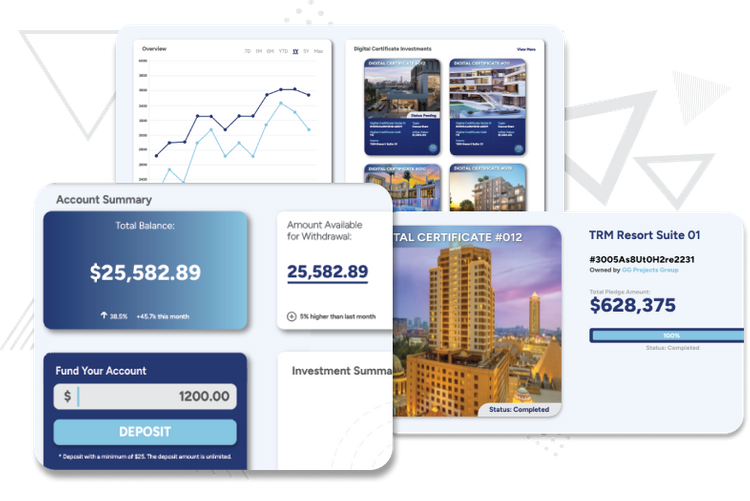
In the world of Proptech, The Rainmakers revolutionise property investment in Malaysia by providing Secure and Sustainable Single Asset Investment opportunities, enabling ambitious and seasoned investors to invest in high-yield commercial real estate with lower capital.
With their innovative ‘SASS’ fractional property ownership platform, they identify, acquire, and invest alongside our stakeholders, democratising high-yield commercial real estate and making it accessible to all.
Led by a team of industry veterans and trustees, The Rainmakers harness real-time property data, financial insights, and extensive market knowledge for strategic investments in carefully curated properties, all while upholding strict regulatory compliance standards.
The Rainmakers Process
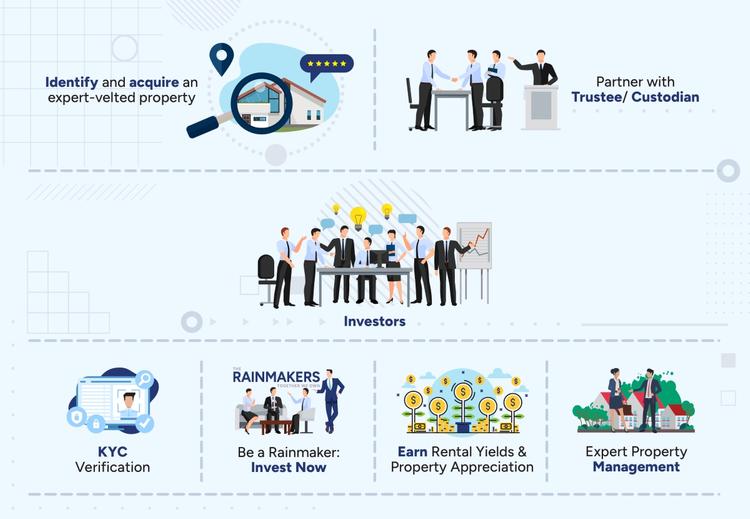
The Rainmakers streamline the property investment process by eliminating financial barriers, reducing the time and effort needed to invest, and providing assurance that all properties are legally owned by investors.
At The Rainmakers, an investment community pools resources to purchase properties on a collective basis, with a minimum investment per property of only RM500.
Once a property is funded, investors earn returns through property value growth and rental income.
The assets are highly liquid, for when a decision is made to exit their investments, investors can cash out at any time by selling their fractions to another investor and potentially gain a profit.
When investing with The Rainmakers, every investment can be made with the assurance that it’s backed by data and transparency.
The Rainmakers leverage AI data to make investment decisions, whilst using the latest technology to provide transparency and security.
It also has an external and in-house acquisition team to source for investment opportunities based on a due diligence criteria that evaluates potential investments.
An investment committee then makes final decisions on investment opportunities identified by the acquisition team, thereby minimising risk and maximising long-term value creation.
Retail investors usually find it difficult to have a diversified portfolio but with The Rainmakers, they have the options to buy and sell lucrative real estate all over the world — ranging from short stay properties, hotels, to other classes of commercial properties — at the fraction of a price.
Clients can also choose from curated property investment categories such as Below Market Value, Potential Growth, Good Cash Flow, Potential Development, Business Development, and more, allowing for more choices for diversification.
The following table has more information to help you make an informed decision when choosing between fractional investment and other viable options:
Want to know more about The Rainmakers? Check out their website to learn how you can invest with ease.
Disclaimer: The information is provided for general information only. iProperty.com Malaysia Sdn Bhd makes no representations or warranties in relation to the information, including but not limited to any representation or warranty as to the fitness for any particular purpose of the information to the fullest extent permitted by law. While every effort has been made to ensure that the information provided in this article is accurate, reliable, and complete as of the time of writing, the information provided in this article should not be relied upon to make any financial, investment, real estate or legal decisions. Additionally, the information should not substitute advice from a trained professional who can take into account your personal facts and circumstances, and we accept no liability if you use the information to form decisions.