
In high-density environments, where many people coexist and share limited space, efficient and well-designed vertical transportation becomes paramount.
Over the last few centuries, there has been a significant growth in global population, coupled with a high level of industrialisation in our economies. Consequently, a larger proportion of the population has migrated towards urban centres, giving way to the phenomenon that we know as urbanisation.
In Malaysia, the urbanisation rate has tripled over five decades, increasing from 28.4% in 1970 to 75.1% in 2020, according to the Statistics Department of Malaysia. Projections from the United Nations Department of Economic and Social Affairs in 2018 indicate that this trend will continue to grow. It is anticipated that Malaysia’s urbanisation rate will reach around 81.8% by 2030, indicative of the rapid growth and expansion of our cities.
As our cities continue to grow, the need for efficient and sustainable mobility solutions within urban areas becomes increasingly critical. Vertical transportation, especially in the context of the rising prevalence of high-rise and high-density buildings, plays a fundamental role in ensuring the seamless movement of people.
Why Does People Flow within Buildings Matters?
People flow, defined as the movement of individuals within and between buildings, is crucial for a well-functioning urban environment. Consider this relatable scenario: long queues in the lobby after office hours. Here is another: crowded lifts after lunch hour in your office building.
Optimal people flow entails smooth, safe, and comfortable movement, minimising waiting times. This experience begins at the arrival point, progresses through the lobby, and finally culminates at the ultimate destination, traversing multiple doors, spaces, and halls along the way.
People flow goes beyond mere transportation within buildings. It embodies a comprehensive philosophy of urban mobility that ensures movement within and between buildings is not only safe but also efficient and enjoyable. It prioritises the well-being and convenience of individuals as they navigate the urban landscape.
This holistic approach seeks to create environments where individuals can move with ease, connecting seamlessly with the places and spaces that enrich their lives. In doing so, it fosters a sense of vitality within urban areas, forging a foundation for vibrant, sustainable smart cities.
Discover properties for saleInnovative Vertical Transportation is the Key to Humanising High-Density Buildings
In high-density environments, where many people coexist and share limited space, efficient and well-designed vertical transportation becomes paramount. Innovation in elevator and escalator solutions aims not only to optimise space utilisation but also to enhance the overall user experience.
We can achieve a 50% increase in People Flow performance through the following innovative technologies:
- Destination Control Systems: Grouping end users with similar destination floors dramatically reduces the number of starts and stops leading to increased performance whilst at the same time reducing energy consumption.
- Speed Upgrades: Modern control technologies together with high friction lifting material enable elevators to run at higher speeds without the need for additional construction work.
- Double Deck Conversions: For highly populated towers, the conversion of traditional single-deck to double-deck elevators offers sufficient increases in people flow capacity without the need to add additional elevator shafts. According to Rick Barker, a principal of vertical transportation consultant Barker Mohandas LLC, “Double-deck elevators were initially planned to reduce elevator core space by over 35% compared to single-deck elevators.”
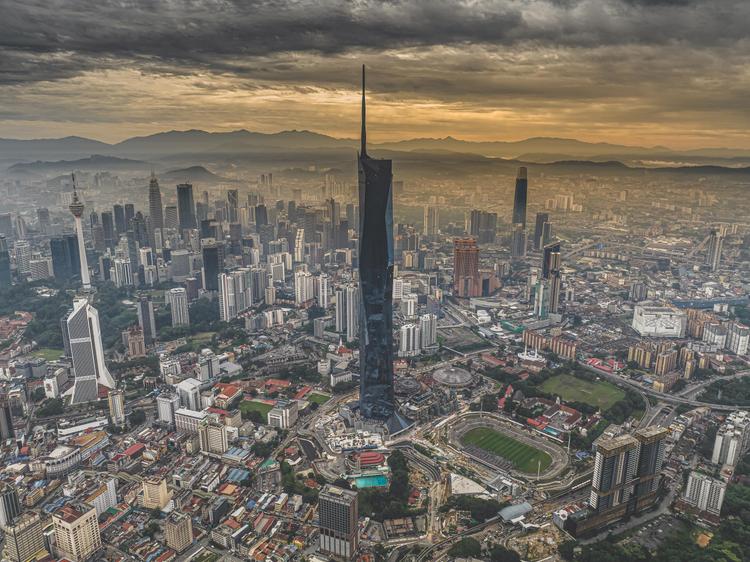
Moving 10,000 People through Merdeka 118 – the World’s Second Tallest Building
My colleague, Janne Sorsa who is the head of People Flow Planning at KONE, recently spoke at the Council of Tall Buildings and Urban Habitat’s International Conference in Kuala Lumpur. In his presentation, he shared some excellent insights on people flow in Merdeka 118, a monumental project for us at KONE.
We have proudly furnished this iconic structure that stands tall at an impressive height of 678.9 metres with the world’s highest escalators. Our contribution extends to a vertical transportation system comprising a total of 89 elevators, among them 37 double-deck elevators, complemented by a 3rd generation destination control system and emergency evacuation elevators.

As the second tallest building in the world, Merdeka 118 boasts KONE’s innovative double-deck elevators, a strategic choice to optimise floor space. The 3rd generation Destination Control System addresses potential congestion during peak office hours. This not only enhances efficiency during high-traffic periods but also significantly reduces wait times, enhancing the user experience. In fact, our 3rd generation Double Deck Destination Control System boasts an average waiting time that is 15 to 20% shorter than the prevailing industry standard during peak hours.
In terms of safety, Merdeka 118 adopts emergency evacuation elevators in addition to the traditional evacuation methods using stairs. These specialised elevators are engineered to swiftly transport occupants to safety in the event of an emergency. What is more, they feature user-friendly interfaces that offer crucial information to passengers, both in regular operations and emergency situations. This forward-thinking approach exemplifies our commitment to not only efficiency and convenience but also to the safety and well-being of all building occupants.
In this dynamic landscape of urbanisation, the need for efficient people flow within high-density and tall buildings like the Merdeka 118 becomes paramount. As cities in Malaysia grow and evolve, the demand for innovative vertical transportation systems rises in tandem. They play a critical role in ensuring seamless movement within these bustling urban environments. They also contribute to creating accessible, safe, and convenient urban spaces that cater to the evolving needs of modern societies. This holistic approach not only supports the demands of urbanisation but also fosters the development of smart sustainable communities in Malaysia.
*This article is written by Teoh Tze Ping, Managing Director, KONE Malaysia.