

Malaysia has a diverse housing market, from terrace houses and semi-detached homes to condominiums, serviced residences, and townhouses. Understanding the differences can help you narrow down your options when buying or renting.
These property types differ in their layout, space, management, and ownership structure. Marketing terms such as “serviced residence”, “SoHo”, or “superlink” can also vary between developments, so check the property’s actual details and documents.
In this guide, we explore the main types of houses in Malaysia, their key features, and what to consider when choosing a home.
<a href=”https://www.iproperty.com.my/property-for-sale”><strong>Browse properties for sale in Malaysia and find one that suits your needs.</strong></a>What Are The Main Types Of Houses In Malaysia?
The types of houses in Malaysia range from landed homes with private outdoor space to high-rise properties with shared facilities. They also differ in layout, density, maintenance requirements, and how common areas are managed.
The National Property Information Centre (NAPIC), for example, uses four broad house categories in its Malaysian House Price Index: terrace, high-rise, semi-detached, and detached houses.
The main property types covered in this guide include:
- Landed properties
- High-rise properties
- Strata properties
- Commercial or flexible-use properties
- Mixed or integrated developments
Some of these terms describe the physical type of home, while others refer to its layout, use, or development concept. Understanding these differences can make it easier to compare properties before looking at each type in detail.
What Is The Difference Between Landed, Strata And High-Rise Property?
Landed, strata, and high-rise are commonly used terms in Malaysia, but they describe different aspects of a property. Landed and high-rise generally describe the physical form of a home, while strata refers to an ownership structure involving individual parcels and shared common property.
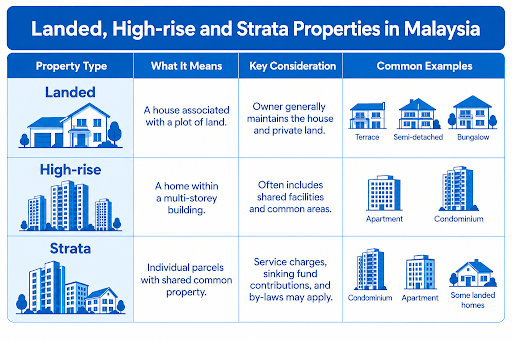
The categories can overlap. For example, a condominium can be both high-rise and strata, while some landed developments also use strata titles. Buyers should therefore check the property’s title and management structure rather than relying only on whether it appears to be landed or high-rise.
Now, let’s look at 12 different types of houses you can find in Malaysia.
1. Bungalow Or Detached House
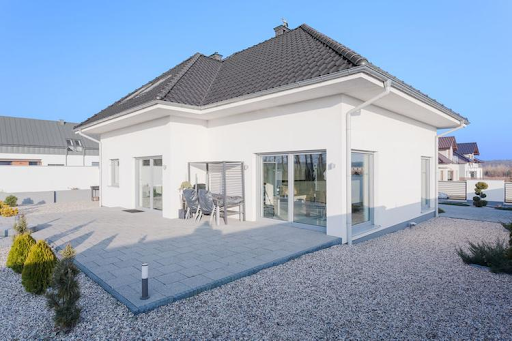
A bungalow, also commonly described as a detached house in Malaysia, is a standalone landed home that does not share a wall with another house.
It is generally surrounded by private outdoor space, although the amount of land varies considerably between developments.
Compared with terrace and semi-detached houses, bungalows typically provide greater privacy and more flexibility for gardens, parking, outdoor living areas, or future alterations, subject to local authority requirements and any applicable development rules.
Common characteristics include:
- No shared party wall with a neighbouring house
- Private land around some or all sides of the building
- Larger land and built-up areas than many other landed homes
- Greater privacy and separation from neighbouring properties
- More outdoor space to maintain
Bungalows can vary significantly in size, design, and price. Location also makes a substantial difference. A bungalow in an established part of Kuala Lumpur or Petaling Jaya can have very different characteristics and pricing from one in a suburban or smaller-town development.
2. Semi-Detached House
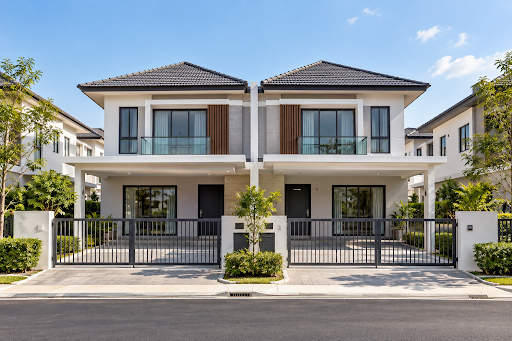
A semi-detached house, commonly shortened to semi-D in Malaysia, consists of two landed homes joined along one side by a common wall.
Each home generally has its own entrance, driveway, and outdoor area. Because only one side is attached to another property, semi-detached houses usually provide more side space and privacy than an intermediate terrace house.
Typical features include:
- One shared wall with the adjoining home
- Open land on the other side
- Private front and rear areas
- More windows may be possible along the exposed side, depending on the design
- Generally larger land and built-up areas than standard terrace houses
Semi-detached homes can suit larger households that want the space associated with a landed home without moving to a fully detached bungalow.
3. Terrace, Link And Superlink Houses
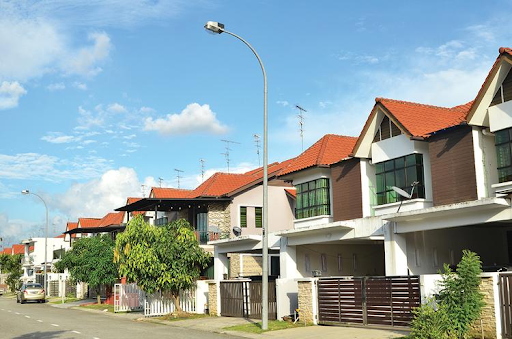
Terrace houses are among the most recognisable types of houses in Malaysia.
A terrace development consists of a row of landed homes. An intermediate unit normally shares walls with properties on both sides, while an end or corner unit typically has only one adjoining home.
1. Terrace House
Terrace houses come in single-storey, double-storey, and multi-storey configurations.
They commonly provide:
- Individual entrances
- Front car porches
- Rear yards or utility areas
- Multiple bedrooms
- Less private outdoor land than semi-detached or bungalow homes
Corner lots usually have additional land along one side, although the actual size and configuration depend on the development.
2. Link House
A link house is a row of connected landed homes, similar to a terrace house. Its key appeal is efficient use of land while still providing each household with its own entrance, parking area, and typically front and rear outdoor space.
3. Superlink House
Superlink is generally a marketing term used for larger link or terrace-style homes. These properties may have wider frontages, larger built-up areas, and more bedrooms than conventional terrace houses.
These three house types offer similar landed living, but differ mainly in size, frontage, layout, and outdoor space. Compare the actual property dimensions and features rather than relying on the development label alone.
<a href=”https://www.iproperty.com.my/new-property-launch”><strong>Browse new properties for sale in Malaysia and find your next home. </strong></a>4. Cluster House And Zero-Lot Home
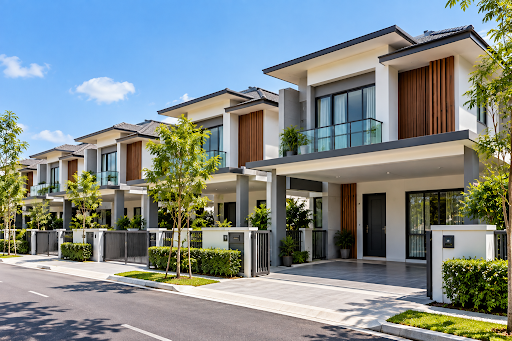
Cluster and zero-lot homes are increasingly encountered in newer landed developments and are worth distinguishing from conventional terrace, semi-detached, and bungalow homes.
A cluster house generally refers to landed homes arranged in groups or clusters rather than a continuous row. Depending on the design, units may be linked or positioned closely together while retaining private entrances and outdoor areas.
A zero-lot home is designed closer to one boundary of its lot. This allows more usable outdoor space to be concentrated on the opposite side instead of dividing it evenly around the house.
These concepts can offer an alternative for buyers who want landed living but prefer layouts that differ from conventional terrace housing.
5. Townhouse
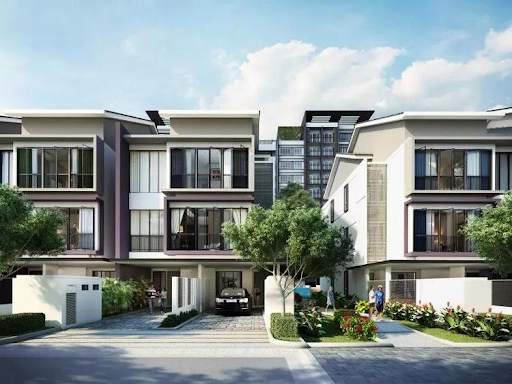
A townhouse in Malaysia can differ from the conventional townhouse concept found in some overseas markets.
Locally, a townhouse development may contain multiple homes within the same low-rise building. For example, one residence may occupy the lower level while another occupies the upper level, with each having a separate entrance.
Some developments also use multi-level configurations.
Common characteristics include:
- Two or more homes within a low-rise building
- Separate or partially separated entrances
- Lower and upper units may have different layouts
- Shared common property in strata developments
- Facilities may be available in gated or strata schemes
Townhouses can provide a middle ground between landed and high-rise living. Residents may get a lower-density environment than a large condominium while still sharing parts of the development with other owners.
Before buying, check whether stairs are required to reach the unit, the location of parking bays, how common property is managed, and which outdoor spaces form part of the individual parcel or common property.
6. Flat And Apartment
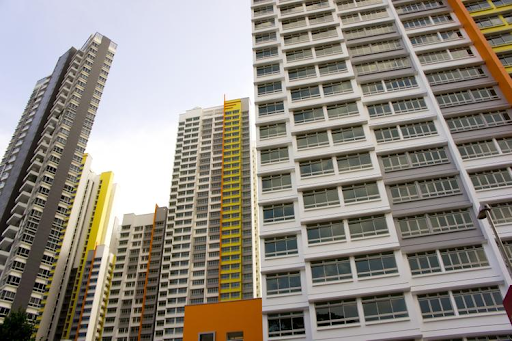
Flats and apartments are common forms of high-rise or multi-storey housing in Malaysia, although the terminology is not always applied consistently.
1. Flat
The term flat is generally associated with more basic multi-storey housing.
Older flats may have fewer facilities than newer apartments or condominiums. Some low-rise developments are also walk-up flats without lifts.
Facilities can vary but may include:
- Parking areas
- Playground
- Basic security
- Small shops or other neighbourhood amenities
Malaysia also has public housing flats under programmes such as the Program Perumahan Rakyat (PPR).
According to the National Housing Department, PPR housing in urban areas can consist of buildings between five and 25 storeys, while landed terrace homes may be provided in suburban areas. A standard PPR unit is approximately 700 sq ft and includes three bedrooms, two bathrooms, a living area, and a kitchen.
2. Apartment
An apartment generally offers individual residential units within a multi-storey building.
Depending on the project, an apartment may include lifts, security, parking, and selected recreational facilities.
The distinction between an apartment and condominium is not fixed simply by size. In everyday property usage, apartments are often positioned as having fewer facilities or a simpler range of common amenities than condominiums, but buyers should compare the actual development instead of relying on the label.
7. Condominium
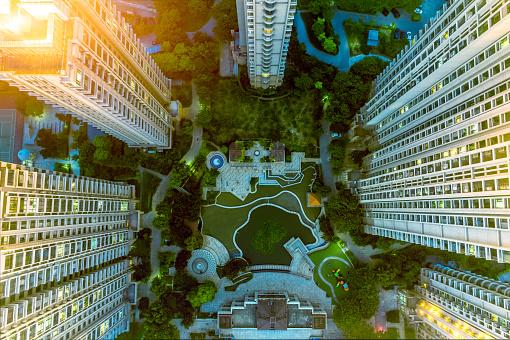
A condominium is typically a strata residential development where individual owners have their respective parcels while common property is collectively managed.
Common facilities may include:
- Swimming pool
- Gymnasium
- Children’s playground
- Multipurpose hall
- Landscaped areas
- Security and controlled access
- Shared parking areas
The range of facilities differs considerably between developments.
Condominium owners should budget for recurring service charges and sinking fund contributions, which help cover the maintenance, repair, and upkeep of common property.
Density can also affect everyday living, so consider the number of units, lifts, parking arrangements, facilities, and management of common areas when comparing developments.
8. Serviced Residence Or Serviced Apartment
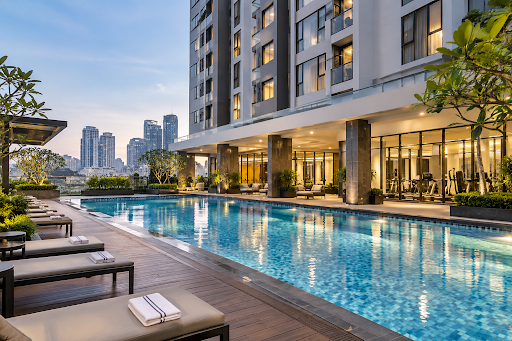
A serviced residence, sometimes called a serviced apartment, generally refers to a strata development offering residential-style units together with shared facilities.
Many are located within urban or mixed developments and may be connected or situated close to shopping centres, offices, public transport, and other commercial components.
A serviced residence does not necessarily provide hotel-style services such as housekeeping or room service. Facilities, title classification, utility arrangements, and legal treatment can vary between developments.
Before buying, check:
- Land and title information
- Approved property use
- Sale and purchase agreement
- Maintenance and sinking fund charges
- Utility arrangements
- Parking allocation
- Development density
- Applicable house rules or by-laws
This is particularly important when comparing a serviced residence with a conventional condominium.
9. Studio, Duplex And Penthouse Units
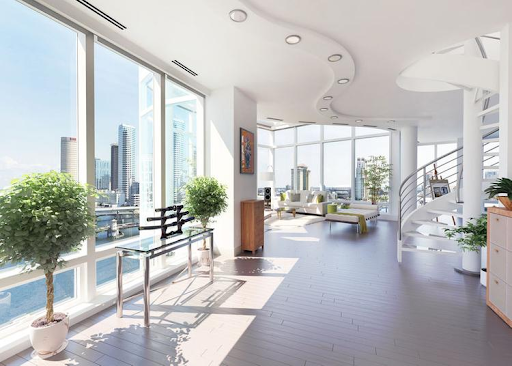
Some property terms describe the layout or position of a unit rather than a completely separate category of development.
1. Studio
A studio is generally a compact unit with an open-plan main living space.
The sleeping, living, and dining areas usually occupy the same main room, while the bathroom is enclosed. Some designs have a separate or partially separated kitchen.
Studios can suit single occupants, couples, or buyers who prioritise a smaller space in a convenient location.
2. Duplex
A duplex unit is arranged across two internal levels connected by a staircase within the property.
Duplexes may have higher ceilings or double-volume spaces, depending on the design. Bedrooms may be located on the upper level while living and dining spaces occupy the lower level.
Again, “duplex” primarily describes the configuration. It does not by itself tell you whether the development is a condominium, serviced residence, or another property type.
3. Penthouse
A penthouse is generally a larger unit located on or near the highest floor of a high-rise development.
Penthouses may offer:
- Larger floor areas
- Fewer neighbouring units
- Private lift lobbies in some developments
- Terraces or balconies
- Higher-floor views
- Private facilities in selected projects
Not every penthouse occupies an entire floor, and layouts vary considerably.
10. SoHo, SoVo And SoFo
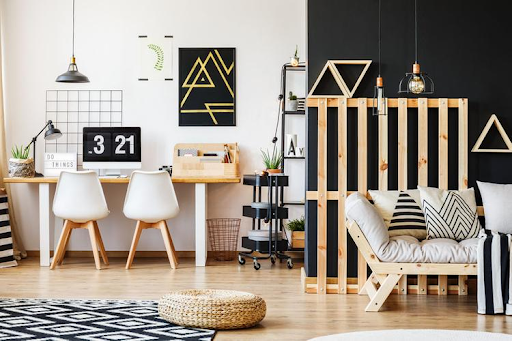
Malaysian property buyers may also encounter developments marketed as SoHo, SoVo, and SoFo.
Although the names sound similar, they should not automatically be treated as interchangeable.
1. SoHo
SoHo stands for Small Office Home Office. These units are designed to accommodate both living and working functions and are commonly found in strata developments.
A SoHo may include:
- Living and sleeping space
- Bathroom
- Kitchen or kitchenette
- Workspace
- Shared facilities depending on the development
2. SoVo
SoVo commonly stands for Small Office Versatile Office. It is generally marketed primarily as a flexible commercial workspace rather than a conventional home. Unlike SoHo units, SoVo units are not intended to combine residential living and office use.
3. SoFo
SoFo generally stands for Small Office Flexible Office. Like SoVo, the term is generally associated with flexible commercial space. Its flexible layout may allow owners to configure the interior for different working arrangements or business requirements.
Buyers should be particularly careful when comparing these categories. Check the property’s approved use, title, utilities, financing terms, and buyer protections rather than relying on its marketing name alone.
<a href=”https://www.iproperty.com.my/property-insights/”><strong>Stay informed about Malaysia’s property market with Property Insights. </strong></a>11. Mixed Or Integrated Development
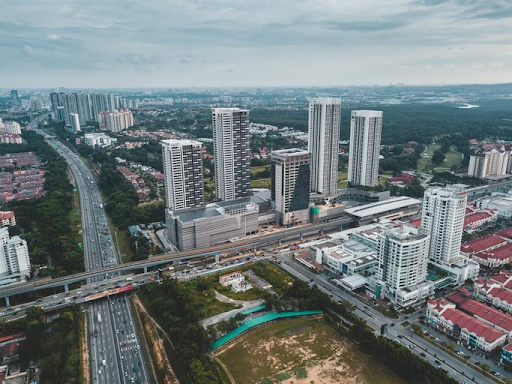
A mixed development combines multiple property uses within the same project, such as residential units, serviced residences, offices, retail shops, shopping centres, and hotels. An integrated development may also connect these components physically or to transport infrastructure.
For residents, the main attraction is convenience, with shops, workplaces, and public transport potentially nearby. However, buyers should consider access, parking, privacy, maintenance charges, density, and the separation of residential and commercial areas.
The presence of commercial components does not determine the title or legal status of a residential unit, so check the specific property documents before buying.
12. Shophouse
A shophouse traditionally combines commercial and living spaces within the same building.
The ground floor is commonly used for retail, food and beverage, professional services, or another business, while the upper floor or floors may be used for offices, storage, or accommodation where permitted.
Older shophouses can be found throughout established Malaysian town centres, while newer commercial developments may use similar layouts.
However, a shophouse should not be treated in the same way as a conventional residential house. Buyers intending to live in one should confirm the approved use, title, local authority requirements, financing implications, and any restrictions before purchasing.
How Do You Choose The Right Type Of House In Malaysia?
There is no single property type that suits every buyer. Consider your budget, household needs, location, and long-term plans.
1. Decide How Much Space You Need
Consider how many bedrooms, parking spaces, and outdoor areas you need. Landed homes generally offer more space, while high-rise units may be easier to maintain.
2. Consider Your Preferred Location
Think about your commute and access to schools, public transport, healthcare, workplaces, and amenities. The types of properties available can vary considerably by location.
3. Compare The Full Cost Of Ownership
Look beyond the purchase price. Depending on the property, costs may include service charges, sinking fund contributions, repairs, insurance, assessment tax, quit rent or parcel rent, utilities, and parking.
4. Check The Property Documents
Check the title, tenure, approved use, sale and purchase agreement, maintenance charges, parking allocation, and applicable restrictions before buying.
5. Think About Maintenance And Facilities
Consider whether you need facilities such as a swimming pool, gymnasium, security, or landscaped areas, as these also come with ongoing maintenance costs.
6. Consider Your Future Needs
Think about whether the property will continue to suit your household in the coming years, particularly if your family size, mobility needs, or lifestyle may change.
Compare these factors carefully to find a property that works for both your current lifestyle and longer-term plans.
Finding A Home That Suits Your Needs
The different types of houses in Malaysia vary in space, privacy, facilities, and living environment. Terrace houses, semi-detached homes, bungalows, condominiums, serviced residences, and townhouses each offer different features that may suit different household needs and lifestyles.
Before deciding, compare the property’s location, size, price, title, maintenance requirements, recurring charges, facilities, and suitability for your household. Check the specific development carefully, as properties with similar labels may still differ in layout, approved use, facilities, and ownership structure.
Want to estimate your monthly costs? Use the Mortgage Calculator to estimate your monthly repayments and manage your budget.